
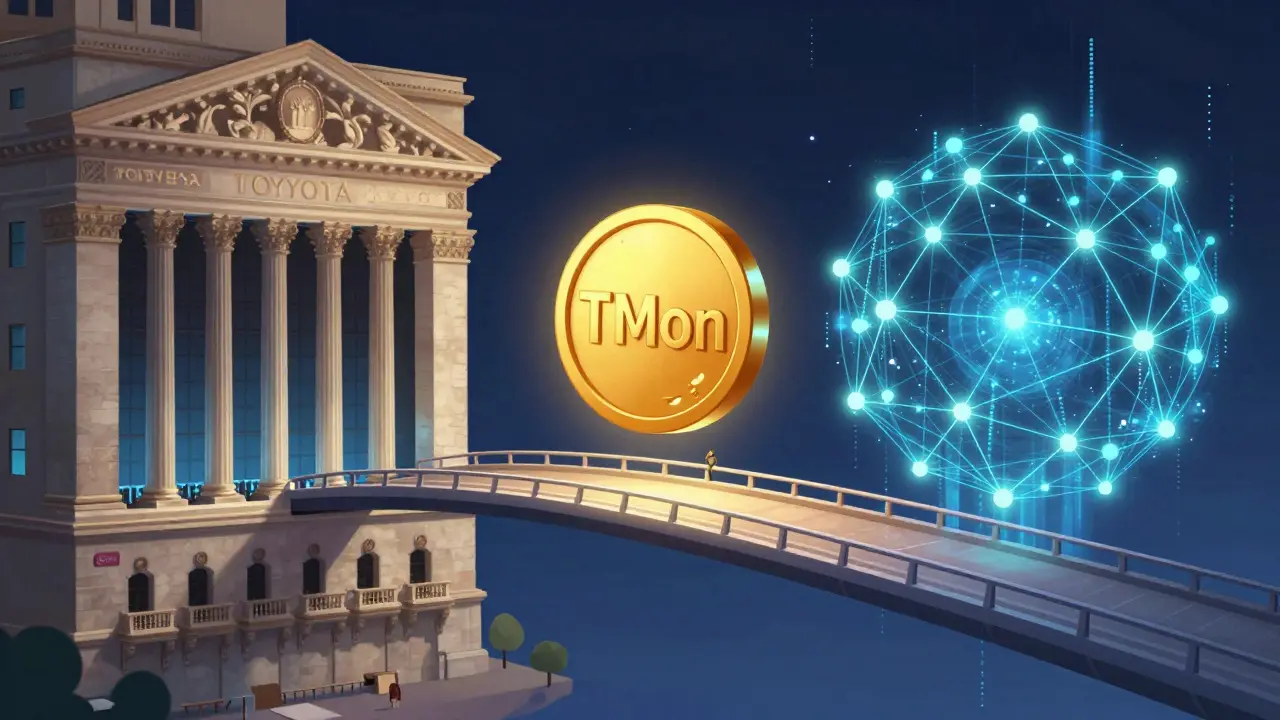
Imagine buying a piece of Toyota Motor Corporation without opening a traditional brokerage account. You don't need to wait for the New York Stock Exchange to open at 9:30 AM EST. Instead, you use your crypto wallet, connect to the blockchain, and buy a digital token that tracks the price of Toyota stock. This is exactly what TMon, or Toyota Tokenized Stock (Ondo), offers. It is not a new cryptocurrency in the sense of Bitcoin or Ethereum. It is a financial bridge between the world of traditional stocks and the decentralized blockchain.
If you have heard about TMon and are wondering if it is a scam, a revolutionary investment tool, or just hype, you are not alone. The concept of tokenizing real-world assets (RWAs) is exploding, but it comes with specific rules, risks, and quirks that differ from standard crypto trading. Let's break down what TMon actually is, how it works under the hood, and whether it makes sense for your portfolio in 2026.
The Basics: What Exactly Is TMon?
TMon is a digital token issued by Ondo Finance. Its sole purpose is to provide economic exposure to Toyota Motor Corporation (NYSE: TM) stock. When you hold TMon, you do not own shares of Toyota in the traditional legal sense where your name appears on the company's shareholder registry. Instead, you own a token that is backed 1:1 by actual Toyota stock held in custody by regulated institutions.
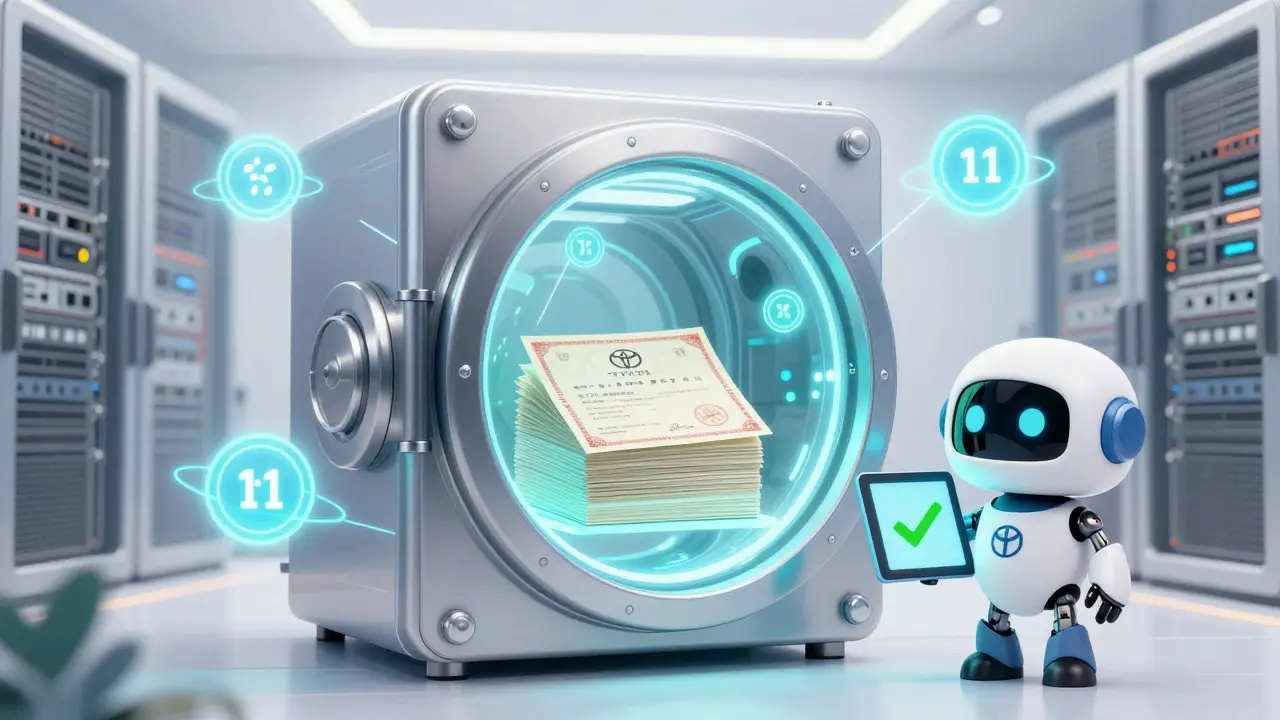
Think of it like this: Ondo Finance buys real Toyota shares and locks them away in a secure vault (custody). They then mint TMon tokens on the blockchain. Each TMon token represents a fractional slice of those locked-up shares. If Toyota's stock price goes up, the value of your TMon goes up. If Toyota pays dividends, those dividends are automatically reinvested into more Toyota stock, which increases the backing value of each TMon token.
| Attribute | Detail |
|---|---|
| Issuer | Ondo Finance |
| Underlying Asset | Toyota Motor Corporation (TM) Stock |
| Blockchain Networks | Ethereum (ERC-20), BNB Chain |
| Regulatory Status | US Securities Act Regulation S Exemption |
| Dividend Handling | Automatically Reinvested |
| Minimum Investment | $100 USD (via stablecoins) |
How Does Ondo Finance Make This Possible?
Ondo Finance is the engine behind TMon. Founded by Nathan Allman, James Reynolds, and Wayne Weave, Ondo specializes in bringing institutional-grade finance onto the blockchain. They didn't invent the idea of tokenized stocks-Mirror Protocol tried something similar years ago-but they focused heavily on regulatory compliance, which is the biggest hurdle in this space.
Here is the step-by-step process of how TMon operates:
- Custody: Ondo partners with regulated custodians (like Paxos Trust Company) to hold the actual Toyota shares. This ensures that for every TMon in circulation, there is real stock backing it.
- Minting: When you want to buy TMon, you send USDC (a stablecoin) to Ondo's platform. Ondo uses that money to buy more Toyota stock and mints new TMon tokens for you.
- Trading: You can trade TMon on supported platforms like Ondo Global Markets. Because it lives on the blockchain, you can trade it 24 hours a day, 7 days a week, unlike the NYSE which closes on weekends and evenings.
- Redemption: If you want out, you can burn your TMon tokens. Ondo sells the underlying Toyota stock and sends you back the equivalent value in USDC.
This system allows for faster settlement times. Traditional stock trades take two days to settle (T+2). With TMon, transactions can settle in approximately 15 minutes because the ledger is updated instantly on the blockchain.
Who Can Buy TMon? The Regulatory Catch
This is the most critical part to understand. TMon is not available to everyone. Specifically, it is generally restricted for residents of the United States.
Ondo Finance operates TMon under Regulation S of the U.S. Securities Act. This exemption allows them to sell securities to investors outside the U.S. without registering the offering with the SEC for public sale. This means if you live in Japan, Germany, Singapore, or Brazil, you likely qualify. If you live in the U.S., you typically cannot buy TMon directly through Ondo's retail channels.
Why does this matter? Because it limits the pool of buyers, which directly impacts liquidity. As of late 2024 data, TMon had only around 26 unique holders. While this number grows, it is tiny compared to major cryptocurrencies. This restriction is a double-edged sword: it provides legal safety for Ondo, but it creates a smaller, less liquid market for traders.
TMon vs. Traditional Stock Investing: Pros and Cons
Is TMon better than just buying Toyota stock on Robinhood or Fidelity? It depends on what you value. Let's compare the two approaches.
| Feature | TMon (Tokenized) | Traditional Brokerage |
|---|---|---|
| Trading Hours | 24/7 (Weekends included) | Market Hours Only (Mon-Fri) |
| Settlement Time | ~15 Minutes | T+2 Days (2 Business Days) |
| Liquidity | Low ($2,500 avg daily volume) | Very High ($1.8B avg daily volume) |
| Fees | 0.15% Minting / 0.10% Redemption + Gas | Often $0 Commission + Spreads |
| Access | Non-US Residents | Global (with local restrictions) |
| Voting Rights | No | Yes (for full share owners) |
The Case for TMon: If you are a crypto-native investor who wants exposure to blue-chip stocks without leaving your Web3 wallet, TMon is convenient. You can react to news after the market closes. If Toyota announces a breakthrough battery technology at 10 PM on a Sunday, you can buy TMon immediately. Traditional brokers won't let you trade until Monday morning.
The Case Against TMon: Liquidity is the killer here. With an average daily volume of roughly $2,500, trying to buy $5,000 worth of TMon could significantly move the price against you (slippage). In contrast, you can buy millions of dollars of Toyota stock on the NYSE with zero impact on the price. Additionally, you pay higher fees. The 0.15% minting fee plus Ethereum gas fees often exceed the zero-commission models of modern brokerages.
Risks You Must Know Before Buying
No investment is risk-free, and tokenized stocks carry unique dangers beyond normal market volatility.
- Smart Contract Risk: TMon lives on code. If there is a bug in Ondo's smart contracts or the Ethereum network, funds could theoretically be lost. While Ondo audits their code, no system is immune to exploits.
- Custodial Risk: You are trusting Ondo and its partners (like Paxos) to hold the actual Toyota shares. If the custodian fails or acts maliciously, your token becomes worthless paper.
- Regulatory Risk: The SEC has been scrutinizing tokenized securities. Commissioner Hester Peirce has indicated increased scrutiny under proposed rules. If regulations tighten, Ondo might be forced to change how TMon operates, or even delist it for certain users.
- Premium/Discount Arbitrage: Because liquidity is low, TMon sometimes trades at a premium to the actual price of Toyota stock. In September 2024, data showed TMon trading at a 3.2% premium. This means you are paying more for the token than the underlying asset is worth. Always check the Net Asset Value (NAV) before buying.

How to Buy and Use TMon
If you decide TMon fits your strategy, here is the practical workflow. Note that this process requires some technical comfort with crypto wallets.
- Get a Web3 Wallet: Install MetaMask or another compatible wallet. Ensure you are connected to either the Ethereum Mainnet or BNB Chain, depending on which version of TMon you want.
- Acquire Stablecoins: Buy USDC (USD Coin) on a centralized exchange like Coinbase or Kraken, and transfer it to your Web3 wallet. You will need this to pay for the TMon.
- Complete KYC: Go to the Ondo Finance platform. You must complete Know Your Customer (KYC) verification. This involves uploading ID documents. Processing usually takes about 48 hours.
- Mint TMon: Once verified, connect your wallet to Ondo Global Markets. Deposit your USDC and swap it for TMon. The minimum initial investment is typically $100.
- Monitor and Redeem: Hold the token as long as you want exposure to Toyota. To cash out, initiate a redemption request. Be aware that redemptions may fail if attempted during weekends due to banking processing delays.
The Future of TMon and Tokenized Stocks
TMon is currently a niche product. It serves as a proof-of-concept rather than a mass-market solution. However, the broader trend of Real-World Assets (RWAs) moving on-chain is accelerating. BlackRock's entry into tokenized funds has added credibility to the sector.
Ondo Finance plans to expand TMon's availability to other chains like Arbitrum to reduce gas fees. They are also working on deeper integrations with decentralized exchanges. If the SEC establishes a clear regulatory framework for tokenized securities in 2025 or 2026, products like TMon could see explosive growth. Until then, treat it as an experimental allocation-a small percentage of your portfolio used to test the waters of tokenized equities.
Can US residents buy TMon?
Generally, no. TMon is offered under Regulation S, which restricts sales to non-U.S. persons. Ondo Finance requires KYC verification to ensure compliance, and U.S.-based addresses are typically blocked from purchasing.
Does TMon give me voting rights in Toyota?
No. TMon provides economic exposure to the stock price, but you do not receive shareholder voting rights. The actual shares are held in custody by Ondo's partners, who manage the corporate actions.
What happens if Toyota pays a dividend?
Dividends are automatically reinvested. Ondo uses the dividend payments to buy more Toyota stock, which increases the total assets backing the TMon supply. This effectively raises the value of each individual TMon token over time.
Is TMon safe from hacking?
Like any crypto asset, TMon carries smart contract risk. While Ondo conducts audits, no code is 100% secure. Additionally, you must keep your personal Web3 wallet secure. If you lose your private keys, you lose access to your TMon forever.
How does TMon compare to Mirror Protocol's mTM?
Mirror Protocol's mTM was a synthetic asset backed by crypto collateral, which made it risky and volatile. TMon is fully collateralized by actual Toyota stock held in regulated custody, making it much safer and legally compliant, though less liquid.
What are the fees for using TMon?
Ondo charges a 0.15% fee when minting (buying) TMon and a 0.10% fee when redeeming (selling). On top of this, you must pay blockchain gas fees (network transaction costs), which vary based on Ethereum or BNB Chain congestion.

Comments
Sophie Nakasako
I've been following Ondo Finance for a while and this breakdown is incredibly helpful. It really highlights the friction between traditional finance and crypto. The 24/7 trading aspect is what draws me in, but I'm still wary of the liquidity issues mentioned here.
Kristy Morrow
its just another way to lose money why would you trust a smart contract with your life savings when robinhood exists
John Harman
You guys are missing the point entirely. This isn't about replacing Robinhood, it's about settlement speed and composability. If you can't understand that T+2 is archaic compared to instant blockchain settlement, you're not ready for Web3. The liquidity will come once institutions figure out how to route orders through these protocols without breaking SEC rules. Stop acting like every new financial instrument is a scam just because it uses code instead of paper.
Antony Lopez
Why should we care about Japanese cars being tokenized on American blockchains? This feels like a violation of our financial sovereignty. We need domestic solutions, not foreign assets wrapped in crypto garbage. Keep your Toyota shares in Japan where they belong and let us focus on US industry.
Logan Edmison
i mean its kinda cool but like the fees are insane right? gas on eth is brutal sometimes so u basically pay more to buy less stock. plus if the custodian goes bust ur tokens r worthless. seems risky as hell for something thats supposed to be safe.
Michelle Walker
The risk profile is unacceptable for retail. Custodial risk alone makes this a terrible product. You are trusting a third party to hold the asset and a fourth party to write the code. In traditional finance, SIPC insurance covers you up to $500k. Here? You get nothing. Smart contracts fail. Custodians go bankrupt. It's a disaster waiting to happen.
Shay Thomson
Oh wow, imagine if we could all just coexist and use technology to make investing easier! 🌟 I think there's beauty in the idea of fractional ownership. Maybe we can learn from each other instead of tearing down new ideas. Let's embrace the future together!
DJ Maleko
So @Sophie Nakasako you actually bought some? 👀 I'm curious about your experience with the KYC process. Did it take long? Also, do you think the premium/discount arbitrage is worth worrying about for small amounts? 🤔💸
Erika Pozzetto
In my considered opinion, the regulatory framework surrounding Regulation S offers a fascinating glimpse into the evolving landscape of international securities law. While the liquidity constraints are indeed significant, one must appreciate the meticulous compliance efforts undertaken by Ondo Finance to ensure adherence to these complex legal structures. It is a testament to the ingenuity of modern fintech entrepreneurs who seek to bridge disparate financial systems.
Russ Fincham
This is basically a glorified ETF wrapper with higher fees and more points of failure. The only reason anyone talks about this is because they want to feel like they're part of the 'future' while actually just buying a blue-chip auto stock. Save your gas fees and use a normal broker.
Linda Hilliard
Only the sophisticated investor understands the alpha here. The rest of you are stuck in legacy thinking. Tokenization allows for programmable money flows that traditional brokers simply cannot match. If you can't handle the complexity, stay away. (¬_¬)
Winston Lacewing
It's morally wrong to restrict access based on geography! 🚫🌍 Everyone deserves equal opportunity to invest in global markets regardless of where they live. This exclusionary practice is abhorrent and needs to change immediately! 😡✊
Kristine Lawson
Furthermore; it is imperative to note that the lack of voting rights fundamentally alters the nature of equity ownership. One does not merely purchase an asset; one participates in corporate governance. To strip this away is to create a hollow derivative that serves only speculative interests, rather than long-term value creation. How can one justify such a structure?
Tawny Holmes
Liquidity is too low. Fees are too high. Skip it.
Jessie Smith
look i get the hype but its just tm stock wrapped in a shiny digital bow. the real play is the underlying tech stack maybe. but for now? nah. keep yer cash safe in the vault not on the chain. chains break. vaults dont usually.
Drew M
Guys, relax! 🎉 This is just the beginning of a beautiful revolution in finance! Imagine the possibilities! 🚀✨ Who cares about the fees when you're part of the future? Embrace the chaos! 🌈💃
Deep Rahman
I have been thinking about this concept for a very long time and it seems to me that the essence of this innovation lies in the democratization of access to previously restricted financial instruments. Although the current implementation has flaws such as low liquidity and high transaction costs, the potential for growth is immense if regulatory hurdles are cleared. It is important to remain patient and observant as the market matures over the coming years.
Melissa Beckwith
I've analyzed the whitepaper and the custody arrangements extensively. The reliance on Paxos is a double-edged sword. On one hand, it provides necessary regulatory cover; on the other, it introduces a central point of failure that contradicts the ethos of decentralization. Until we see truly decentralized custody solutions for RWAs, this remains a niche product for those who specifically need 24/7 exposure or are outside the US. For most, the slippage and gas costs outweigh the benefits significantly.
Josephine Finlayson
I think it's wonderful that you're all sharing your perspectives! It's always good to discuss risks and rewards openly. Remember to do your own research and never invest more than you can afford to lose. Stay safe and supportive of each other! 💖📚
Tuan Nguyen
The inefficiency of this model is staggering. Why tokenize a single stock when you could tokenize a basket? The overhead per unit is absurd. It's a solution looking for a problem. Only useful for bots doing micro-arbitrage during weekends, which is hardly a sustainable business model for the average user.