

For years, sending money via Bitcoin or USDT in Nigeria felt like walking a tightrope. One day your bank account worked; the next, it was frozen because the Central Bank of Nigeria (CBN) frowned upon digital assets. But if you are asking whether crypto payments are allowed in Nigeria today, the answer is no longer a murky 'maybe.' As of 2026, the landscape has shifted dramatically. Cryptocurrency is not legal tender-you cannot pay your federal taxes with Dogecoin-but it is fully legal to own, trade, and use for peer-to-peer transactions, provided you follow the new rules.
The game changed permanently in March 2025 when President Bola Ahmed Tinubu signed the Investments and Securities Act (ISA) 2025 into law. This legislation stopped treating crypto as a wild west experiment and started treating it as a regulated financial asset. If you are a user, this means safety. If you are a business, this means compliance. Here is exactly what you need to know about making and accepting crypto payments in Nigeria right now.
The New Legal Status: From Ban to Regulation
To understand where we stand in 2026, you have to look at how far we have come. Between 2021 and 2023, the CBN banned commercial banks from servicing crypto businesses. It was a blunt instrument that didn't stop Nigerians from using crypto-it just pushed it underground. By late 2023, reality won out. The CBN issued new Virtual Asset Service Provider (VASP) Guidelines, effectively lifting the ban on banks interacting with licensed crypto firms.
Then came the ISA 2025. This act recognized digital assets as securities. Investments and Securities Act (ISA) 2025 is the landmark Nigerian legislation that officially recognizes cryptocurrencies and digital assets as securities, bringing them under formal regulatory oversight. This distinction matters. It means the Securities and Exchange Commission (SEC) now has the power to regulate exchanges, protect investors, and crack down on fraud. You can legally buy crypto, hold it, and sell it. You can even use it to pay someone else, as long as both parties agree and the platform facilitating the trade is compliant.
However, there is a crucial limit: crypto is not legal tender. The Nigerian Naira remains the only official currency for settling debts to the government or for mandatory statutory payments. You cannot force a vendor to accept Bitcoin if they prefer Naira, but you certainly can negotiate a private transaction where both sides are happy.
Who Regulates Your Crypto Wallet?
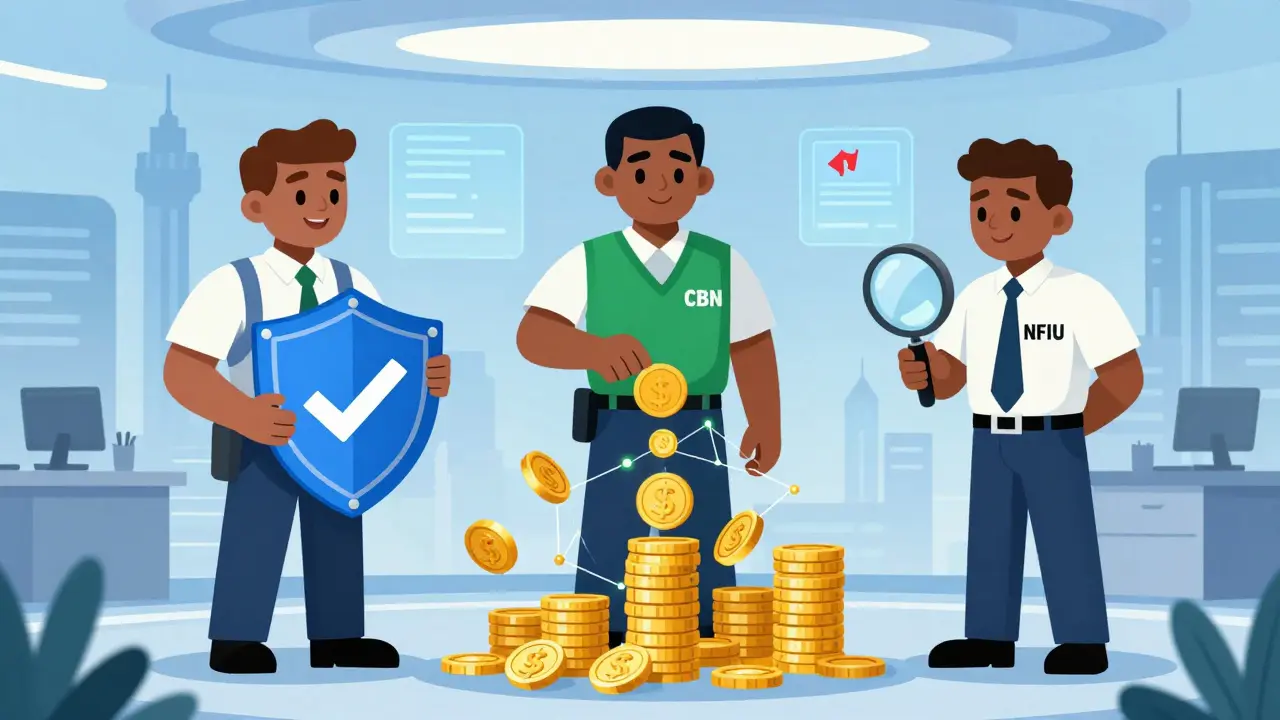
In the past, regulation was fragmented. Now, three main bodies share the load, and understanding their roles helps you stay safe.
- Securities and Exchange Commission (SEC): They are the primary boss of the crypto space now. Under the ISA 2025, all crypto exchanges and Virtual Asset Service Providers (VASPs) must register with the SEC. If an exchange isn't on the SEC's approved list, you are taking a risk.
- Central Bank of Nigeria (CBN): They watch the banks. Their job is to ensure that the flow of money between traditional banking systems and crypto platforms doesn't destabilize the economy. Since December 2023, they allow banks to serve SEC-licensed crypto firms.
- Nigerian Financial Intelligence Unit (NFIU): They care about crime. Their focus is Anti-Money Laundering (AML) and Counter-Terrorism Financing (CFT). If your crypto activity looks suspicious, the NFIU steps in.
This multi-agency approach creates a net. For legitimate users, it’s annoying paperwork. For scammers running Ponzi schemes, it’s a nightmare. The SEC has the authority to suspend licenses and levy heavy fines-starting at ₦10 million ($6,693) for the first month of non-compliance. This pressure forces platforms to clean up their acts.
How to Make Safe Crypto Payments in 2026
Because the rules have tightened, "just downloading an app" is no longer enough. To make crypto payments safely in Nigeria, you need to verify the platform you are using. Here is your checklist for secure transactions:
- Check for SEC Licensing: Before you deposit Naira or send USDT, check if the exchange is registered with the SEC. Platforms like Quidax is a leading Nigerian cryptocurrency exchange that secured early licensing under the new regulatory framework and Busha were among the first to get approval in 2024. Using unlicensed offshore platforms carries higher risk because they may not comply with local consumer protection laws.
- Use P2P with Caution: Peer-to-Peer (P2P) trading is huge in Nigeria. Nigeria ranks first globally in P2P crypto volume. While legal, P2P requires you to vet individual traders. Stick to merchants with high completion rates and verified badges on reputable platforms.
- Avoid Unregistered Exchanges: Many international giants have paused or exited the Nigerian market because the cost of SEC licensing is high. If you are using a platform that doesn't clearly state its regulatory status in Nigeria, assume it is operating in a gray area.
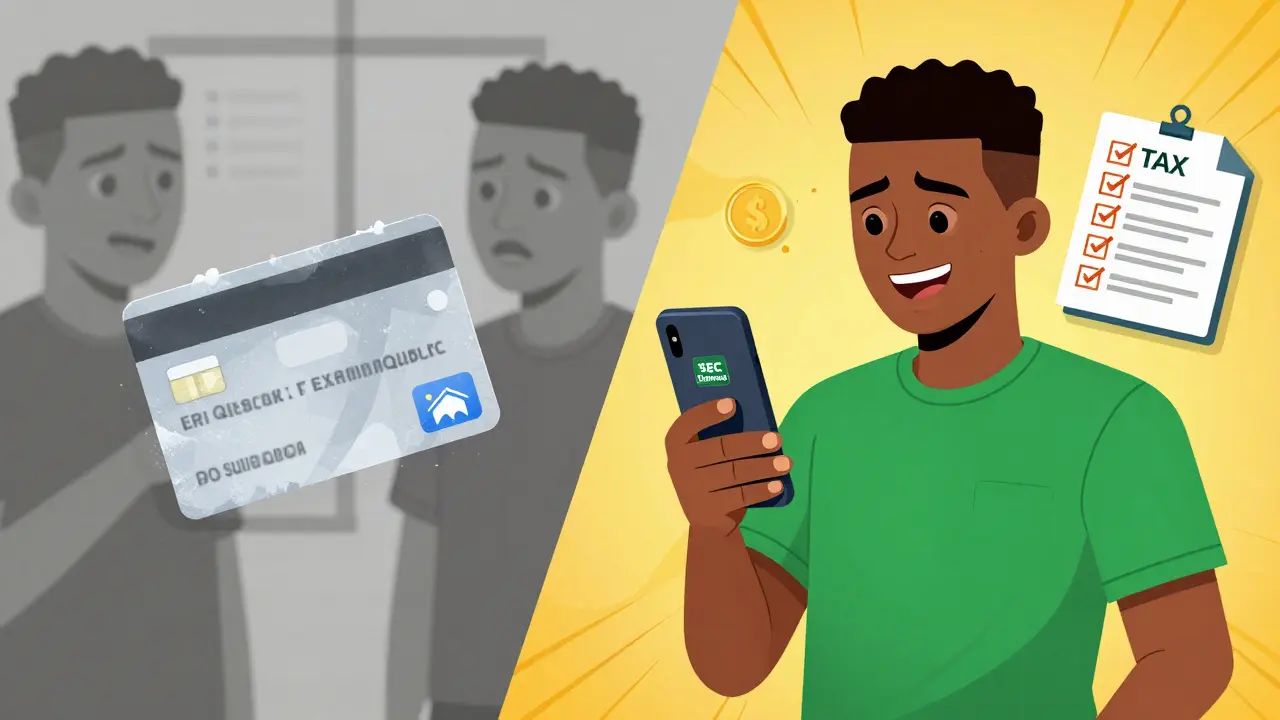
- Keep Records: With the new Tax Administration Act, every transaction counts. Save screenshots of your trades, invoices, and wallet addresses. You will need these for tax filing.
The key shift here is trust. Previously, you trusted the code. Now, you must also trust the regulator. Licensed platforms integrate better with local banks, meaning your Naira deposits and withdrawals are smoother and less likely to be flagged by fraud detection algorithms.
The 2026 Tax Reality: What You Owe the Government
If you thought the regulatory changes ended with the ISA 2025, think again. Starting January 1, 2026, the Nigerian Tax Administration Act (NTAA) 2025 came into full effect. This is where many casual traders get caught off guard.
Crypto is treated as property. Holding Bitcoin does not trigger a tax bill. Selling it for a profit does. Here is how the math works for individuals:
| Taxable Event | Tax Type | Rate / Cap |
|---|---|---|
| Selling crypto for profit | Personal Income Tax | Sliding scale, capped at 25% |
| Holding crypto (no sale) | None | 0% (No capital gains tax on holding) |
| Trading losses | Deduction | Can offset against other taxable income |
For businesses, the stakes are higher. Companies earning between ₦25 million and ₦100 million annually pay 20% corporate income tax on profits. Those earning over ₦100 million pay 30%. Additionally, any company charging fees for crypto services must pay 7.5% VAT on those fees.
Experts call this regime "progressive" compared to other countries because it provides clarity. In the past, you never knew if the FIRS (Federal Inland Revenue Service) would come after you. Now, the rules are written down. If you make ₦1 million in profit from flipping Ethereum, you owe personal income tax on that gain. Failing to report this is now a clear violation of the NTAA 2025.
Risks and Pitfalls to Avoid
Even with legalization, risks remain. The regulatory framework explicitly targets Ponzi schemes and fraud. The SEC and EFCC (Economic and Financial Crimes Commission) have enhanced tools to track illicit flows, including access to telecom records.
Here are the biggest traps for Nigerian crypto users in 2026:
- Unlicensed Platforms: Some apps still promise high returns without SEC registration. These are often scams. If it sounds too good to be true, it’s likely a violation of the ISA 2025.
- Bank Account Freezes: While banks can now serve licensed VASPs, they are still cautious. If you suddenly move millions of Naira into a crypto account without a clear source of funds, your bank may flag it for AML checks. Always keep a paper trail.
- Volatility: Regulation doesn’t stop Bitcoin from dropping 20% in a week. Use stablecoins like USDT or USDC for payments if you want to avoid price swings during the transaction.
- International Restrictions: Some global platforms may restrict Nigerian users due to compliance costs. Don’t rely solely on foreign apps; diversify with local, licensed options.
The era of anonymity is over. Know Your Customer (KYC) requirements are stricter than ever. You will need to provide valid ID and proof of address to use most serious platforms. This is a feature, not a bug-it protects your funds from being stolen by hackers who exploit weak security.
Future Outlook: What Comes Next?
The trajectory for crypto in Nigeria is cautiously optimistic. The government sees the value in the sector. Between July 2024 and June 2025, Nigeria received an estimated $92.1 billion in crypto value. That is massive economic activity. The government wants to capture some of that through taxes and licensing fees, not push it away.
We expect more domestic exchanges to launch as the licensing process becomes standardized. We also expect tighter integration between crypto wallets and mobile money providers like OPay or PalmPay, making everyday crypto payments as easy as sending airtime.
For the average Nigerian, the message is clear: Crypto is here to stay. It is legal, it is taxed, and it is regulated. Stop hiding your transactions. Start using licensed platforms. Keep your records straight. And remember, while you can pay your friend with Bitcoin, you still need Naira for your electricity bill.
Is it illegal to own cryptocurrency in Nigeria in 2026?
No, it is not illegal to own cryptocurrency in Nigeria. The Investments and Securities Act (ISA) 2025 recognizes digital assets as securities. You can legally buy, hold, and sell crypto, provided you use regulated platforms and comply with tax laws.
Can I use Bitcoin to pay for goods and services in Nigeria?
Yes, you can use Bitcoin or other cryptos for private transactions between consenting parties. However, crypto is not legal tender, meaning vendors are not required to accept it, and you cannot use it to pay government taxes or statutory fees.
Which crypto exchanges are licensed in Nigeria?
As of 2026, platforms like Quidax and Busha have secured licenses from the Securities and Exchange Commission (SEC). Always check the SEC’s official registry for the most current list of approved Virtual Asset Service Providers (VASPs).
Do I have to pay tax on my crypto profits?
Yes. Under the Nigerian Tax Administration Act (NTAA) 2025, profits from selling or exchanging crypto are subject to personal income tax. The rate is on a sliding scale, capped at 25% for individuals. You must declare these gains when filing your annual tax return.
Why did the CBN reverse its ban on crypto banks?
The CBN reversed its restrictive stance in December 2023 because the ban failed to stop crypto usage and instead pushed it underground, increasing financial instability risks. The new VASP Guidelines allow banks to serve SEC-licensed crypto firms, bringing the industry into the formal financial system.

Write a comment