
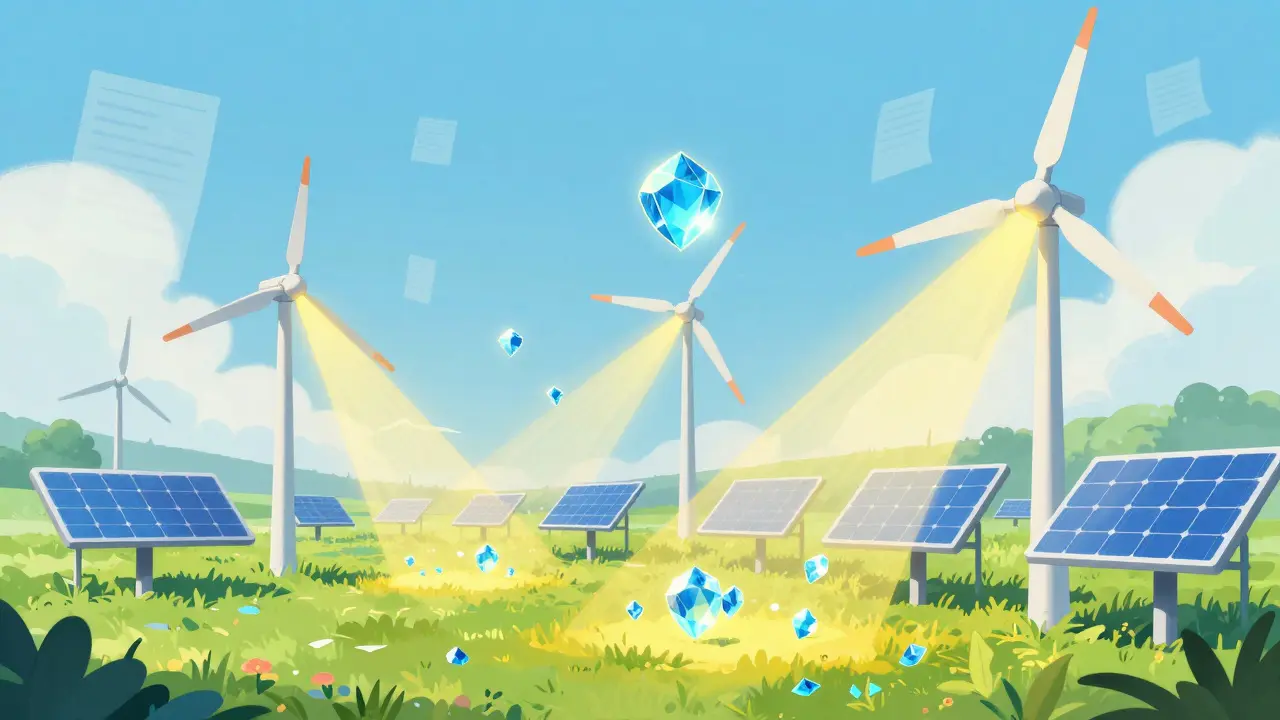
You know how companies love to tell you they run on 100% Green Energy? You buy their products thinking you’re helping the planet. But here’s the hard truth: until recently, most of that was just paper promises. Without real-time proof, "green" claims were easy to fake. That changed when developers started putting Renewable Energy Credits on Blockchain. By late 2025, this shift stopped being a buzzword experiment and became critical infrastructure for anyone serious about climate action.
What Exactly Is a Renewable Energy Credit?
Before we get into the code, we need to understand the asset itself. Think of electricity generation like a two-part process. First, you generate the power (the electrons flowing through the wire). Second, you generate the environmental attribute (the fact that those electrons came from wind instead of coal).
A Renewable Energy Credit (REC)Renewable Energy Certificate is a digital receipt proving one megawatt-hour of clean energy entered the grid. When a company buys an REC, they can legally claim that usage for sustainability reporting, even if their physical lights are powered by the mixed grid. In 2024, these certificates were mostly tracked on old Excel sheets or centralized databases managed by regional authorities. It worked, sort of, but it was slow, expensive, and riddled with human error.
The Broken Traditional System
Under the old rules, issuing a certificate took days. If a solar farm produced power on Monday, the broker processed paperwork on Wednesday, auditors reviewed it on Friday, and retirement records updated next week. During those gaps, fraud could happen. We call it double-counting-where two different companies both claim credit for the same unit of green energy.
In 2023, analysis showed transaction costs ate up about 5 percent of a certificate's value due to all these middlemen. Imagine paying $5 just to sell a $100 green credit because five different firms checked your box. Plus, international trading was nearly impossible. If an Australian farmer wanted to sell carbon offset credits to a German company, the regulatory paperwork alone took months to resolve. This fragmentation left huge chunks of potential green capital stranded.
How Blockchain Solves the Trust Problem
Enter the technology everyone is talking about. At its core, blockchain acts as a shared, unchangeable ledger. Instead of one central bank holding the books, the network agrees on who owns what, when they own it, and when it gets retired.
This isn't magic; it's math. Every transaction creates a cryptographic hash. Once verified, you cannot alter the history without breaking the chain. For energy credits, this eliminates double-counting automatically. The system knows if a credit is already sold. You don't need a lawyer to verify that.
Distributed Ledger Technology allows these systems to operate publicly. This means any investor, consumer, or regulator can pull up the chain and see exactly where a specific kilowatt-hour originated and who bought it. This transparency builds trust without requiring expensive third-party auditors for every single transfer.
Key Players Driving the Shift
We aren't building these networks in a vacuum. Major industry players have standardized the approach. Here are the two giants leading the charge as of 2026:
| Platform | Focused Region | Transaction Speed | Key Feature |
|---|---|---|---|
| Power Ledger | Australia / Global | ~15 seconds | P2P Energy Trading |
| Energy Web Chain | Europe / Global | Instant | I-REC Standard Integration |
Power Ledger, founded by Dr. Jemma Green, pioneered peer-to-peer trading. Their platform let households sell excess rooftop solar directly to neighbors in Brooklyn Microgrid projects. By 2025, they had processed millions of transactions with zero fraud cases reported. Energy Web Foundation (EWF) focused on enterprise adoption. They built the chain to talk to existing energy grids easily. Their big win in late 2023 was integrating with the International REC Standard (I-REC)International Guarantee of Origin. This allowed cross-border trading without manual conversion headaches.
Real-World Impact Numbers
Data confirms why this transition matters. Germany's Microgrid projects saw administrative processing time drop by 70%. Where it used to take weeks to settle a trade, it now happens in seconds. Costs fell from that traditional 5 percent overhead to roughly 1-2 percent of the certificate value.
Consider the Colombia case study from Grid Singularity. Rural producers who waited months for payment in the old system started receiving funds 83% faster using the tokenized platform. This liquidity incentive encouraged smaller generators to come online, increasing overall renewable supply. Meanwhile, corporate buyers gained the ability to verify claims instantly via dashboard APIs, satisfying ESG mandates that regulators introduced in 2024.
Tech Specs: How It Actually Works
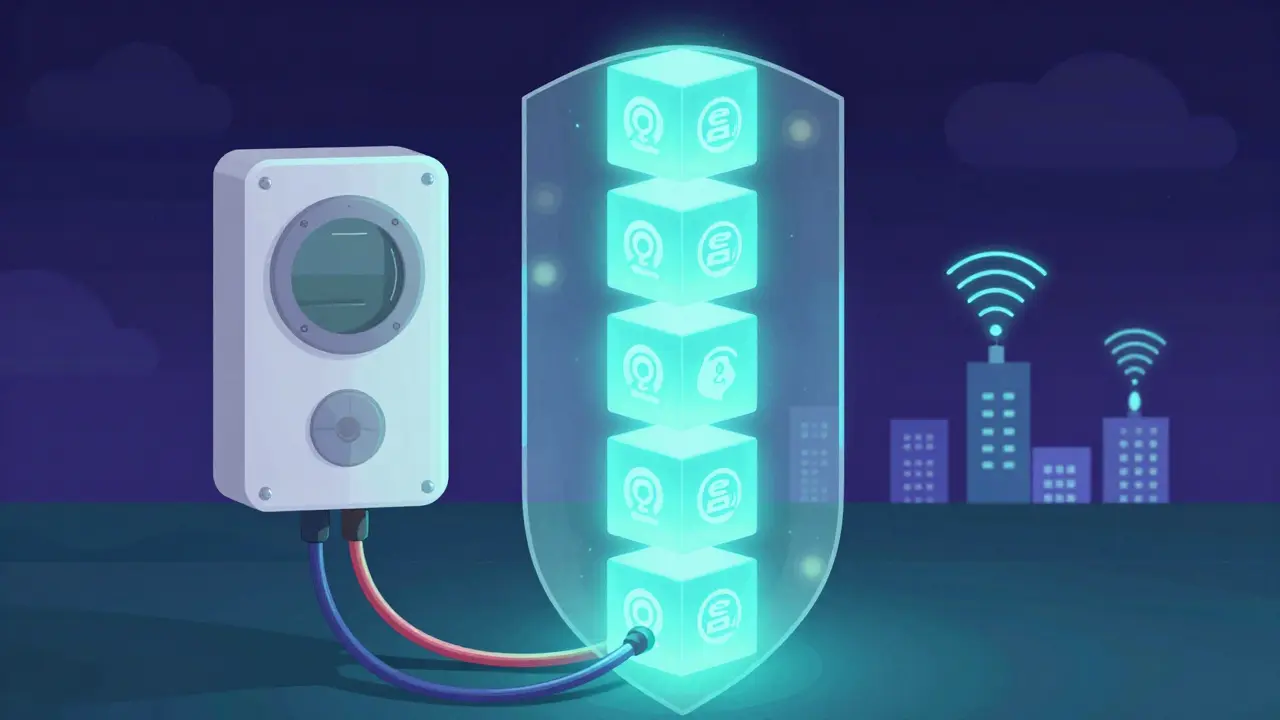
If you are technical, you care about the stack. Most modern implementations rely on smart meters sending data to an oracle, which triggers a smart contract on the chain. When the meter shows 1 MWh generated, the blockchain mints a token representing that credit.
These tokens usually follow standards similar to ERC-20 or EWC-20. This ensures interoperability-you can move your credits between wallets and exchanges easily. The consensus mechanism is typically Proof-of-Stake, which is far less energy-intensive than Bitcoin mining, ensuring the verification process doesn't negate the green benefits.

Challenges Still Remaining
It isn't all smooth sailing. Regulatory alignment remains the biggest hurdle. As of early 2026, 18 U.S. states still lacked federal standardization for digital verification, creating compliance risks for multi-state companies. Europe moved faster, recognizing blockchain-verified GOs in 2023, but Asia-Pacific adoption varied wildly.
Then there is the integration cost. Setting up these systems for large utilities runs between $500,000 and $2 million initially. Small operators sometimes lack the technical skills to manage wallets and gas fees. Furthermore, Professor Michael Webber warned in 2023 that over 12 competing tokenization standards risk fragmenting the market again. If Platform A cannot talk to Platform B, we just build new walled gardens instead of solving the old ones.
Future Trajectory for 2026 and Beyond
Looking ahead, the consolidation phase is starting. Industry analysts predict three to four dominant platforms will control 80 percent of the market by 2026. This is good for stability but bad for competition. Auto-issuance features scheduled for release later this year will remove manual intervention entirely, meaning no humans touch the certificate creation anymore.
We also expect quantum-resistant upgrades by 2026. As quantum computing advances threaten current encryption, foundations like Energy Web are already rolling out roadmaps to future-proof the ledger. If these security updates hold up, blockchain-based REC systems are projected to become near-universal among major energy markets by 2030.
Frequently Asked Questions
Can individuals buy Renewable Energy Credits on Blockchain?
Yes, platforms like Power Ledger allow individual homeowners to trade small amounts of solar credits. However, most enterprise trading happens between corporations managing large portfolios of sustainability assets.
Is blockchain secure enough for energy trading?
The underlying distributed ledger technology uses advanced cryptographic hashing (like SHA-256) that makes tampering virtually impossible. While no system is immune to bugs in smart contracts, the immutability of the record prevents fraud significantly better than legacy databases.
Does using blockchain increase energy consumption?
Modern energy blockchains use Proof-of-Stake consensus, which consumes negligible electricity compared to fossil-fuel burning data centers. Studies show the energy footprint of verification is less than 0.1 percent of the renewable energy being tracked.
How much does it cost to tokenize a renewable credit?
Transaction costs have dropped to roughly 1-2 percent of certificate value. Initial setup for enterprises ranges from $500,000 to $2 million, but ROI typically arrives within 18 to 24 months through efficiency gains.
Are these credits recognized by government regulators?
Adoption varies by region. The EU officially recognizes blockchain-verified certificates under 2023 amendments. The U.S. has 18 pilot programs by 2026, while global standardization efforts continue to align frameworks through bodies like the International REC Standard.

Comments
Elizabeth Akers
i think this stuff is actually kinda cool finally seeing green energy get tracked right without people lying about where the power comes from feels like a big step forward for everyone involved in fixing the climate mess we got ourselves into
Alex Lo
oh man you guys dont realize what is coming here its huge i mean seriously when i first read about recs being on ledgers i thought it was just another tech hype cycle like nfts but now im seeing real transaction volumes and thats different its different because energy grids actually work physically you cant fake physical electrons flowing through wires the way you can fake a pdf certificate so putting that physical truth onto a digital ledger creates this unbreakable link between what happens in the sun and what happens in your wallet and honestly speaking i think most people forget that the grid is already smart meters everywhere sending data back to central servers so why not let those meters mint tokens directly instead of waiting for a broker to fill out forms by hand which takes weeks forever and wastes money on lawyers who charge high fees for checking boxes nobody cares about anymore anyway plus with proof of stake verification the electricity cost to run the chain is basically nothing compared to burning coal so we arent solving climate change just moving the problem to mining farms which was my biggest fear initially until i saw the math on pos consensus mechanisms so yeah im super pumped about this shift happening in twenty twenty six its going to be wild watching utilities scramble to upgrade their old databases though some might resist hard because they profit from the delays but innovation always wins in the end trust me on that one ive been tracking these things since two thousand eighteen and the trend lines never lie once adoption crosses the inflection point there is no stopping it even the regulators have started waking up to the fact that manual audits are obsolete in the face of cryptographic immutability which is terrifying for old school bureaucrats who love signing paper stamps
Lisa Miller
That is such a great perspective on the automation aspect you really highlighted the inefficiency of the brokers well. It gives me hope that the system will become more accessible for smaller producers too. We need more transparency like this to build trust in sustainability claims. Your excitement is really contagious regarding the future of clean energy markets.
Alex Kuzmenko
i knwo teh trad system was broken btu im still worried bout security do these chains handle quantum computing yet cause hackers r clever and if they crack encryption all our green credits could be duped before we evn notice it happening to us in real time
athalia georgina
sorry to intrude but u missed the part about cross border trading regulations being the real bottleneck not tech itself honestly speaking its a waste of time to talk about coins when govts wont agree on standards yet
Ashley Stump
The whole idea is just a massive scam designed to control the energy market while pretending to help the planet.
Justin Garcia
Your lack of technical understanding is showing in every syllable you type here.
Matt Bridger
One must consider the implications of regulatory arbitrage when implementing distributed ledger technology across national borders Indeed the fragmentation of standards poses a significant risk to long term liquidity Furthermore compliance costs remain disproportionately high for smaller entities seeking to tokenize their output
Justin Smith
Regulatory arbitrage is indeed a factor. However current EU frameworks recognize blockchain GOs. Standardization is progressing faster than anticipated.
Michael Nadeau
When we discuss the essence of energy attribution we are essentially discussing the philosophical nature of ownership in a non-fungible resource Is the electron truly owned or is only the claim of generation ownership held by the entity? This distinction matters immensely when we tokenize assets that are intangible yet physically grounded in reality. The separation of the asset from its physical carrier creates a duality that blockchain attempts to resolve through immutable records. Yet history teaches us that human systems seek to optimize efficiency over truth sometimes leading to distortions in value perception. Perhaps the true victory here lies not in the code but in the collective agreement to trust the ledger over the intermediary. We see this pattern repeat in financial markets and supply chains alike. It suggests a deeper cultural shift towards decentralized verification of truth. The question remains whether humanity is ready to cede oversight of critical infrastructure to algorithmic consensus. Trust is a fragile commodity that requires constant maintenance regardless of the technological medium used to verify it. The transition period will inevitably reveal friction points between legacy systems and new protocols. We must prepare for that turbulence with patience and education. Ultimately the goal is not merely efficient trading but sustainable stewardship of our shared environment. Technology serves as the tool but policy dictates the direction in which that tool is pointed. Without aligned incentives the best ledger in the world will simply track bad behavior efficiently. Therefore the focus must remain on ensuring the underlying physical generation is genuinely renewable.
joshua kutcher
I hear what youre saying about the philosophy of ownership here It seems like a heavy topic to carry on our shoulders sometimes. Maybe focusing on the practical benefits for communities would be easier for people to digest. Everyone wants to feel like they are part of something positive. You are raising important points that need to be discussed more openly.
Disha Patil
This sounds like something rich companies do to hide their emissions elsewhere while poor countries suffer from pollution. Why should we care about crypto tokens when the air is literally filling with smog in places like India
Chris R
While pollution is a serious issue globally the tokenization actually helps rural producers in Africa get paid faster for solar output as mentioned in the post Liquidity matters for development in underserved regions We should support solutions that empower local energy generation rather than shutting down all innovation
Markus Church
The integration with international standards is certainly impressive however the cost barrier for small scale implementation remains a concern for widespread adoption in developing nations
Leah Lara
Honestly reading this made me tired just too much jargon to process all at once and not sure if it changes anything practically for me personally
Beverly Menezes
It might seem boring now but it helps the earth in the long run Simple changes add up over time for everyone we know
Samson Abraham
In conclusion the convergence of utility grids and blockchain presents a pivotal moment for verifying environmental attributes Though initial hurdles exist the trajectory appears favorable for global decarbonization efforts