
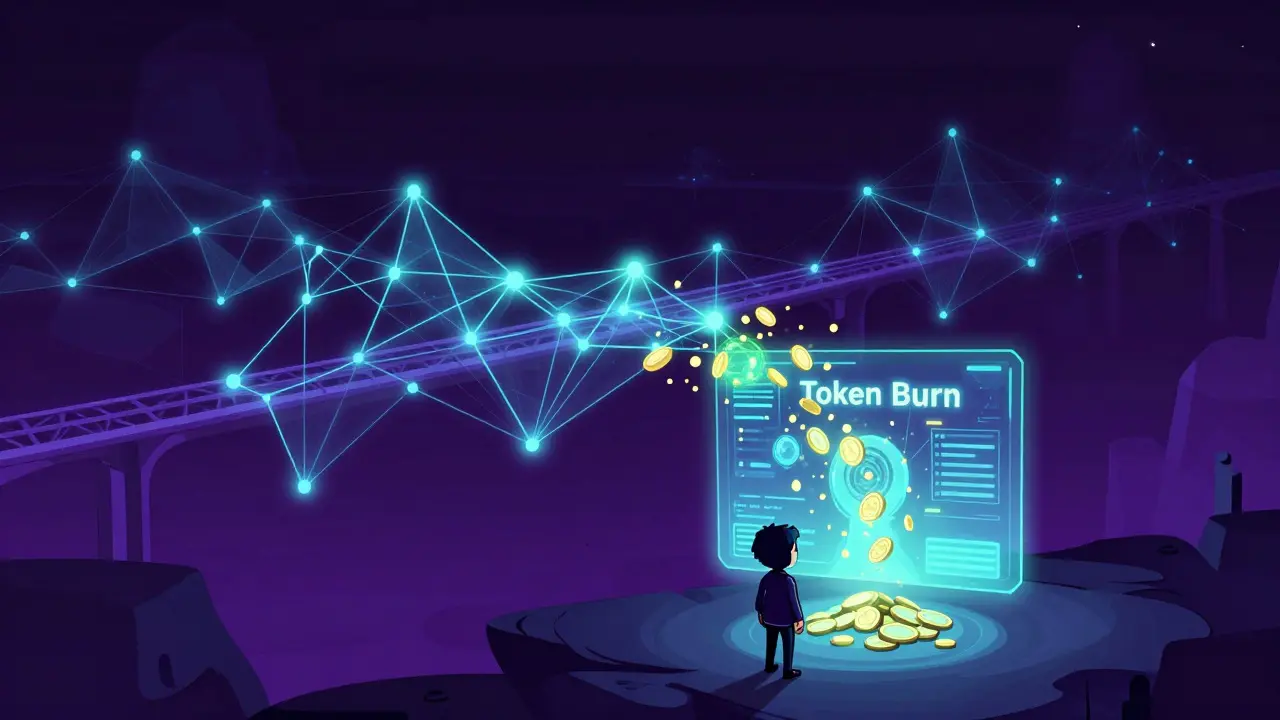
It is August 2026. You have been waiting for the HyperGraph a decentralized data infrastructure protocol designed to provide cross-chain interoperability through its unique hypergraph structure. Also known as HGT, it aims to solve the fragmentation problem in blockchain networks by allowing seamless data transfer between different chains. airdrop. Maybe you bridged assets on their testnet back in 2024. Maybe you held the token before they burned it. Or maybe you are just hearing about it now and wondering if there is still free money on the table. The short answer? It is complicated. Unlike the clean, single-snapshot events of the past, HyperGraph’s distribution strategy has evolved significantly since its early days.
If you are looking for a simple "claim button" link right now, you might be disappointed. However, that does not mean your efforts were wasted. The project has shifted from a traditional one-time airdrop to a more complex loyalty and governance model. To understand where you stand, we need to look at what actually happened to the HGT token, how the current reward system works, and whether you qualify for any remaining distributions.
The Confusion Around HGT: Burn vs. Distribution
First, let’s clear up the biggest misunderstanding in the community. Many users remember holding HGT Token the native utility token of the HyperGraph network, originally used for gas fees and staking before being merged into the broader ecosystem. in their wallets during 2023 and early 2024. Then, suddenly, the value dropped to near zero or disappeared entirely from major exchanges. This was not a hack. It was part of a strategic pivot.
HyperGraph decided to burn the old HGT tokens to transition to a new economic model focused on long-term sustainability rather than short-term speculation. If you held the original ERC-20 HGT token, you likely did not receive an automatic airdrop of new tokens in a 1:1 ratio. Instead, eligibility for future rewards was often tied to on-chain activity metrics-such as the number of transactions, bridge usage, or governance participation-rather than simple static balance holding.
This shift means that checking your old wallet balance is not enough. You need to check your interaction history with the HyperGraph Network a Layer-0 protocol that enables cross-chain communication and data synchronization across multiple blockchains like Ethereum, BNB Chain, and others. protocols. Did you use their bridge? Did you stake? Did you vote in governance proposals? These actions are what determine your "points" or eligibility score today.
How to Check Your Eligibility in 2026
Since there is no universal claim portal open to everyone, you must verify your status manually. Here is the step-by-step process to see if you are owed anything:
- Identify Your Wallet Address: Go back to the wallet address you used when interacting with HyperGraph services between 2023 and mid-2024. Make sure you have the private keys or seed phrase for this specific wallet.
- Check On-Chain Activity: Use a block explorer like Etherscan or BscScan. Search for your address and filter by "Token Transfers" or "Internal Transactions." Look specifically for interactions with HyperGraph contract addresses. Common contracts include their bridge router or staking pools.
- Visit the Official Dashboard: Navigate to the official HyperGraph website. Look for a section labeled "Rewards," "Loyalty Program," or "Governance." Connect your wallet using MetaMask or another Web3 provider. If you have eligible activity, the dashboard should display a point balance or a pending reward amount.
- Review Community Announcements: Check their official Discord and Twitter channels. In 2025 and 2026, many projects moved claims to decentralized autonomous organizations (DAOs). You may need to cast a vote to unlock your rewards.
If the dashboard shows zero points despite your memory of heavy usage, double-check that you were using the mainnet and not just a testnet. Testnet activity rarely qualifies for real-token airdrops unless explicitly stated otherwise.
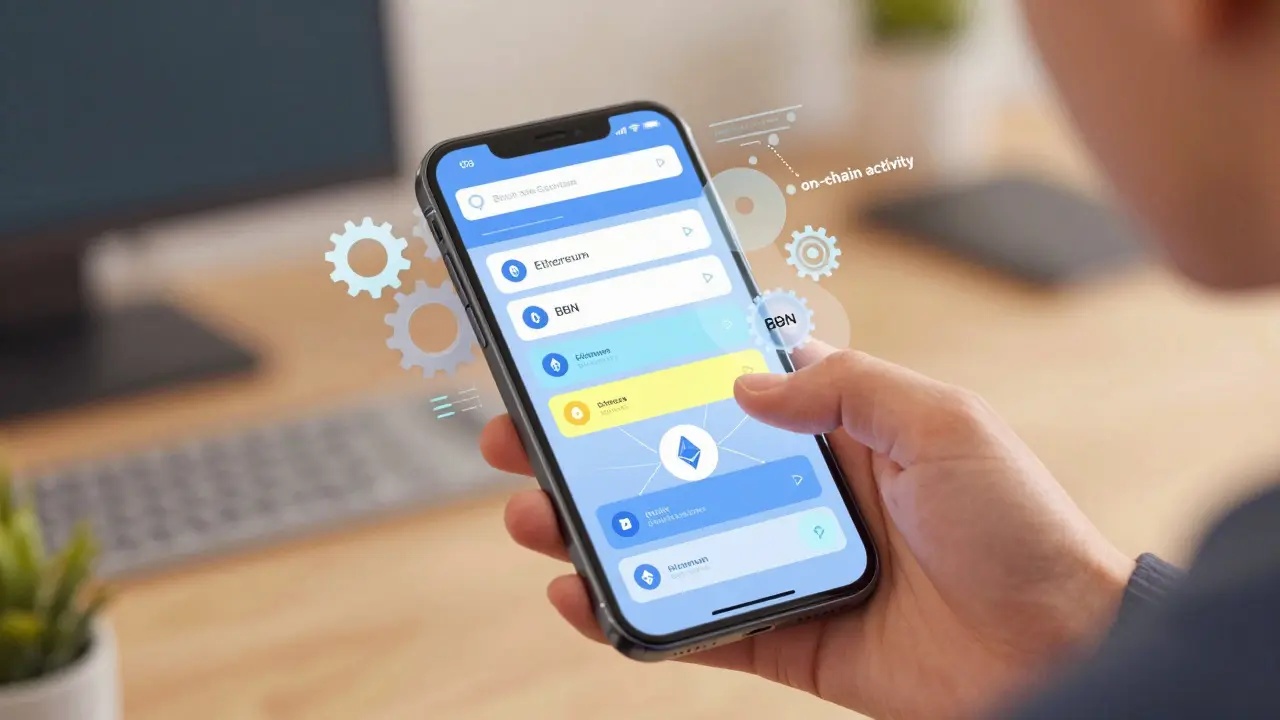
Current Reward Mechanisms: Beyond the Initial Drop
Even if you missed the initial snapshot, HyperGraph has introduced ongoing incentive programs. These are not traditional airdrops but rather yield farming and liquidity mining opportunities. Understanding these can help you earn HYPE-like Rewards similar to the Hyperliquid model, these are continuous emissions distributed to active users and liquidity providers. equivalents within the ecosystem.
The current model focuses on three main areas:
- Liquidity Provision: By adding liquidity to HyperGraph-supported pairs on decentralized exchanges (DEXs), you earn trading fees and potentially bonus tokens. This is riskier due to impermanent loss but offers higher returns.
- Staking: Locking up your existing assets in the HyperGraph staking contract allows you to earn passive income. This supports network security and reduces circulating supply.
- Governance Participation: Active voters in the DAO often receive small periodic bonuses. This encourages decentralization and ensures that decisions reflect the community’s will.
These mechanisms are designed to reward long-term believers rather than quick-flippers. If you are looking for a get-rich-quick scheme, this might not be it. But if you want steady exposure to the growth of cross-chain infrastructure, these methods are viable.
Comparison: HyperGraph vs. Other Major Airdrops
To put HyperGraph’s situation in perspective, let’s compare it to other notable projects that had similar timelines or models. This helps set realistic expectations.
| Project | Airdrop Type | Eligibility Criteria | Status in 2026 |
|---|---|---|---|
| HyperGraph | Points/Loyalty | On-chain activity, bridge usage | Ongoing rewards via DAO |
| Hyperliquid | Genesis Snapshot | Trading volume, points accumulation | Completed; continuous emissions |
| LayerZero | Phase-based | Cross-chain messaging usage | Multiple phases completed |
| Arbitrum | Single Snapshot | Early user activity on L2 | One-time event closed |
As you can see, HyperGraph follows a hybrid model. It is not as straightforward as Arbitrum’s one-and-done approach, nor is it as purely trading-focused as Hyperliquid. Its focus on data infrastructure means that utility drives value, which is why their rewards are tied to actual network usage.
Pitfalls to Avoid: Scams and Fake Claims
Because the official claim process is fragmented, scammers thrive in this space. With the date being August 2026, several fake "HyperGraph Claim" sites have popped up. Here is how to protect yourself:
- Never Share Your Seed Phrase: No legitimate airdrop requires your 12-24 word recovery phrase. If a site asks for it, close the tab immediately.
- Verify URLs: Always bookmark the official HyperGraph website. Typosquatting domains (like hypergraph-airdrop.com instead of hypergraph.network) are common traps.
- Check Contract Addresses: Before approving any transaction, copy the contract address and paste it into a reputable scanner like Revoke.cash or DeBank. Ensure it matches the official addresses listed on CoinMarketCap or CoinGecko.
- Beware of High Gas Fees: Legitimate airdrops usually have low or subsidized gas fees. If a claim requires an unusually high ETH or BNB payment, it is likely a scam.
Patience is your best defense. If something feels off, wait. Official announcements always come through verified social media channels first.
Future Outlook: What Comes Next for HGT?
Looking ahead, HyperGraph is focusing on expanding its interoperability layer. They are integrating with newer Layer-2 solutions and enhancing their data availability modules. For users, this means more opportunities to earn rewards by providing data validation services or running light nodes.
The team has also hinted at a potential secondary token distribution for developers who build applications on top of their SDK. If you are a coder, this could be your entry point. Non-developers should focus on maximizing their liquidity and staking positions to benefit from the network’s growing adoption.
In summary, while the classic "free token" airdrop era for HyperGraph may be over, the doors to earning are still open. It requires more work-checking dashboards, participating in governance, and managing liquidity-but the rewards are sustainable. Don’t rely on luck; rely on activity.
Is the HyperGraph (HGT) airdrop still active in 2026?
The initial one-time airdrop is largely complete. However, HyperGraph continues to distribute rewards through its loyalty program, staking incentives, and governance participation. Users with historical on-chain activity may still qualify for residual points or future drops based on their engagement level.
Did I miss out if I only held HGT tokens without using the bridge?
Possibly. HyperGraph shifted its eligibility criteria from static token holding to dynamic on-chain activity. Simply holding the token may not grant significant rewards compared to users who actively bridged assets, provided liquidity, or participated in governance votes during the snapshot periods.
How do I check my HyperGraph points balance?
Connect your eligible wallet to the official HyperGraph dashboard. Look for sections labeled "Rewards," "Points," or "Loyalty." If you have qualifying activity, your balance should appear there. If not, review your transaction history on Etherscan to ensure you interacted with the correct smart contracts.
Are there any risks associated with claiming HyperGraph rewards?
The primary risk is encountering phishing scams. Always verify the URL and contract addresses before signing any transactions. Additionally, providing liquidity carries the risk of impermanent loss, so assess your risk tolerance before committing funds to yield farming pools.
What is the difference between HyperGraph and Hyperliquid?
They are completely different projects. HyperGraph focuses on cross-chain data interoperability and infrastructure, while Hyperliquid is a perpetual exchange platform. Their tokens (HGT vs. HYPE), ecosystems, and airdrop mechanics are distinct and should not be confused.

Comments
amy miranda
Oh, spare me the corporate buzzwords about 'long-term sustainability' and 'loyalty models.' It is just a fancy way of saying they burned our tokens to inflate their own bags while we got nothing but gas fees and heartburn. I checked my wallet three times because I am an idiot who trusts whitepapers, and sure enough, zero points. Zero. They call it a pivot; I call it a rug pull with extra steps.
Subhash Kashyap Dm
the centralization narrative is obvious here. burning tokens reduces supply artificially to manipulate price action while the dev team holds warm wallets. check the multisig transactions on etherscan. they are not rewarding activity they are rewarding compliance with their new governance structure which is essentially a dictatorship disguised as a dao. typical web3 grift.
Lorraine Surringer
i feel like such a fool for bridging assets back in 2024 thinking i was being smart. now im staring at a dashboard that says 'no eligible activity' even though i used the bridge five times. why does it always have to be so complicated? cant they just give us the damn tokens already?
Ed Wallace
It is fascinating how the definition of 'value' shifts from static holding to dynamic participation. In a way, this mirrors the broader societal shift from ownership to access. You no longer own the asset; you lease your attention and transaction history in exchange for potential future utility. Whether this is liberation or exploitation depends entirely on whether the network actually achieves interoperability or remains a siloed experiment.
Billy Cunningham
just keep checking the discord every hour 🕒👀
Eric Zehr
Don't let the frustration cloud your judgment, Lorraine. While the initial burn was painful, the shift to a loyalty model ensures that only dedicated users benefit long-term. This filters out the speculators and builds a stronger community foundation. If you engaged with the protocol, there is still value to be extracted through the ongoing yield farming opportunities. Stay focused on the fundamentals.
SUBHAM CHOUDHURY
You can still make it work if you look at the liquidity pools carefully. The impermanent loss is real but the bonus tokens might offset it if you pick the right pairs. Just don't rush into it without reading the docs again. We have all been there when we first started interacting with cross-chain protocols. Keep learning and stay positive.
Ed Mitchell
The entire concept of decentralized governance is a facade designed to obscure the true beneficiaries of the tokenomics restructuring. By forcing users to vote to unlock rewards, they create a paper trail of consent that shields them from regulatory scrutiny. Observe the timing of these announcements relative to major market dips. It is not coincidence; it is coordination.
Pernelia Wahkan
I spent hours digging through Etherscan trying to find those specific contract interactions mentioned in the guide. It feels like hunting for a needle in a haystack made of other needles. The documentation is sparse and the interface is clunky. I wonder if the developers actually test their own dashboards before pushing updates or if they just assume everyone has infinite patience.
Joshua Hofford
Hey, I remember when we were all just happy to see any cross-chain solution working properly. Now we are analyzing point balances like stock tickers. It is wild how fast the culture changes. But hey, if you put in the work and provide liquidity, you are part of the infrastructure. That is something to be proud of, regardless of the immediate token payout.
Joy Kwant
It is morally bankrupt to take user funds, burn them, and then demand more engagement for scraps. Where is the accountability? Where is the transparency? They treat users like data points to be mined rather than stakeholders to be respected. Until they address this fundamental disrespect, their ecosystem is built on sand.
Marcia Albert
I just sit back and watch the drama unfold. Some people get rich, some get ruined, and most just get confused. I bridged once, forgot about it, and now I am just curious to see if anything shows up. No stress, no hype, just vibes.
Emma Smith
the quantum entanglement of our digital identities with these smart contracts creates a paradox where agency is both expanded and restricted simultaneously. we think we are voting but really we are being voted upon by the algorithmic determinism of the protocol design. scary stuff huh