
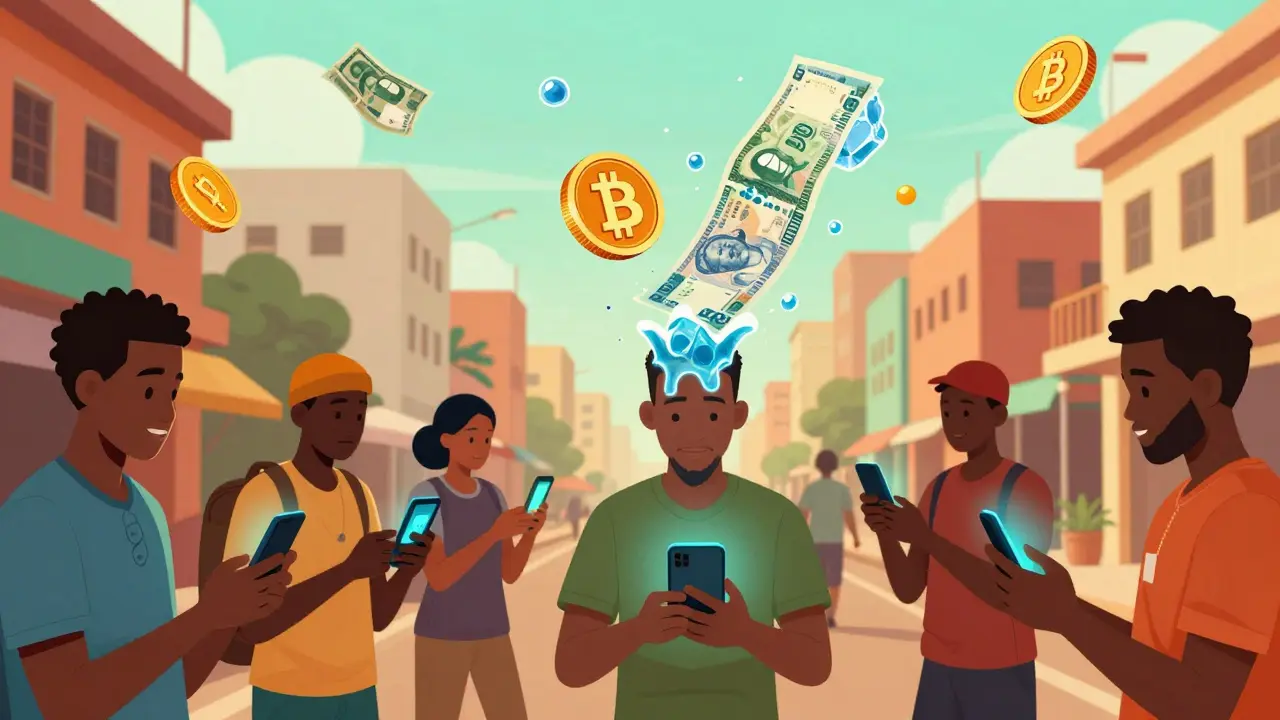
The Nigerian Naira has lost more than 75% of its value against the US dollar since 2016. With inflation hovering around 24% in recent years, holding cash feels like watching ice melt in your hand. This economic pressure didn't just push people to save harder; it pushed them to find new ways to store value. Enter Peer-to-Peer (P2P) crypto trading, a decentralized system that lets Nigerians buy and sell digital assets directly using local payment methods, bypassing traditional banks entirely.
In 2021, the Central Bank of Nigeria (CBN) tried to stop this trend by banning banks from servicing crypto businesses. But you can’t ban what people desperately need. Instead of disappearing, the market went underground and then exploded. Today, Nigeria ranks second globally in cryptocurrency adoption. As of late 2025 and moving into 2026, the landscape has shifted again-not with bans, but with regulation. The passage of the Investments and Securities Act (ISA 2025) brought clarity, turning a wild west of unregulated exchanges into a structured, SEC-supervised ecosystem.
Why P2P Dominates the Nigerian Market
You might wonder why Nigerians prefer P2P over standard exchange deposits. It comes down to three main drivers: financial inclusion, remittance costs, and inflation hedging.
- Financial Inclusion: Approximately 36% of Nigerian adults are unbanked. Many others are underbanked, meaning they have accounts but lack access to credit or reliable international transfer services. P2P platforms allow anyone with a smartphone and a bank account-even a basic one-to participate in the global economy.
- Cheaper Remittances: Sending money home traditionally cost up to 8% per transaction via Western Union or MoneyGram. P2P crypto transfers often cost less than 1%, making it a lifeline for families separated by borders.
- Protecting Savings: When the Naira depreciates rapidly, converting savings into stablecoins like USDT or Bitcoin acts as a shield. It’s not about getting rich quick; it’s about keeping your purchasing power intact.
The P2P segment now constitutes roughly 68% of all crypto activity in Nigeria, far higher than the global average of 29%. This isn't a hobbyist market; it's a survival mechanism for millions.
How the ISA 2025 Changed the Game
For years, traders operated in fear. Would their bank freeze their account tomorrow? Would the platform vanish overnight? The Investments and Securities Act (ISA 2025) changed this dynamic fundamentally. Passed in early 2025, this law established the Securities and Exchange Commission (SEC) as the primary regulator for digital assets in Nigeria.
This shift did two critical things:
- Legitimized Banks' Role: While the CBN had previously reversed its ban in 2023, the ISA 2025 provided the legal backbone for banks to confidently service licensed crypto businesses without fear of regulatory retaliation.
- Reduced Fraud: According to Dr. Amina Bello, Chief Economist at ChainUp Africa, scam incidents dropped by 63% compared to Q4 2024. Why? Because platforms now must undergo rigorous vetting to get a license.
However, this clarity came with a catch: consolidation. Smaller, non-compliant platforms were forced out or acquired. By late 2025, only about 12 platforms operated under provisional licenses, with the SEC expecting 35-40 fully licensed entities by year-end. For users, this means fewer choices but significantly safer ones.
Top P2P Platforms in Nigeria: A Comparative Look
Not all platforms are created equal. Some prioritize speed, others focus on security or educational support. Here is how the major players stack up in the current market.
| Platform | Key Strength | Fees | Security Features | User Rating |
|---|---|---|---|---|
| Binance P2P | Market Leader (45% share), high liquidity | 0.1% taker/maker | Dispute resolution, KYC verification | 4.8/5 |
| Bybit | Local language support (Yoruba, Igbo, Hausa) | Competitive maker/taker fees | Deep banking integration | 4.6/5 |
| YellowCard | Instant Naira deposits/withdrawals | Zero trading fees | 2FA, encrypted wallets, daily updates | 4.5/5 |
| Busha | First SEC-licensed exchange under ISA 2025 | Standard market rates | Multi-factor auth, quarterly audits | 4.4/5 |
| Breet | Fastest payouts (avg. 3 mins) | Low spread | High user satisfaction (97%) | 4.3/5 |
Binance P2P remains the giant in the room. With nearly half the market share, it offers the deepest liquidity, meaning you can usually find a buyer or seller instantly. Its "Naira Direct" feature, launched in August 2025, cut conversion steps from five to two, reducing transaction time by 38%. However, its popularity makes it a target. In March 2025, a 37-hour service disruption affected 28,000 Nigerian users, highlighting the risk of relying on a single dominant platform.
Bybit has carved out a niche by focusing on localization. Offering 24/7 support in Yoruba, Igbo, and Hausa is a game-changer for users who aren't comfortable negotiating trades in English. Shennon Hewa, a crypto trader with eight years of experience, notes that Bybit’s deep integration with Nigerian banking infrastructure gives it a 12-15% performance advantage in local processing speeds.
YellowCard appeals to those who want simplicity. Licensed across 20 African countries, it offers zero trading fees and instant withdrawals. However, be aware of its technical limitations. Stress tests by NairaCompare showed its mobile app crashed during peak hours in 43% of cases. If you trade large volumes during market volatility, this could be a dealbreaker.
Busha is the safe bet for compliance-focused traders. As the first exchange licensed under the new ISA 2025 framework, it prioritizes security over speed. It offers recurring purchases and limit orders, features rarely seen in pure P2P apps. If you are an institutional player or a high-net-worth individual concerned about audit trails, Busha is likely your best option.
The Hidden Risks: Scams, Security, and Glitches
Regulation has helped, but it hasn't eliminated danger. The Economic and Financial Crimes Commission (EFCC) reported that 22% of fraud cases in Q2 2025 involved impersonation of verified sellers. Here is how to protect yourself.
1. The "Verified Seller" Trap
Scammers now create fake profiles that mimic verified merchants. They may even use stolen photos and IDs. Always check the merchant’s history within the platform. If a seller has only been active for a week but claims to have thousands of transactions, walk away. Legitimate high-volume traders have long histories.
2. Disabling Two-Factor Authentication (2FA)
Here is a startling stat: 68% of Nigerian users disable 2FA because of SMS delivery issues. Security researcher Chinedu Okoro warns this creates massive vulnerability points. Do not skip 2FA. If SMS fails, switch to an authenticator app like Google Authenticator or Authy. It is slightly more work to set up, but it prevents hackers from draining your wallet if they get your password.
3. Escrow Freezes
During periods of high regulatory scrutiny, platforms sometimes freeze escrow accounts for compliance checks. Users have reported freezes lasting 72+ hours. To mitigate this, avoid trading extremely large sums in a single transaction. Spread your trades across multiple smaller amounts if possible, and always keep communication logs within the platform’s chat system. Never move conversations to WhatsApp or Telegram, as these chats hold no weight in dispute resolution.
Practical Guide: How to Start Safely
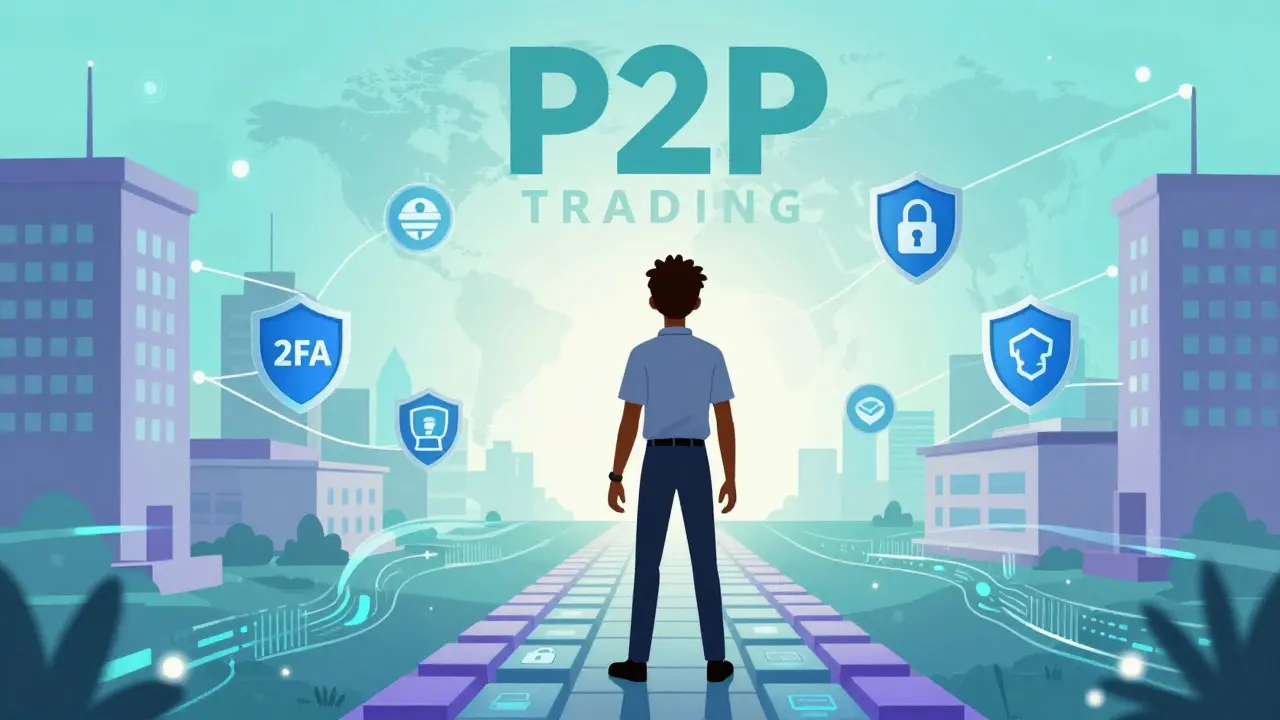
If you are new to P2P trading, the learning curve is moderate. Most beginners need 2-3 hours to complete initial setup and feel confident. Follow these steps to minimize errors.
- Choose Your Platform Wisely: Don't just pick the biggest name. If speed is your priority, try Breet. If you want educational support, YellowCard offers 120+ tutorial videos in local languages. If you want regulatory safety, go with Busha.
- Complete KYC Thoroughly: Identity verification is mandatory under ISA 2025. Ensure your photo matches your ID exactly. Blurry photos or mismatched names cause 37% of account verification delays.
- Start Small: Your first few trades should be small amounts-perhaps ₦5,000 to ₦10,000. This allows you to test the withdrawal process and understand how long it takes for funds to hit your bank account.
- Use the Escrow System: Never release crypto until you see the money in your bank account statement. Screenshots of transfers can be faked. Wait for the actual notification from your bank.
- Monitor Exchange Rates: Rates fluctuate every few seconds. During high volatility, a rate discrepancy of up to 2.7% can occur between when you click "buy" and when the trade executes. Be prepared to cancel and retry if the rate moves against you significantly.
What to Expect in 2026 and Beyond
The outlook for Nigeria’s P2P market is robust. The sector is projected to grow at 27% annually through 2027, potentially reaching $5.1 billion in volume. Several trends will shape the next year:
- Real-Time Monitoring: By December 31, 2025, all platforms were required to implement real-time transaction monitoring systems. This means faster detection of suspicious activity but potentially more frequent temporary holds on unusual transactions.
- Institutional Entry: Dr. Bello predicts a 40-50% increase in institutional participation by 2026. Traditional financial players are entering the space, which will bring better customer service standards and more stable pricing.
- Regional Expansion: Platforms like YellowCard are expanding into other African countries, leveraging their Nigerian operational experience. This cross-border growth will likely lead to more unified fee structures and easier regional transfers.
While risks remain-particularly regarding technological infrastructure in rural areas-the combination of regulatory clarity and strong demand ensures that P2P crypto trading will remain a cornerstone of Nigeria’s financial landscape.
Is P2P crypto trading legal in Nigeria in 2026?
Yes. Following the passage of the Investments and Securities Act (ISA 2025), P2P crypto trading is fully legal and regulated by the Securities and Exchange Commission (SEC). Banks are also permitted to service licensed crypto businesses, removing previous banking restrictions.
Which P2P platform is safest for beginners in Nigeria?
Busha is often recommended for beginners due to being the first SEC-licensed exchange under the new framework, offering strong security audits. Alternatively, YellowCard provides extensive educational resources and tutorials in local languages, helping new users learn safely.
How do I avoid scams on P2P platforms?
Always trade within the platform's chat system, never release crypto until you confirm funds in your bank statement (not just screenshots), enable two-factor authentication (2FA), and stick to merchants with long, verified transaction histories. Avoid communicating with sellers on external apps like WhatsApp.
Why are transaction times slower on some platforms?
Delays can occur due to bank processing times, high network traffic, or regulatory compliance checks. Platforms like Breet specialize in fast payouts (under 3 minutes), while others may take 15-30 minutes. Volatile markets can also cause rate discrepancies, leading users to cancel and restart trades.
Can I use my regular bank account for P2P trades?
Yes. Since the CBN reversed its ban in 2023 and the ISA 2025 was passed, major Nigerian banks allow transactions with licensed P2P platforms. However, ensure you are using a licensed platform to avoid any potential account flags.

Write a comment