
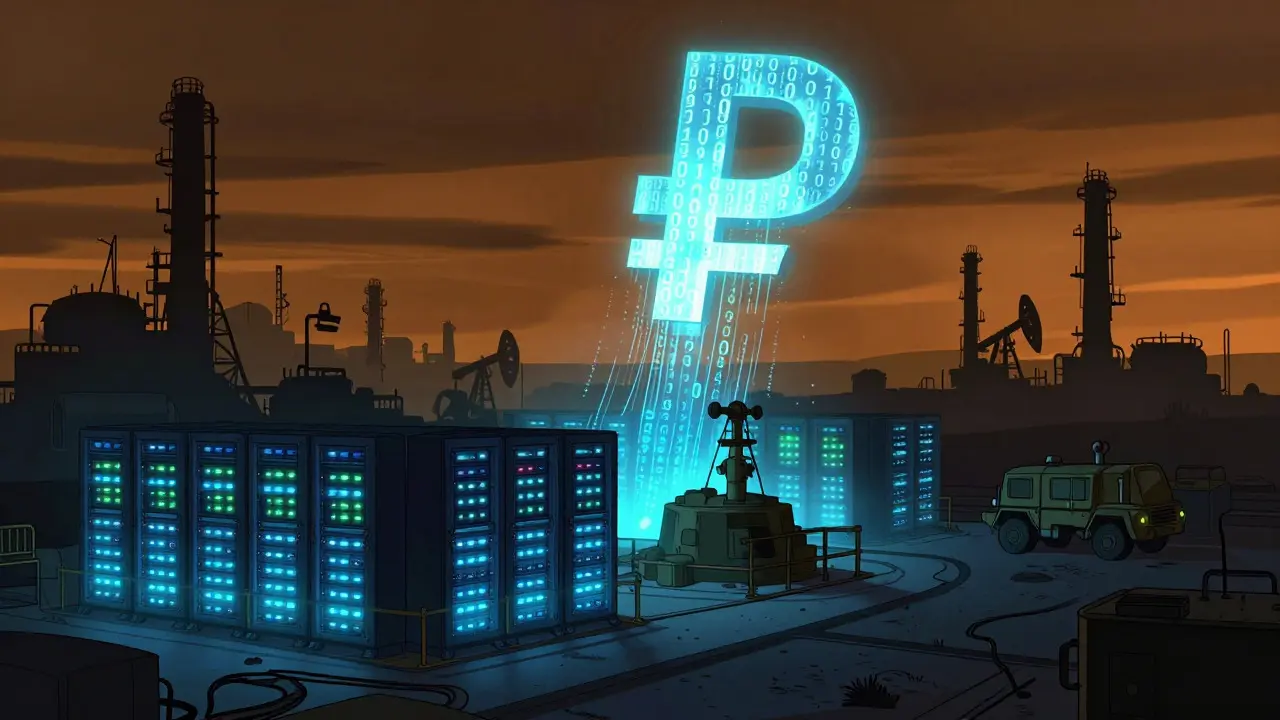
The Shift from Restriction to Weaponization
For years, the narrative around Russia's cryptocurrency policy was defined by hesitation and restriction. Central banks worried about capital flight, and regulators treated digital assets with suspicion. That changed dramatically after the invasion of Ukraine in February 2022. Facing unprecedented Western financial isolation, Moscow quietly pivoted. Instead of banning crypto, it began legalizing mining operations and cross-border crypto payments. This wasn't just a regulatory update; it was a strategic move to build an alternative financial infrastructure capable of operating outside the traditional Western-controlled banking system.
The goal is clear: create a shadow economy that can sustain military procurement and commodity trade despite heavy sanctions. By embracing digital assets as tools of economic warfare, Russia has transformed crypto from a speculative asset class into a critical component of its national security strategy. This shift represents one of the most significant experiments in state-sponsored crypto adoption in modern history.
The A7A5 Stablecoin: A Ruble-Backed Workhorse
At the center of this new ecosystem is the A7A5 stablecoin, a ruble-backed cryptocurrency designed for commercial transactions. Launched in February 2025 by pro-Russian Moldovan oligarch Ilan Shor, A7A5 is issued by Old Vector, a company based in Kyrgyzstan but backed by Russia's state-owned Promsvyazbank (PSB). This structure allows Russian entities to hold value in a digital format that mirrors the ruble while bypassing SWIFT restrictions.
The scale of A7A5’s usage is staggering. From its launch through July 2025, the token facilitated over $51.17 billion in transactions. In its first four months alone, it processed an estimated $9.3 billion. What makes A7A5 particularly effective for sanctions evasion is its transaction pattern. Blockchain analytics reveal distinct business-day activity spikes, indicating systematic use by commercial entities rather than retail investors. These are not day traders; they are companies moving supply chain funds.
| Metric | Value/Detail |
|---|---|
| Total Transaction Volume | Over $51.17 billion (through July 2025) |
| Issuer | Old Vector (Kyrgyzstan-based, PSB-backed) |
| Primary Exchange | Garantex (sanctioned), then Grinex |
| Backing Asset | Russian Ruble |
| Primary Use Case | Cross-border commercial trade and military procurement |
A7A5 proved harder for Western authorities to monitor than conventional dollar-based stablecoins like USDT or USDC because it operates within a more insular network of exchanges. However, its reliance on specific platforms created vulnerabilities that Western intelligence agencies quickly exploited.
Garantex and Grinex: The Exchanges Behind the Curtain
To make A7A5 useful, Russia needed places to trade it. Enter Garantex, a crypto exchange with deep ties to Russian oligarchs. For years, Garantex served as the primary liquidity hub for A7A5 and other sanctioned assets. The US Treasury sanctioned Garantex in 2022, effectively cutting off its access to global fiat rails. But in the world of sanctions evasion, closure often means rebranding.
In 2024, former employees of Garantex launched Grinex, a successor platform explicitly created to bypass sanctions. According to the US Department of the Treasury, Grinex was built specifically to continue the work of its predecessor. It operated on a "fairly small subset" of crypto platforms, many with notable ties to Russia, creating a closed loop designed to avoid Western oversight. This insular ecosystem allowed Russian entities to swap rubles for crypto, move funds across borders, and convert back without touching the US dollar or Eurozone banking systems.
The cat-and-mouse game intensified in August 2025 when the US Treasury sanctioned Grinex. Simultaneously, the UK’s Office of Financial Sanctions Implementation (OFSI) targeted Old Vector and Meer, key players in the Kyrgyzstani crypto network. These actions weren't just about shutting down exchanges; they were aimed at dismantling the operational infrastructure, including individuals linked to Kyrgyz banks used to pay for military goods.
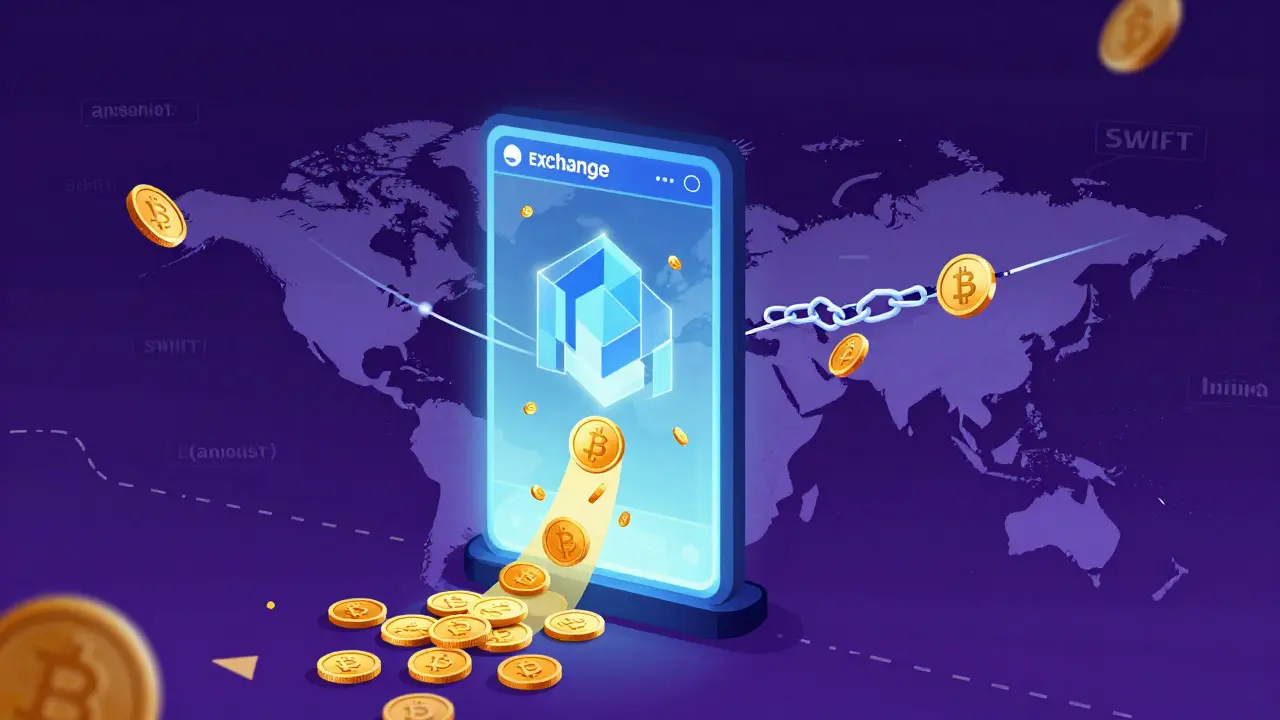
Legalizing Mining: Building the Infrastructure
While stablecoins handle the payments, cryptocurrency mining provides the underlying infrastructure and energy utilization. Russia reportedly operates the world's third-largest virtual currency mining industry. The recent legalization of mining operations signals a commitment to developing self-sufficient payment rails. By encouraging domestic mining, Russia ensures it has the hash rate and technical expertise to maintain control over blockchain networks, even if foreign software providers pull out.
This strategy also helps monetize excess energy capacity. With oil and gas exports restricted, selling electricity via crypto mining becomes a viable revenue stream. More importantly, it creates a domestic pool of miners who can be leveraged to support the broader shadow economy. The US Treasury’s designation of virtual currency mining companies in August 2025 marked the first time such entities were directly targeted, highlighting how central mining has become to Russia’s evasion tactics.
Western Countermeasures: OFAC and Chainalysis
Western governments have responded with swift and comprehensive enforcement. On August 20, 2025, the US Treasury’s Office of Foreign Assets Control (OFAC) designated facilitators of Russian sanctions evasion. Under Secretary for Terrorism and Financial Intelligence Brian E. Nelson stated clearly: "Treasury can and will target those who evade, attempt to evade, or aid the evasion of U.S. sanctions against Russia, as they are helping support Putin's brutal war of choice."
These designations target not only the crypto services themselves but also the human networks supporting them. The sanctions include organizations whose primary mission is facilitating evasion for Russian entities, showing an institutional commitment to circumventing international restrictions. The UK joined forces, sanctioning eight individuals and entities linked to the A7A5 infrastructure, including Luxembourg-based firms and four Kyrgyz entities.
Chainalysis, a leading blockchain analytics firm, has documented what it terms Russia's "shadow crypto economy." This system spans sanctioned exchanges, money laundering services, military procurement networks, and commodity trade. While these networks facilitate high volumes of transfers, Chainalysis emphasizes that the inherent transparency of blockchain technology presents opportunities to identify and disrupt them. Every transaction leaves a trace, allowing authorities to map connections between seemingly unrelated wallets and entities.

Limitations: Why Crypto Isn't a Magic Bullet
Despite the sophisticated infrastructure, experts argue that cryptocurrency has significant limitations as a tool for large-scale sanctions evasion. The Bitcoin Policy Institute argues that Bitcoin is "ill-suited to help Russia evade sanctions" because it is "far too small to replace the dollar and the euro as a trade-currency." Russia's annual pre-war exports totaled approximately $400 billion, representing around 50% of Bitcoin's total market capitalization. Trying to process hundreds of billions in commodity trades through a volatile asset like Bitcoin is impractical.
This is why Russia relies heavily on stablecoins like A7A5 rather than pure cryptocurrencies. Stablecoins offer price stability, which is essential for long-term contracts and military procurement. However, even stablecoins face challenges. Their effectiveness depends on liquidity pools and trusted counterparties, both of which are shrinking under pressure from coordinated Western sanctions. Academic research indicates that while Russia, North Korea, and Venezuela all leverage crypto for evasion, none have achieved complete financial independence. They remain constrained by market size limitations, regulatory countermeasures, and the traceability of blockchain transactions.
The Future of the Shadow Economy
The emergence of new retail-focused offerings suggests Russia is trying to expand beyond institutional use. The ability to purchase A7A5 tokens using PSB bank cards, advertised directly on the A7A5 website, indicates an attempt to integrate crypto into everyday commerce. If successful, this could deepen public reliance on the shadow economy, making it harder to unwind even if political circumstances change.
However, the ongoing coordination between US and UK authorities demonstrates that the window for easy evasion is closing. The transparency of blockchain, once seen as a shield for anonymity, is now a sword for enforcement. As Russia continues to operationalize alternative payment rails through legalized mining and stablecoin systems, the effectiveness of these tools remains in question. They provide a lifeline, but not a cure, for a economy under siege.
What is the A7A5 stablecoin?
A7A5 is a ruble-backed cryptocurrency launched in February 2025 by Ilan Shor. It is issued by Old Vector, a Kyrgyzstan-based company backed by Russia's state-owned Promsvyazbank. A7A5 is primarily used by Russian commercial entities to conduct cross-border transactions and evade Western sanctions, having processed over $51 billion in transactions by mid-2025.
Why did the US sanction Grinex?
The US sanctioned Grinex in August 2025 because it was created by former employees of the sanctioned exchange Garantex specifically to bypass US sanctions. Grinex became a key platform for trading the A7A5 stablecoin and facilitating illicit flows of funds for Russian military procurement and commodity trade.
Is cryptocurrency effective for Russia to evade sanctions?
It is partially effective but limited. While crypto allows Russia to bypass SWIFT and move funds through shadow networks, major cryptocurrencies like Bitcoin are too volatile and small in market cap to replace the dollar for large-scale trade. Stablecoins like A7A5 are more useful but are increasingly targeted by Western sanctions and blockchain analytics.
What role does mining play in Russia's crypto strategy?
Mining provides the underlying infrastructure and energy utilization for Russia's crypto ecosystem. By legalizing and expanding mining, Russia maintains technical control over blockchain networks and monetizes excess energy capacity. The US recently designated mining companies as part of its sanctions efforts, recognizing their importance to the shadow economy.
How do Western governments track crypto sanctions evasion?
Western governments use blockchain analytics firms like Chainalysis to trace transactions. Despite the perception of anonymity, blockchain records are transparent. Authorities analyze transaction patterns, link wallets to known entities, and identify clusters of activity associated with sanctioned exchanges like Garantex and Grinex.

Write a comment