
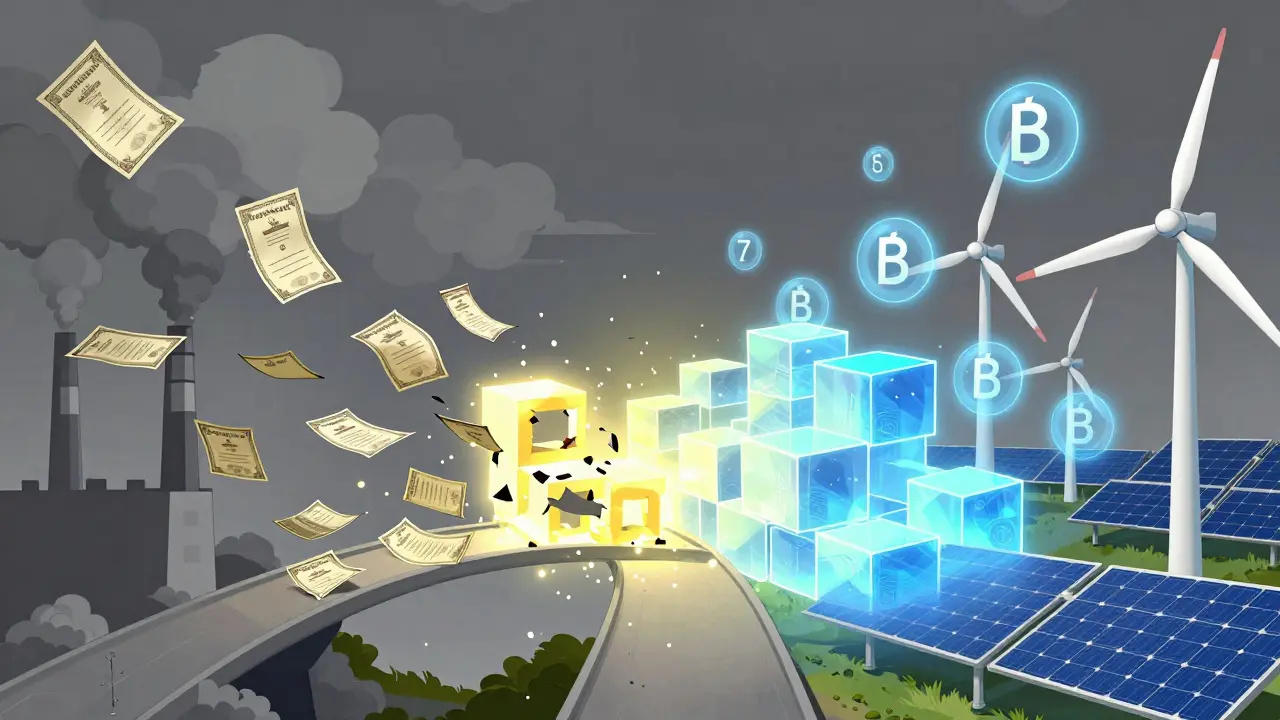
The energy grid we rely on today is a mix of everything. When you flip a switch, your power could come from a coal plant, a solar farm, or a dam miles away. This makes it impossible to know exactly where your electricity comes from just by looking at the meter. For years, businesses trying to claim they are running on green power relied on paper certificates called Renewable Energy Credits, also known as RECs. These certificates represent proof that one megawatt-hour of electricity was generated from renewable sources. However, managing these credits manually has always been messy. Errors, fraud, and slow paperwork were common issues until distributed ledger technology arrived to clean up the process.
Why Traditional Systems Fail
In the past, buying a renewable energy certificate meant dealing with multiple middlemen. You'd have an issuer creating the document, brokers moving it around, and auditors checking if the math adds up. According to analysis by the Energy Web Foundation, traditional transaction costs often ate up about 5 percent of a certificate's value just in fees. On top of that, the process took weeks or sometimes months to settle.
The biggest risk was double-counting. In a centralized database, it's technically possible for a glitch or bad actors to let two different companies claim the same batch of green energy attributes. This undermines the whole point of the market because the "green" label loses its meaning. By 2023, the International Renewable Energy Agency noted an estimated error rate of 3-5% in legacy systems. That means out of every hundred units of clean energy sold, a few were effectively counterfeit.
Blockchain Solves the Trust Gap
Blockchain technology functions as a public record book that no single person controls. It allows data to be stored across a network of computers rather than in one central server. When applied to energy, this creates a permanent, unchangeable history of who generated the power and who claimed the right to call it "green."
Here is how it works in practice:
- Generation: A smart meter at a wind turbine records production in real-time.
- Tokenization: That physical energy is instantly converted into a digital token on the chain.
- Trade: The owner sells the token to a buyer through a peer-to-peer marketplace.
- Retirement: Once used, the certificate is retired on the ledger so no one else can buy it.
This system eliminates the need for brokers to move documents back and forth. Instead of waiting 45 days for payment and confirmation, a platform like Power Ledger processed transactions in roughly 15 seconds. The cryptographic hashing algorithms ensure that once a block is sealed, the data inside cannot be altered without everyone in the network noticing.
| Feature | Traditional System | Blockchain System |
|---|---|---|
| Transaction Cost | ~5% of value | ~1-2% of value |
| Settlement Time | Days to Weeks | Seconds to Minutes |
| Error/Fraud Risk | 3-5% | Near Zero |
| Transparency | Limited to audited parties | Publicly Verifiable |
Key Players in the Market
While many projects started as pilots around 2017, a few leaders have emerged to handle large-scale operations. Two names dominate the conversation currently.
Energy Web Foundation (EWF): This organization launched the Energy Web Chain in 2019 specifically designed for energy applications. It operates as a public proof-of-stake blockchain supporting standard token types. By late 2024, their integration with international standards allowed cross-border trading of certificates verified in real-time.
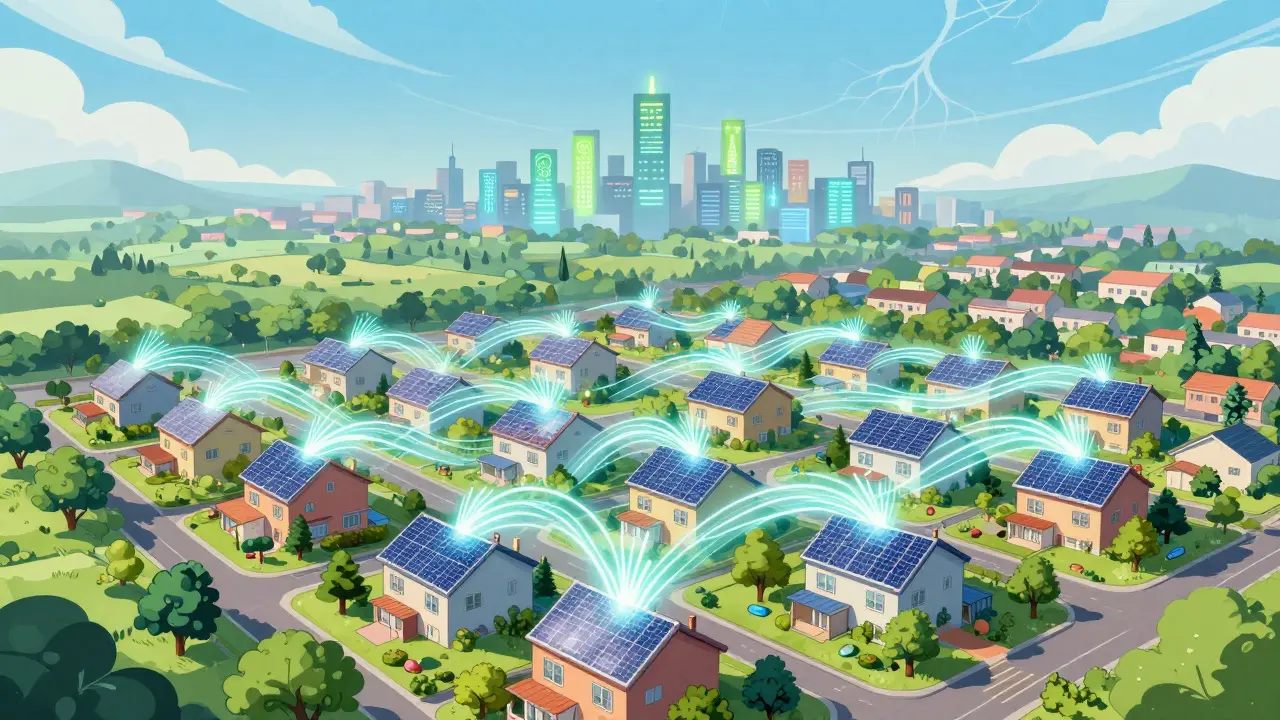
Power Ledger: Founded in Australia, this company focuses heavily on peer-to-peer energy trading. Their implementation in regions like the Brooklyn Microgrid saw hundreds of households trade gigawatt-hours of solar power. In 2023 alone, their Australian setup processed over 1.2 million transactions without a single recorded instance of fraud. This stands in stark contrast to the older registry models managed by organizations like the Center for Resource Solutions.
The Role of Smart Meters and IoT
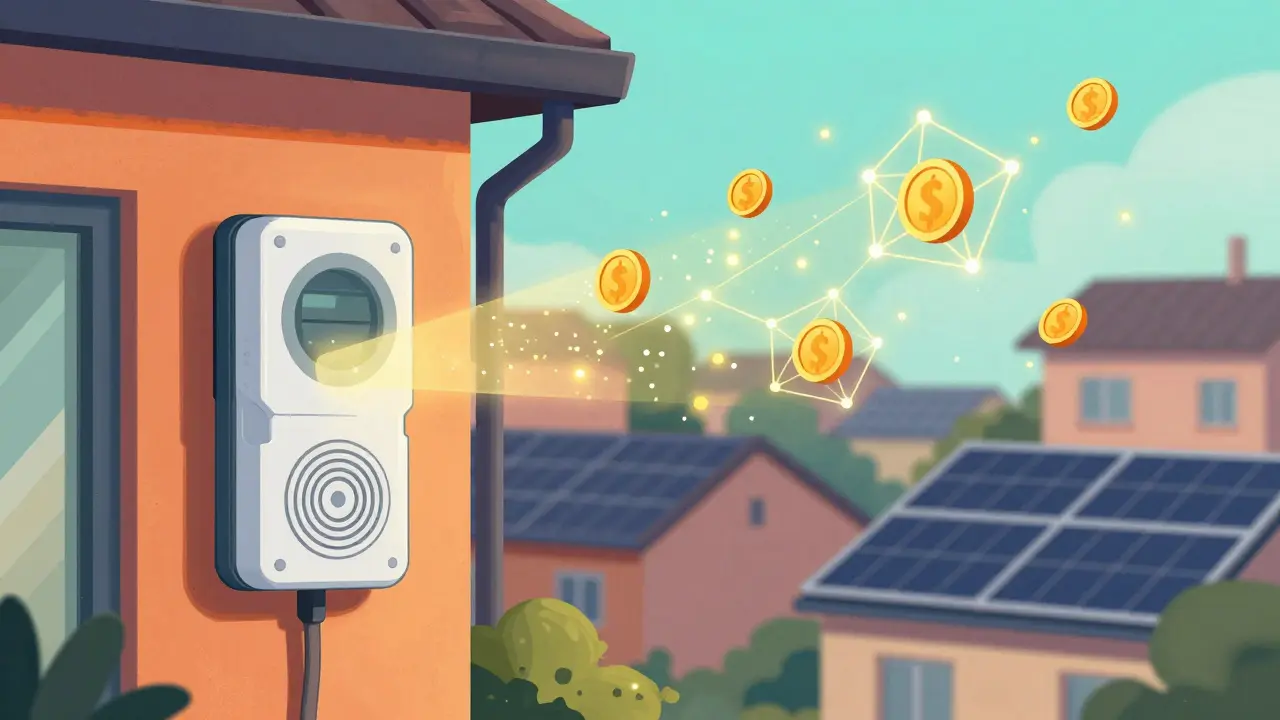
You can't have a fully automated energy credit system without reliable data coming from the source. This is where Smart Meters play a critical role. These devices send consumption and generation data automatically. However, connecting them securely to a blockchain requires specific protocols.
In Germany, a project analyzing microgrids found that integrating these meters reduced administrative processing time by 70%. The challenge lies in the hardware itself. Many older grids still rely on analog meters that require manual reading, which introduces the human error element back into the equation. For a blockchain system to work seamlessly, the physical infrastructure needs to update alongside the software layer.
In some developing regions, this gap has caused issues. A project in Kenya had high expectations for mobile-based verification, but over 60% of intended users couldn't complete transactions because they lacked smartphone literacy or consistent internet access. Technology is only useful if the people it serves can actually reach it.
Financial Impact and ROI
Is it worth the investment? Companies usually spend between $500,000 and $2 million to integrate enterprise-level blockchain solutions initially. While that sounds steep, the return on investment typically appears within 18 to 24 months thanks to savings on administrative labor and reduced fraud losses.
Corporate interest has surged. Deloitte reported that 68 of the Fortune 100 companies were using these systems for sustainability reporting by 2024. As global regulations tighten regarding environmental claims, having an immutable audit trail becomes more valuable than saving pennies on transaction fees. It acts as insurance against greenwashing accusations.
For individual users, the savings come from selling excess generation. In Perth, Australia, users reported receiving payments for their excess solar generation in 24 hours instead of the usual 45-day cycle. Cash flow matters when you are trying to recoup the cost of rooftop panels.
Regulatory Landscape and Standards
Technology moves faster than laws. One major hurdle in 2025 was ensuring that a blockchain token is legally recognized as a valid certificate. The European Union updated its Renewable Energy Directive in 2023 to explicitly recognize blockchain-verified Guarantees of Origin. This gave legal certainty to operators in Europe.
In the US, the picture is less uniform. Eighteen states had established pilot programs by Q1 2024, but federal standardization remains absent. This fragmentation can lead to interoperability issues where a token issued in California might not transfer easily to a buyer in New York unless the underlying chains talk to each other. The Energy Web Foundation's roadmap aims to solve this with universal bridges planned for later in 2026.
Standardization is also key for carbon tracking. As markets evolve, they aren't just selling energy; they are selling carbon benefits attached to that energy. Newer protocols scheduled for 2025 implementation focus on co-benefit tracking, allowing a single token to prove both renewable origin and carbon avoidance simultaneously.
Challenges Moving Forward
Despite the optimism, barriers remain. Interoperability is the top concern. Currently, there are over 12 competing tokenization standards in use, risking a scenario where new digital silos replace old physical ones. If a utility company builds on one proprietary chain and a customer uses another, they can't transact.
Furthermore, there is the question of quantum computing. Current encryption standards protecting ledgers could theoretically be broken by powerful quantum machines in the future. Organizations like the Energy Web Foundation have already begun roadmaps for quantum-resistant upgrades by 2026 to future-proof the ledger before those computing powers emerge.
Finally, user experience remains a friction point. Platforms averaging a 4.2 out of 5-star rating still face complaints about a steep learning curve for non-technical users. As the industry matures, the software needs to look less like a developer tool and more like a standard banking app to achieve mass adoption.
The Path Ahead
We are looking at a sector shifting from niche experiments to core infrastructure. Gartner predicts that by 2026, three or four dominant platforms will control the majority of the market. Consolidation helps simplify the choice for buyers. Long-term assessments indicate near-universal adoption among major energy markets by 2030.
If you are looking to enter this space now, the landscape offers distinct options. Large corporations prefer robust, compliant chains like the Energy Web Chain for reporting accuracy. Smaller cooperatives or residential groups might lean toward localized platforms offering easier onboarding. Regardless of the path, the transition from paper certificates to verifiable digital assets is the defining trend for the next decade of the energy sector.
What exactly is a Renewable Energy Credit?
A Renewable Energy Certificate (REC) is an electronic certificate representing one megawatt-hour (MWh) of electricity generated from a renewable resource like solar or wind. It allows a consumer to claim the environmental benefits of that generation even if the physical electrons consumed came from the general grid.
Does using blockchain eliminate fraud completely?
It significantly reduces the risk. Because the ledger is immutable, data cannot be changed retroactively, preventing the double-counting errors seen in traditional databases where the same certificate was claimed by multiple parties.
Which blockchain is best for energy tokens?
The Energy Web Chain is widely considered a leader due to its open-source nature and support for energy-specific standards like ERC-20 tokens. However, private permissioned blockchains are also common for utility providers requiring strict privacy controls.
Can individuals sell their own energy credits?
Yes, through platforms like Power Ledger, prosumers (those who produce and consume) can tokenize excess energy from solar panels and sell it directly to neighbors or larger buyers, settling in digital currencies or fiat within minutes.
Are blockchain RECs legally binding?
In jurisdictions like the EU, yes. Regulatory amendments in 2023 recognized blockchain-verified Guarantees of Origin as compliant for corporate reporting, though rules vary by region in North America and Asia.

Write a comment