

Imagine writing code that holds millions of dollars, deploying it to a public network, and realizing too late that anyone can drain the funds. This isn't a hypothetical nightmare for developers in 2026; it is the reality behind billions in lost assets. Since the infamous DAO hack in 2016, smart contract security has evolved from an afterthought into the most critical aspect of blockchain development. In 2024 alone, exploited vulnerabilities cost projects over $3.2 billion, with decentralized finance (DeFi) protocols bearing the brunt of these attacks. If you are building on Ethereum or any EVM-compatible chain, understanding these flaws is not optional-it is survival.
The High Cost of Ignoring Security
The stakes have never been higher. According to Immunefi’s 2025 Blockchain Hacking Report, cumulative losses from January 2020 through mid-2025 reached staggering heights. The OWASP Foundation’s 2025 Smart Contract Top 10 report highlights that access control failures remain the single biggest threat, responsible for nearly $953 million in damages in 2024. These aren’t just numbers; they represent failed projects, lost user trust, and regulatory scrutiny. For developers, the lesson is clear: a single line of unchecked code can wipe out years of work. The industry has shifted from "move fast and break things" to "verify everything before you deploy."
Top Vulnerabilities Threatening Your Code
To protect your project, you need to know what attackers are targeting. The OWASP Smart Contract Top 10 (2025) categorizes these threats, but three stand out as the most prevalent and damaging in the current landscape.
Access Control Failures
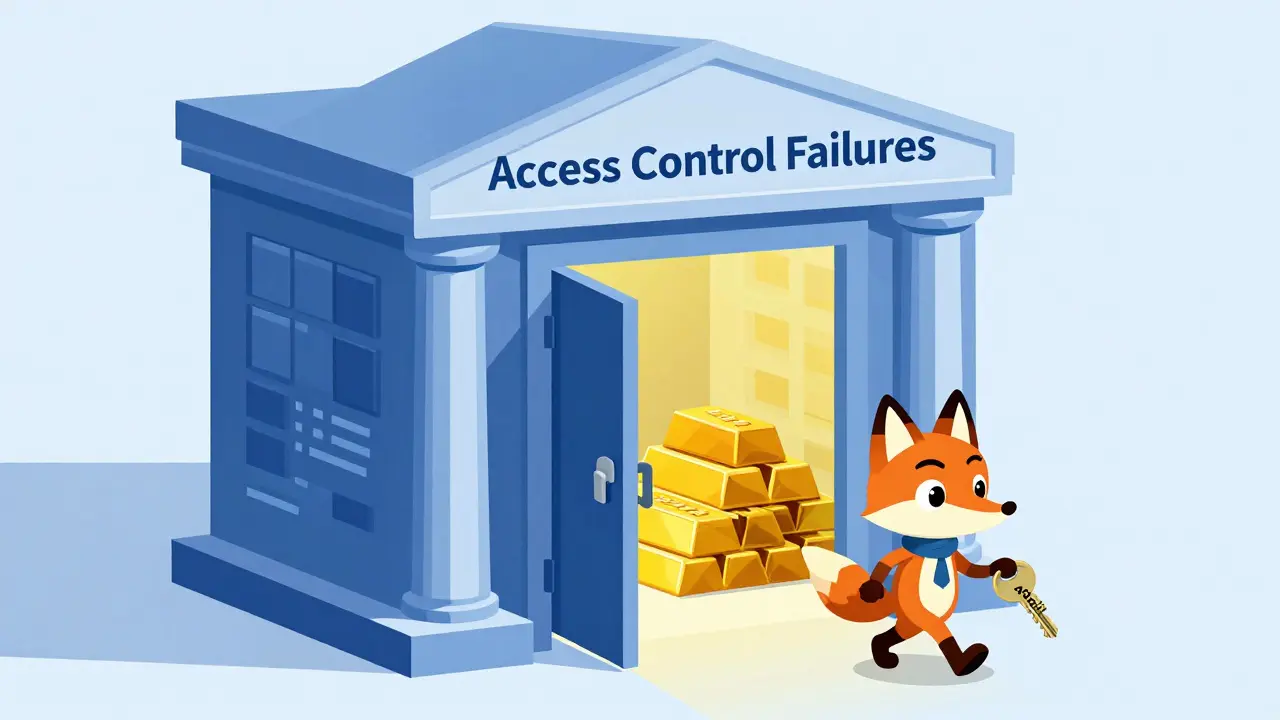
This is the number one cause of smart contract hacks. It happens when a contract fails to properly restrict who can call certain functions. Imagine leaving the back door of a bank unlocked because you forgot to set the lock. In 2023, the 88mph protocol suffered a massive exploit due to a function initialization bug that allowed attackers to reinitialize contracts and gain admin privileges. Dr. Christian Reitwießner, Solidity Language Lead at the Ethereum Foundation, noted in March 2025 that poorly implemented `onlyOwner` modifiers remain the biggest threat. Always use established libraries like OpenZeppelin’s AccessControl instead of rolling your own permission systems.
Price Oracle Manipulation
DeFi protocols rely on external data feeds to determine asset prices. Attackers exploit weak oracle implementations by manipulating the price within a single transaction block. Chainlink’s 2025 Oracle Security Report documented 37 successful attacks in 2024, causing over $412 million in losses. A common mistake is relying on a single DEX pool price, which can be skewed by large trades. Use time-weighted average prices (TWAP) and multiple oracle sources to mitigate this risk. As Dr. Ari Juels of Chainlink Labs stated, this requires multi-layered defense mechanisms.
Reentrancy Attacks
Famous for the 2016 DAO hack, reentrancy occurs when a contract calls an external contract, which then calls back into the original contract before the first execution is complete. While modern Solidity versions have improved safeguards, reentrancy still caused $187 million in losses in 2024. The classic mitigation is the "Checks-Effects-Interactions" pattern: update internal state before making external calls. However, new variants involving flash loans make this even more dangerous, allowing attackers to drain entire protocols in one go.
| Vulnerability Type | Estimated Losses (2024) | Primary Cause | Mitigation Strategy |
|---|---|---|---|
| Access Control | $953.2 million | Missing permission checks | Use OpenZeppelin AccessControl |
| Flash Loan Abuse | $382.1 million | Atomic transaction manipulation | Validate invariants post-loan |
| Oracle Manipulation | $412.7 million | Single-source price feeds | Use TWAP and multiple oracles |
| Reentrancy | $187.3 million | External call callbacks | Checks-Effects-Interactions pattern |
The Rise of Flash Loan Exploits
Flash loans themselves are not vulnerabilities-they are a powerful DeFi primitive. However, they have become a primary weapon for attackers. In 2024, there were 42 incidents involving flash loan abuse, resulting in $382 million in damages. Attackers borrow millions without collateral, manipulate market conditions (like oracle prices), execute an exploit, and repay the loan-all in one transaction. Because the transaction is atomic, if any step fails, the entire process reverts, leaving no trace. This makes detection difficult. To defend against this, ensure your contract logic validates all critical invariants after external interactions, not just before.
Unchecked External Calls and Legacy Issues
Developers often assume that calling another trusted contract is safe. Resonance Security’s 2025 report notes that Unchecked External Calls climbed to #6 in the OWASP rankings due to 19 successful exploits in 2024. If the external call fails or reverts unexpectedly, it can leave your contract in an inconsistent state. Always check the return value of external calls. Additionally, while Integer Overflow and Underflow issues have decreased significantly thanks to Solidity 0.8.0+ automatic checks, legacy contracts still face risks. Ensure you are using the latest compiler version (Solidity 0.8.30 as of May 2025 includes enhanced runtime checks) to avoid these basic arithmetic errors.
Tools and Best Practices for Secure Development
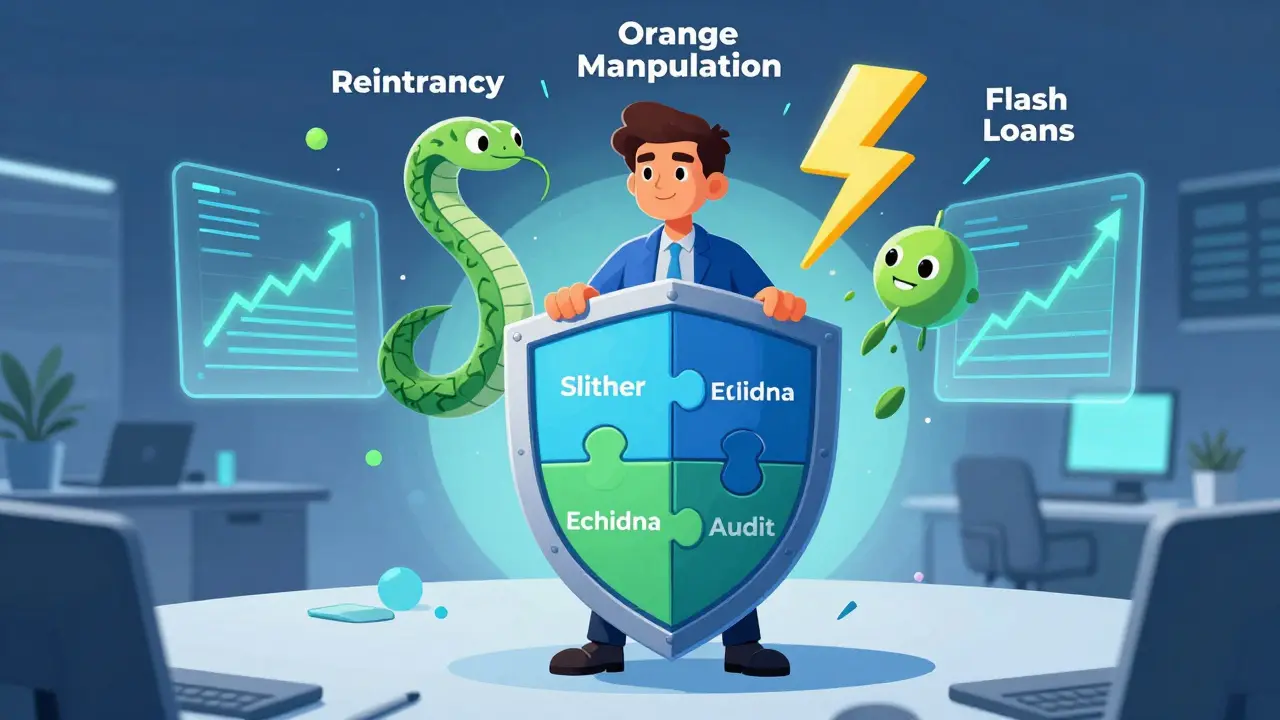
You cannot secure smart contracts with intuition alone. You need robust tooling. QuillAudit’s 2025 Tooling Report shows that Slither is used by 68% of audited projects, detecting 83% of common vulnerabilities during static analysis. Mythril and Echidna are also widely adopted for symbolic execution and fuzzing. Here is a practical checklist for your development workflow:
- Static Analysis: Run Slither on every commit to catch obvious bugs early.
- Fuzzing: Use Echidna to test edge cases in your business logic.
- Formal Verification: For high-value contracts, consider formal methods to mathematically prove correctness.
- Audits: Never skip third-party audits. 89% of new DeFi protocols now conduct formal audits before launch.
- Bug Bounties: List your protocol on platforms like Immunefi to incentivize white-hat hackers to find issues.
Learning curve aside, security is a mindset. Consensys’ 2025 Developer Survey found that 74% of developers consider security the most challenging part of their job. Invest time in studying past exploits. Read post-mortems from hacks like Hundred Finance or Yearn Finance. Understand how attackers think so you can build defenses that anticipate their moves.
The Future of Smart Contract Security
The landscape is evolving rapidly. Solidity 0.8.30, released in May 2025, introduces automatic runtime checks for unchecked external calls, expected to reduce related vulnerabilities by 75%. AI-powered tools like QuillShield are beginning to reduce vulnerability discovery time from weeks to hours. Furthermore, newer languages like Move, adopted by Aptos and Sui, show 87% fewer critical vulnerabilities in audits due to their safer memory models. However, the World Economic Forum warns that smart contract vulnerabilities remain a top systemic risk to global financial stability. Stay updated, keep your dependencies fresh, and never underestimate the importance of rigorous testing.
What is the most common smart contract vulnerability?
Access Control Vulnerabilities are currently the most common and financially damaging, accounting for $953.2 million in losses in 2024. These occur when contracts fail to properly restrict who can execute specific functions, often due to missing or flawed permission checks.
How can I prevent reentrancy attacks?
Use the Checks-Effects-Interactions pattern: update internal state variables before making external calls. Additionally, consider using reentrancy guards provided by libraries like OpenZeppelin, which lock the contract during external interactions.
Are flash loans inherently insecure?
No, flash loans are a legitimate DeFi feature. However, they are frequently abused in exploits because they allow attackers to manipulate market conditions within a single transaction. Defend against this by validating critical invariants after all external interactions are complete.
Which tools should I use for smart contract auditing?
Slither is the most widely used static analysis tool, followed by Mythril for symbolic execution and Echidna for fuzzing. Combining these tools provides comprehensive coverage of potential vulnerabilities before deployment.
Is Solidity 0.8.0+ safe from integer overflows?
Yes, Solidity version 0.8.0 and above include automatic overflow and underflow checks, eliminating the need for manual SafeMath libraries. However, always use the latest compiler version (e.g., 0.8.30) for additional security enhancements.

Write a comment