
US citizens and crypto: What you need to know about regulations, scams, and trading
For US citizens, individuals legally residing in the United States subject to federal and state financial laws. Also known as American crypto users, they operate in one of the world’s most tightly regulated digital asset markets. Unlike many countries where crypto is lightly monitored, the U.S. treats cryptocurrency like a financial asset—taxable, reportable, and often restricted. The IRS demands you report every trade, the SEC targets unregistered tokens, and FinCEN requires exchanges to collect your ID. This isn’t just bureaucracy—it’s a real barrier to entry for beginners and a minefield for anyone chasing airdrops or high-leverage trading.
That’s why crypto scams, fraudulent schemes designed to steal crypto from unsuspecting users, often using fake airdrops or impersonation. Also known as crypto fraud, they’re especially common targeting US citizens because of higher average wallet balances and trust in digital promises. The $10 billion stolen from Americans in 2024 through Myanmar-based operations didn’t happen by accident. These networks prey on people who don’t know the difference between a real token and a dead meme coin. Scammers use fake airdrops like WKIM Mjolnir or CSS CoinSwap Space to lure you into connecting wallets. Once you do, your funds vanish. And if you’re chasing a "free" token tied to a project with zero volume—like OneRing or Fry—you’re already in the danger zone.
Then there’s the crypto exchanges, platforms where you buy, sell, or trade digital assets, often regulated by U.S. agencies like the CFTC or SEC. Also known as crypto trading platforms, they’re the gateway—but not all are safe. In the U.S., you’re limited to a handful of licensed platforms like Coinbase or Kraken. Offshore sites like Binance or KuCoin are blocked. Even some U.S.-based exchanges, like BtcPro or BXTEN, are outright scams with fake volume and no oversight. You can’t trust anonymous platforms like WeDEX just because they offer 400x leverage. If they don’t require KYC for withdrawals, they’re not protecting you—they’re hiding.
And if you think tax rules don’t matter, think again. Every trade, every swap, every staking reward is taxable. The IRS doesn’t care if you lost money—your reportable event still happened. You need tools to track this, not just hope your exchange sends a 1099. And don’t get fooled by wrapped tokens like WBTC. They look like Bitcoin on Ethereum, but if the custodian fails, your BTC is gone. That’s custodial risk, the danger of trusting a third party to hold your assets on your behalf. Also known as centralized risk, it’s why so many people lose crypto—not because of hacking, but because they handed control to someone else.
What you’ll find below isn’t hype. It’s real cases: the airdrops that never happened, the exchanges that vanished, the tokens with no use case, and the scams that stole billions from Americans. No theory. No fluff. Just what happened, who got hurt, and how to avoid the same fate.
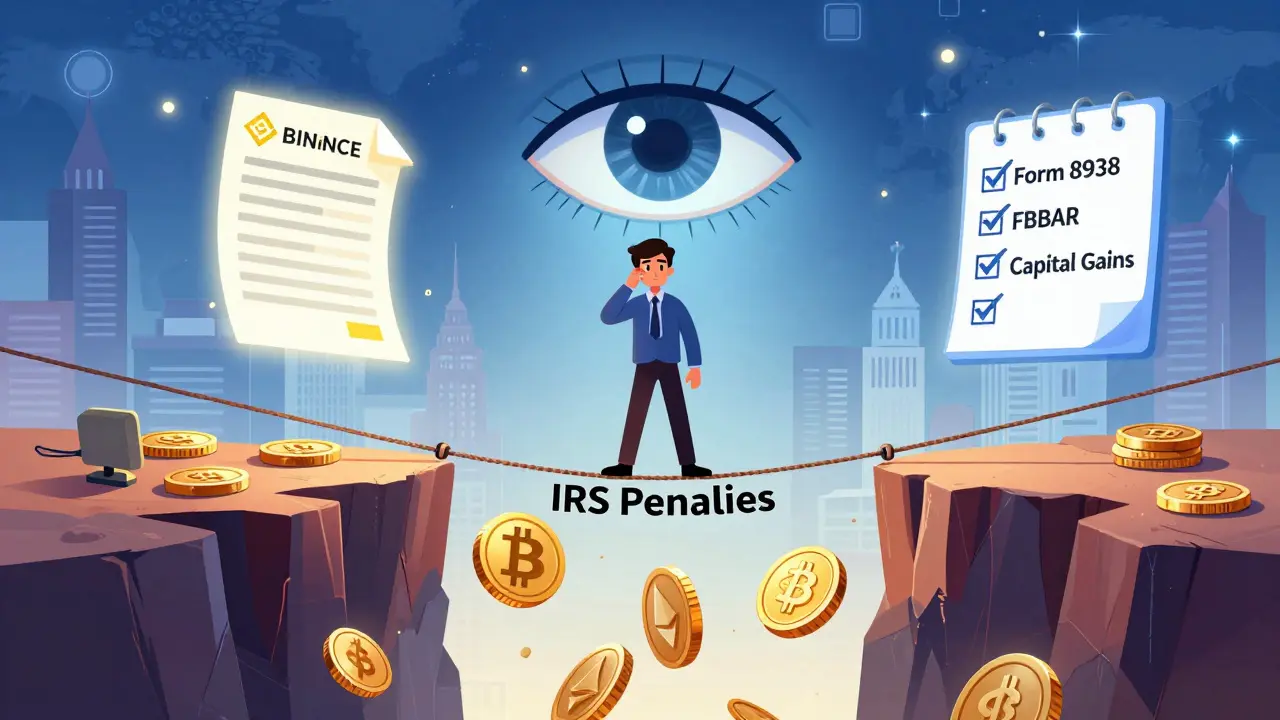
FATCA and Cryptocurrency Reporting for US Citizens: What You Must Know in 2025
U.S. citizens with foreign cryptocurrency must report holdings under FATCA if they exceed $50,000. FBAR rules are changing in 2025 - crypto may soon be included. Know your thresholds, how to value assets, and how to avoid penalties.
read more