
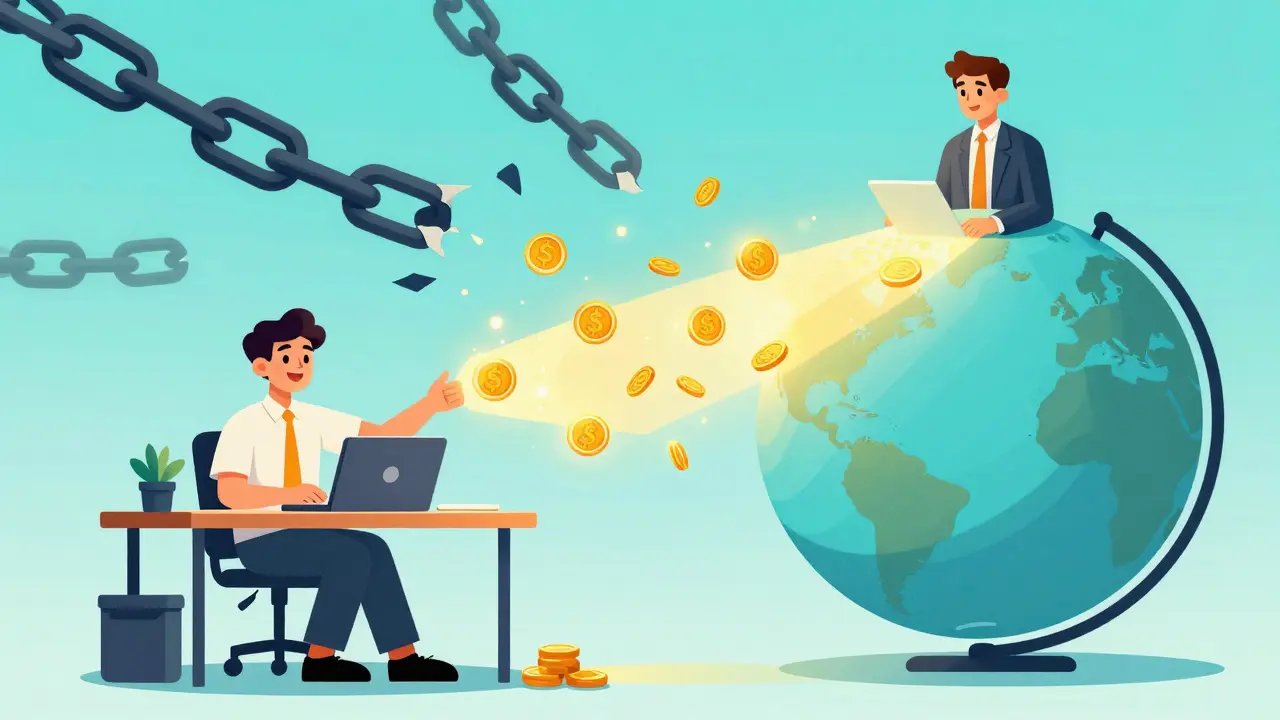
Have you ever wondered why getting paid for work across borders still feels like moving concrete? Traditional banking systems drag their feet, charging hidden fees while holding your money hostage for days. That frustration is exactly what Chrono.tech is built to fix. This isn't just another digital coin hoping for a moonshot; it's a governance token designed to power a real-world decentralized workforce marketplace. The platform represents a shift toward transparent employment solutions where technology removes the middlemen that usually siphon off profit margins.
The cryptocurrency associated with this network goes by the name TIMETIMECHRONO, often referred to simply as the TIME token. It serves as the economic engine for the entire ecosystem, allowing participants to vote on protocol changes, pay for services, and incentivize workers. As of early 2026, the project continues to navigate the complex landscape of Web3 applications, trying to prove that blockchain can solve messy human problems like hiring and payroll efficiency.
The Core Problem: Broken Labor Markets
Before diving into the tech, we need to understand the gap it fills. Global labor markets are historically inefficient. When a company hires someone overseas, friction occurs at every turn. Currency conversion eats away at salaries, wire transfers take weeks, and legal compliance becomes a nightmare for small businesses. Traditional platforms act as gatekeepers, taking massive commissions just to connect two people.
Chrono.tech steps in to digitize these relationships. By using blockchain technology, the platform creates a shared ledger of employment agreements and payments. This means transactions become transparent and verifiable instantly. Instead of waiting three business days for a bank transfer, funds move in minutes. The goal is to empower freelancers and remote workers who are currently underserved by the financial system.
Understanding the TIME Token Utility
Holding the token isn't just about speculating on price movements. The design follows a dual-purpose model common in mature ecosystems. First, it acts as a medium of exchange within the platform. When an employer releases payment or when a worker claims earnings, the system utilizes TIME to settle these transactions efficiently.
Secondly, it functions as a Governance Tokena cryptocurrency that gives holders voting rights over the direction of a decentralized protocol. This allows the community to propose and decide on upgrades to the platform. For example, if the network needs to integrate a new privacy feature or adjust fee structures, TIME holders cast votes. This decentralization ensures that no single corporation dictates the rules of engagement, aligning incentives with the actual users of the system.
Technical Architecture and Standards
To function within the broader crypto economy, the token relies on established infrastructure. Technically, TIME operates on the Ethereuma public blockchain platform supporting smart contracts and tokens network. Specifically, it adheres to the ERC-20 standard. This is crucial because ERC-20 is the most widely adopted token type, ensuring that TIME is compatible with almost all digital wallets and major exchanges.
This technical choice lowers the barrier to entry for users. If you already have a MetaMask or Trust Wallet account, you can likely store and transfer TIME without setting up entirely new software. However, operating on Ethereum also means inheriting its gas fees. Network congestion can sometimes slow down transactions or increase costs, a trade-off that many cross-chain solutions try to mitigate through Layer-2 integrations or alternative bridges.
| Feature | Traditional Hiring/Payment | Chrono.tech (TIME) |
|---|---|---|
| Transaction Speed | 3-5 Business Days | Instant Settlement |
| Currency Conversion | High Fees (3%-5%) | Marginal Gas Fees |
| Governance | Centralized Management | Community Voting (DAO) |
| Access Control | Bank Account Required | Crypto Wallet Only |
The table above highlights the practical shifts you experience when using the platform versus legacy methods. While traditional banking requires KYC processes and lengthy verification periods, the TIME ecosystem prioritizes accessibility via wallet addresses. However, this does come with its own set of responsibilities regarding private key management.
Market Dynamics and Price Volatility
Investors need to approach the current pricing data with caution. Recent market observations show significant variance in the listing price of TIME across different exchanges. Some sources list it hovering near $2.90 USD, while others report figures closer to $8.80 USD. This discrepancy isn't unusual in the crypto space but indicates liquidity fragmentation.
Liquidity refers to how easily you can buy or sell without moving the market price too much. When a token trades on multiple platforms with different trading volumes, the price naturally drifts apart due to localized supply and demand imbalances. Arbitrageurs usually close this gap, but in smaller cap projects, it can persist. Always verify the price on the specific exchange where you intend to transact.
The total market capitalization sits in the millions range, placing it as a mid-to-low tier asset by volume. This categorization implies higher risk compared to giants like Bitcoin or Ethereum, but also higher potential volatility. For those tracking performance, the 24-hour trading volume fluctuates significantly, sometimes ranging between tens of thousands of dollars depending on market sentiment.
Integration with Broader DeFi Ecosystem
The token doesn't exist in isolation. It interacts heavily with the Decentralized FinanceDeFifinancial services built on blockchain technology without intermediaries sector. Many TIME holders utilize staking mechanisms to earn yield on their assets. By locking up tokens in a liquidity pool, users help secure the network and receive rewards in return.
This integration creates a feedback loop. As more people hire through the platform, the demand for the token increases. Higher demand supports the price, which encourages more participation. The challenge lies in scaling the actual usage. Adoption metrics suggest steady growth within specific niches, particularly among remote-first companies seeking to automate payroll and compliance.
Risk Assessment and Due Diligence
Entering any emerging blockchain project requires serious scrutiny. Smart contracts, the code that powers the token distribution, have undergone various audits, though details vary by version. Before committing capital, users should check the latest security reports available on official channels.
Regulatory landscapes are shifting rapidly in 2026. While decentralized tokens aim to operate globally, local laws may classify TIME differently depending on jurisdiction. In some regions, it might be treated as a security rather than a utility token. Investors should consult local regulations before purchasing or selling to avoid compliance issues.
Community health is another vital metric. A strong Discord or Telegram presence indicates active development. If the roadmap stalls or communication dries up, token value can plummet regardless of technical merit. Keeping an eye on developer activity on code repositories provides a clearer picture than just looking at price charts.
Real-World Application Scenarios
Imagine a freelance graphic designer in Brazil working for a startup in Germany. Under the old system, she waits five days for her euros, losing money to fees and exchange rates. With TIME, the contract executes automatically once work is verified. She receives stablecoins or the native token instantly.
This scenario scales to larger organizations needing rapid scaling of teams. During high-growth phases, startups cannot afford delays in onboarding new talent. Blockchain-enabled identity verification speeds up trust-building between strangers. Verification of skills and past work history becomes immutable and portable across different employers within the ecosystem.
The vision extends beyond simple payments. It aims to create a reputation layer where your professional history is owned by you, not a social media platform. You carry your reviews and credentials directly in your wallet, reducing dependency on centralized job boards.
Frequently Asked Questions
What is the primary function of the TIME token?
The TIME token serves as a governance tool allowing holders to vote on platform decisions and acts as a medium of exchange for payments and services within the Chrono.tech ecosystem.
Which blockchain network does Chrono.tech use?
Chrono.tech primarily operates on the Ethereum blockchain utilizing the ERC-20 token standard, which ensures compatibility with most mainstream wallets and exchanges.
Is TIME considered a stablecoin?
No, TIME is not a stablecoin. Its value fluctuates based on market supply and demand, similar to other cryptocurrencies like ETH or BTC, and investors should expect volatility.
How can I participate in the governance process?
To participate, you typically need to hold a specific amount of TIME tokens in a compatible wallet and connect it to the governance dashboard to cast votes on proposals.
Are there risks associated with buying TIME?
Yes, risks include high price volatility, potential regulatory changes in your country, and technical risks associated with smart contracts or wallet security breaches.
Navigating the world of specialized tokens requires patience and research. Projects like Chrono.tech attempt to bridge the gap between speculative assets and practical utility. The success of such ventures depends less on hype cycles and more on adoption rates by real businesses and workers. If the labor market truly needs a decentralized overhaul, platforms with governance tokens like TIME could play a pivotal role in the next decade of global commerce.

Comments
Disha Patil
I cant believe people still think banks are saving us honestly its crazy how much money disappears in fees alone
Alex Kuzmenko
I heard about this tech before but never really looked into the tokenomics deeply enough to understand what they actually do with governance voting rights though it seems interesting
Elizabeth Akers
the idea of workers owning their own reputation data is huge
i love how we dont have to rely on big social media platforms anymore
its pretty cool seeing the shift toward decentralized identity verification happening in real time
Alex Lo
This project sounds absolutely incredible for anyone struggling with international payroll delays and banking friction which is honestly the biggest bottleneck for global startups right now. I think everyone ignores the gas fee implications when talking about ethereum based tokens but layer two solutions might fix that soon enough for us. It really changes everything if you can settle contracts instantly without waiting three business days for wires to clear through legacy banking systems. I have been following web3 labor markets for years and most attempts fail due to lack of actual utility beyond speculation so seeing TIME focus on payment settlement is refreshing. We definitely need more projects that prioritize real world economic problems instead of just trying to pump numbers on charts. The governance aspect also ensures that holders have a say which prevents centralization from taking over the whole ecosystem later down the line. Smart contracts handling employment agreements removes the need for expensive legal middlemen to verify simple work completion tasks every single day. Gas fees on mainnet ethereum can be annoying but compatibility with wallets like metamask means accessibility is high for new users joining the network. Liquidity fragmentation is a known issue in smaller cap assets but arbitrage bots usually smooth that out fairly quickly over time. I am optimistic that adoption will grow once remote companies realize how much commission fees they save by using blockchain ledgers. It essentially creates a reputation layer that belongs to the worker rather than the platform hosting their profile or history data. Security audits are essential though because smart contract exploits can drain funds instantly if not tested properly by reputable firms. Regulatory uncertainty remains the biggest risk factor especially in 2026 when governments are cracking down harder on digital asset classifications globally. I would suggest anyone interested reads the whitepaper thoroughly before buying anything related to this specific token offering on exchanges. Community health matters more than marketing hype because dead discord servers signal abandoned projects quickly regardless of initial price action or listings. Overall this represents a necessary evolution for the future of work infrastructure moving away from traditional banking dependency entirely.
Jay Starr
The drama surrounding the price discrepancy between exchanges is really concerning though I suppose thats normal for low cap assets but still scary for investors.
Lisa Walton
sure decentralize your payroll next you will want me to pay taxes in bitcoin too lol nice try
Katrina Tate
Regulatory risks are understated here and many investors ignore the potential security classification issues in major jurisdictions which could invalidate the utility completely overnight.
Liam Robertson
I think the technology is promising and the team should keep pushing forward with the roadmap updates transparently for everyone to see progress.
athalia georgina
why does nobody talk about the wallet security risks involved losing keys means losing money forever and no bank can help u then plz read carefully
joshua kutcher
I appreciate the push towards giving freelancers ownership of their professional history instead of being locked into centralized job boards that control the narrative around your skills.
Ashley Stump
Another rug pull waiting to happen probably.
Callis MacEwan
From a purely game-theoretic perspective the incentive alignment mechanisms described here seem theoretically sound but empirical validation suggests otherwise given historical precedents of similar DAO governance models failing to achieve meaningful coordination among passive holders
Matt Bridger
The underlying architecture relies heavily on established standards which reduces friction for integration but introduces systemic dependencies on external networks that may become bottlenecks during peak utilization periods
Lisa Miller
This is such a positive step for the industry and I am really excited to see how it develops over the coming months as more users join.
Joy Crawford
omg the gas fees on eth are so annoying sometimes i hate paying that much just to move money around :( but maybe l2 helps soon :)
Beverly Menezes
It is important to balance innovation with safety and everyone needs to learn how to manage private keys responsibly before investing any funds.
Zackary Hogeboom
I am curious to see how the staking yields compare to traditional savings accounts when you factor in the inherent price volatility of the token over time
Shaira Vargas
I feel like everyone keeps getting hyped up about crypto labor markets but forgets that real adoption takes years and this is barely scratching the surface of actual usage yet.
Samson Abraham
We should encourage responsible research into these protocols before allocating significant capital resources to emerging market opportunities in the decentralized finance sector.