
You’ve probably seen the ticker WALV pop up in your wallet or on a decentralized exchange and wondered what exactly it is. Is it a new coin? A copy of another asset? Or something else entirely? If you’re digging into the Alvey ecosystem, you’ve likely noticed two similar names: ALV and WALV. They look alike, but they serve very different roles. Understanding the difference is crucial before you put any money behind them.
Here’s the short version: Wrapped Alvey Chain (WALV) is a tokenized representation of the native Alvey Chain asset that allows users to use its value on other blockchains like Ethereum and BNB Smart Chain. It acts as a bridge, letting you participate in DeFi protocols outside the Alvey mainnet without needing to move funds back and forth constantly.
The Core Concept: Why Wrap a Coin?
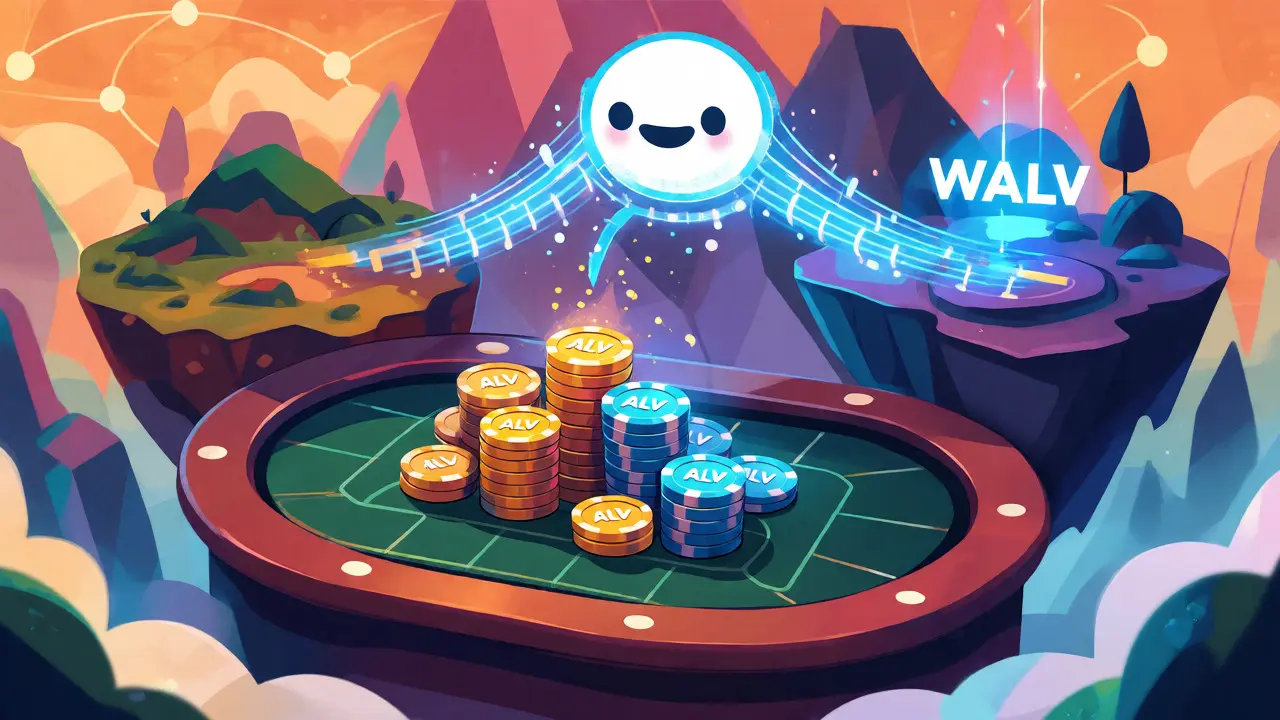
Think of wrapped tokens like casino chips. You can’t take your cash directly to the poker table; you have to exchange it for chips first. When you leave, you swap the chips back for cash. In crypto, this "chip" system lets assets from one blockchain (like Alvey) function on another (like Ethereum).
Alvey Chain (ALV) is the native coin of the Alvey Chain Layer 1 network, which launched around 2021 with a Proof-of-Stake consensus mechanism. It’s designed for fast, low-cost transactions for decentralized apps. But if you want to trade ALV on PancakeSwap (which runs on BNB Smart Chain) or use it in an Ethereum-based lending protocol, you can’t just send the raw ALV there. That’s where WALV comes in.
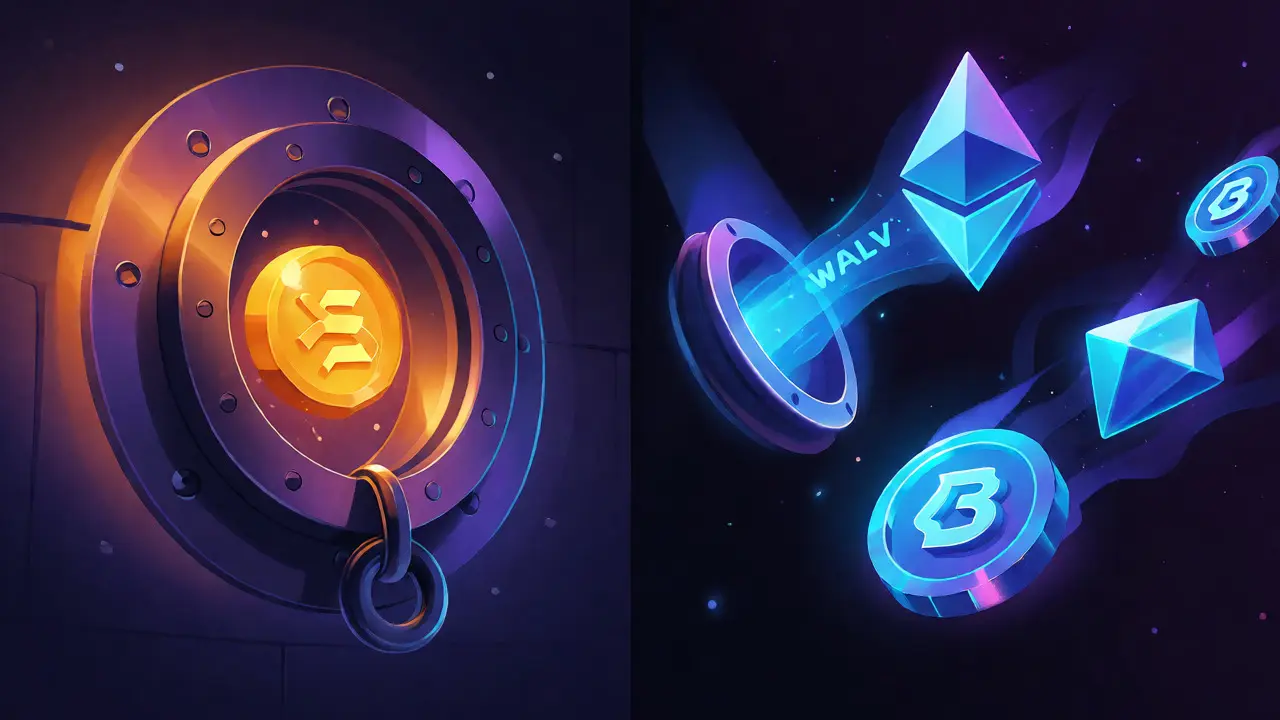
WALV is essentially ALV locked in a vault on the Alvey chain, with a corresponding token minted on Ethereum or BNB Smart Chain. This 1:1 peg means 1 WALV should always be worth 1 ALV, assuming the bridge is working correctly. This setup solves a major headache for traders: interoperability.
Key Features and Tokenomics
If you’re looking at the numbers, you’ll notice some inconsistencies across data platforms. This is common for smaller, niche projects, but here are the current specs as of late 2026:
- Total Supply: Most recent data suggests a maximum supply of 320,000,000 WALV. Earlier reports cited 160 million, indicating a possible change in tokenomics or a clarification of circulating vs. total caps.
- Circulating Supply: As of September 2026, platforms like CoinMarketCap report nearly all 320 million tokens are in circulation.
- Deflationary Mechanism: The underlying Alvey Chain burns a percentage of transaction fees. While this primarily affects the native ALV supply, it indirectly supports the value proposition of WALV by reducing the total amount of the underlying asset available over time.
It’s important to note that WALV itself doesn’t necessarily have a burn mechanism separate from the native chain. Its value is derived from the demand for the underlying ALV and the utility provided by the bridge.
How WALV Works Across Networks
WALV isn’t just one thing; it exists in multiple places. Technically, it’s implemented as an ERC-20 token on Ethereum and a BEP-20 token on BNB Smart Chain. This compatibility is its biggest selling point.
| Feature | Native ALV | Wrapped WALV |
|---|---|---|
| Network | Alvey Chain Mainnet | Ethereum, BNB Smart Chain |
| Primary Use | Paying gas fees, staking on Alvey | Trading, liquidity pools, DeFi on external chains |
| Token Standard | Native Chain Asset | ERC-20 / BEP-20 |
| Liquidity Source | Alvey DEXs | PancakeSwap, Uniswap, CEXs |
This distinction matters because if you try to send WALV to an address expecting native ALV (or vice versa), you could lose your funds. Always check which network you’re operating on. For example, if you’re using MetaMask and see WALV, you’re likely interacting with the BNB Smart Chain or Ethereum version, not the Alvey mainnet directly.
Utility: What Can You Actually Do With It?
Why would anyone bother wrapping the coin? Three main reasons:
- DeFi Participation: The Alvey ecosystem might not yet have the deep liquidity of Ethereum or Binance. By holding WALV, you can lend, borrow, or provide liquidity in larger markets like PancakeSwap v2. We’ve seen pairs like WALV/WBNB and WALV/BSC-USD active on these platforms.
- Governance Access: Some governance votes or community decisions might be easier to cast via interfaces built on established networks rather than the newer Alvey UI.
- Speculative Trading: Many traders prefer the interface and tools available on major exchanges. While Binance lists the contract for tracking, it hasn’t enabled direct trading, so most activity happens on decentralized exchanges or smaller centralized venues like Gate.io or Bitget.
Market Status and Risks
Let’s be real about the market data. WALV is a micro-cap asset. Depending on which tracker you look at, its price has fluctuated wildly between $0.000006 and $0.004 USD in recent snapshots. Market cap estimates range from under $1,000 to over $1 million. This huge variance tells you two things: liquidity is thin, and price discovery is unstable.
A small buy or sell order can swing the price significantly. If you’re planning to enter or exit a position, expect slippage. Also, keep an eye on the migration status. Recent notes indicate the project migrated from an old BSC deployment to a new one. Always verify the contract address before swapping. The current Ethereum-compatible contract starts with 0x256D....
Is it risky? Yes. It’s a small project with limited public documentation on user adoption metrics. There are no massive institutional endorsements or widely cited independent security audits for the specific WALV bridge contracts in mainstream news. Treat it as high-risk speculation.

How to Buy and Store WALV
Since Binance doesn’t offer direct trading, you’ll mostly rely on decentralized exchanges (DEXs). Here’s a typical workflow for acquiring WALV on BNB Smart Chain:
- Get BNB: Buy BNB on a major exchange and withdraw it to a self-custody wallet like Trust Wallet or MetaMask.
- Connect to PancakeSwap: Go to the PancakeSwap v2 interface and connect your wallet.
- Find the Pair: Search for WALV. Ensure you’re selecting the correct contract address for the new BSC deployment.
- Swap: Exchange your BNB for WALV. Confirm the transaction in your wallet.
- Store Safely: Keep your WALV in a non-custodial wallet. Remember, whoever holds the keys owns the coins.
If you want to hold native ALV instead, you’d need to bridge your assets back to the Alvey Chain mainnet, which involves a different set of steps and potentially higher fees depending on the bridge provider.
Frequently Asked Questions
Is WALV the same as ALV?
No, they are distinct tokens with the same economic value. ALV is the native coin on the Alvey Chain mainnet, used for gas and staking. WALV is a wrapped version of ALV that exists on other blockchains like Ethereum and BNB Smart Chain, allowing it to be used in those ecosystems' DeFi applications.
Can I trade WALV on Binance?
As of late 2026, Binance tracks the contract address for reference but does not list WALV for direct spot trading or services. Most trading activity occurs on decentralized exchanges like PancakeSwap or smaller centralized exchanges like Gate.io and Bitget.
What is the maximum supply of WALV?
Recent data indicates a maximum and total supply of 320,000,000 WALV. Earlier sources cited 160 million, suggesting updates to the tokenomics or reporting standards. Always check the latest contract data for the most accurate figures.
Why do prices vary so much across platforms?
WALV is a low-liquidity asset. Different platforms may pull data from different liquidity pools or use outdated contract addresses. Thin order books mean small trades can cause significant price discrepancies between trackers like CoinMarketCap, TradingView, and Bitget.
Is WALV deflationary?
The underlying Alvey Chain (ALV) has a deflationary mechanism where transaction fees are burned. WALV represents this value, so while WALV itself isn't typically burned directly, its value is supported by the reduction in the supply of the native ALV asset it wraps.

Write a comment