
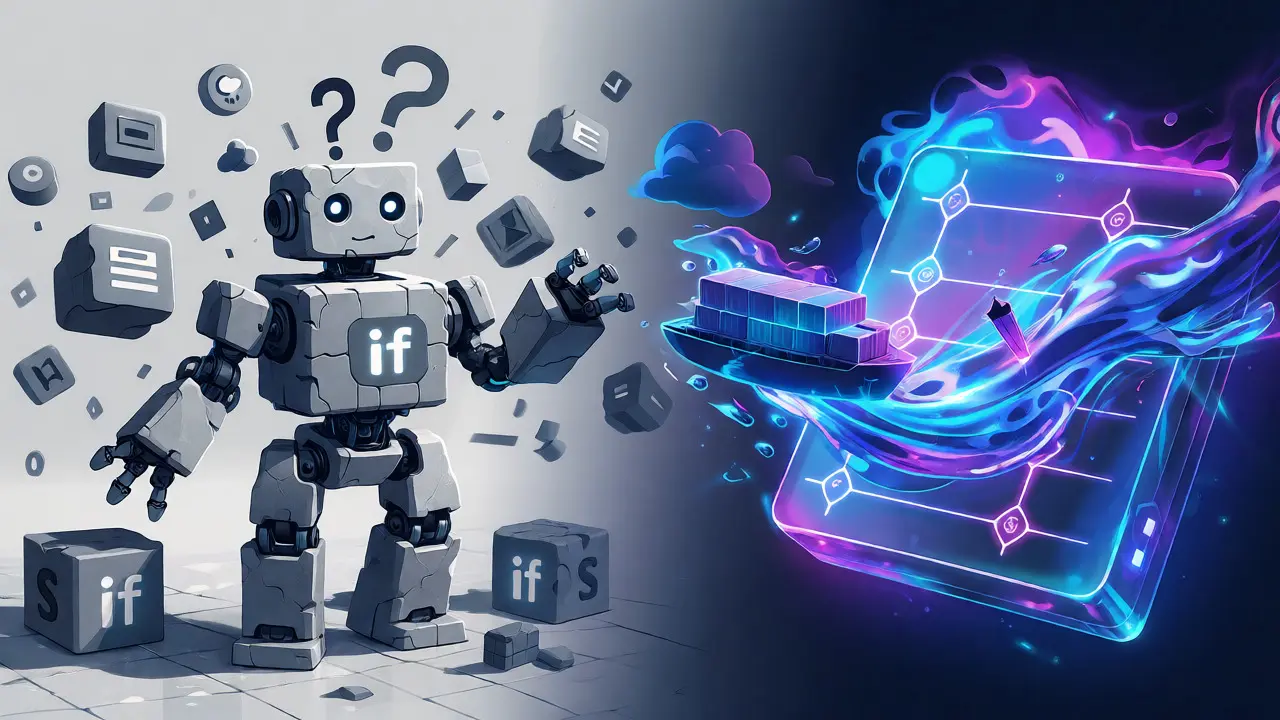
Imagine a digital agreement that doesn't just execute when you click "buy," but actually watches the weather, checks port congestion, and reroutes your shipment to save money before you even realize there's a problem. That isn't science fiction anymore; it is the reality of AI-powered smart contracts. These are self-executing agreements on the blockchain that use machine learning to make decisions, not just follow rules. If you've ever been frustrated by rigid code that breaks when real life gets messy, this technology is likely the fix you've been waiting for.
The Shift From Rigid Code to Adaptive Logic
For decades, we thought of smart contracts as simple "if-then" statements. Nick Szabo proposed the concept back in 1994, but it wasn't until Ethereum launched in 2015 that these became practical tools. Traditional contracts are great for binary outcomes: if payment arrives, release goods. But business is rarely binary. It’s full of gray areas, sudden market shifts, and unpredictable variables. This is where traditional code hits a wall.
AI-powered smart contracts break that wall by integrating machine learning models directly into the execution logic. Instead of hardcoding every possible scenario, these contracts learn from historical data. They analyze patterns, predict outcomes, and adjust their behavior in real-time. Think of it like the difference between a vending machine and a personal shopper. A vending machine only gives you what you press. A personal shopper notices you’re out of milk, knows the price dropped at the local store, and buys it for you without being asked.
How They Actually Work Under the Hood
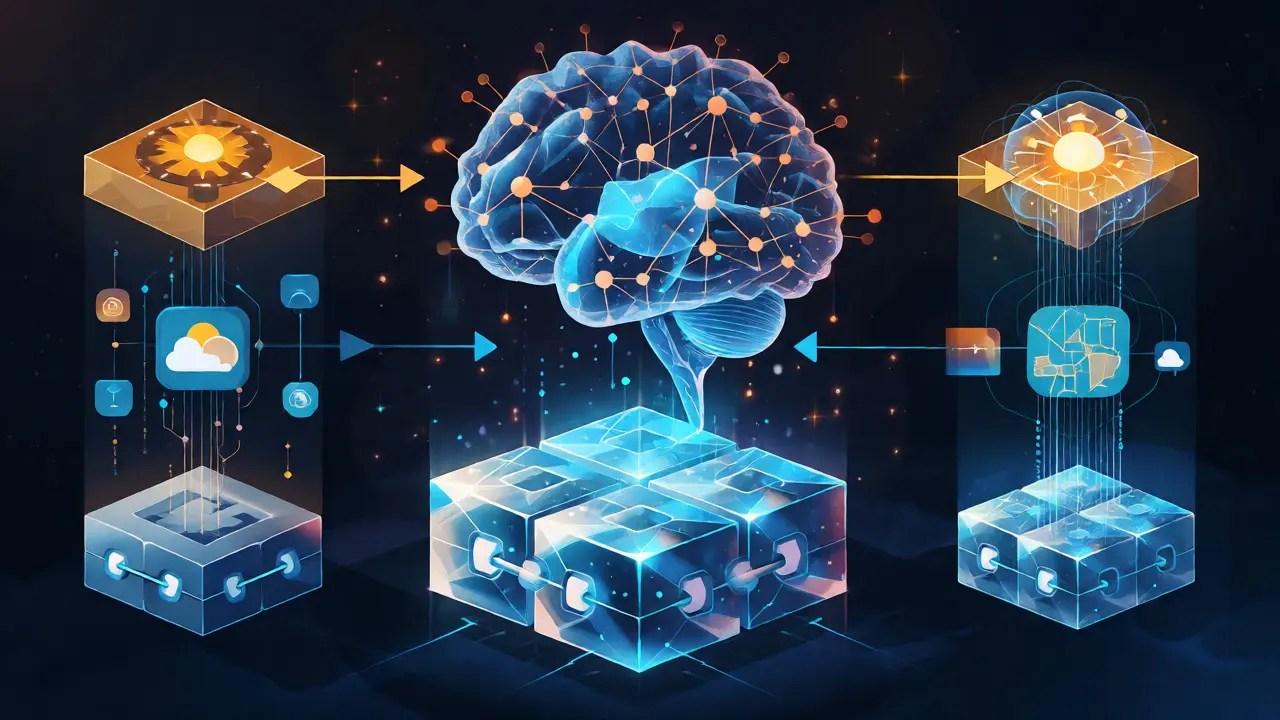
You might wonder how an AI lives inside a blockchain block. It’s not magic; it’s architecture. These systems typically combine three layers: the blockchain for trust and immutability, oracles for external data, and AI models for decision-making. According to technical analyses from early 2025, these contracts feature four key capabilities that set them apart.
- Learning from History: They process thousands of past transactions to improve accuracy. For instance, after analyzing over 10,000 records, prediction accuracy can jump by 15-22%.
- Self-Correction: They refine their own logic over time. Case studies from Fetch.AI showed error rates dropping by 37% after six months of operation.
- Pattern Recognition: They spot anomalies humans miss. In insurance applications, this has helped detect fraudulent claims with 98.7% accuracy.
- Dynamic Decision-Making: They handle complex, multi-variable conditions instantly, processing logic 40-65% faster than traditional scripts in complex scenarios.
The tech stack usually involves TensorFlow or PyTorch for the brain, Solidity for the body (the blockchain interface), and middleware like Fetch.AI’s agent framework to connect the two. It’s a heavy lift computationally, but the payoff in adaptability is massive.
Real-World Wins and Painful Lessons
Let’s look at who is actually using this. It’s not just hype; companies are spending real money. Maersk, the shipping giant, ran a pilot with Fetch.AI in 2024. By letting AI dynamically reroute shipments based on weather and fuel prices, they cut logistics costs by 22.4%. That’s billions saved across their fleet.
In insurance, AXA automated flight delay compensation. Before, a claim took 14 days. Now? It takes 47 minutes with 99.2% accuracy. The AI verifies the flight status via oracles, calculates the payout, and sends the money automatically. No paperwork, no waiting.
But it’s not all smooth sailing. A major European bank failed spectacularly in late 2024. Their AI model misinterpreted market volatility data, leading to $1.2 million in erroneous transactions. The issue wasn’t the blockchain; it was the quality of the input data. As one supply chain manager from Unilever noted on Reddit, "Our AI reduced delays by 31%, but we spent six months just calibrating the data." Data silos and poor historical records remain the biggest hurdles for new adopters.
| Feature | Traditional Smart Contract | AI-Powered Smart Contract |
|---|---|---|
| Logic Type | Static "If-Then" Rules | Adaptive Machine Learning Models |
| Complexity Handling | Low (Binary outcomes) | High (Multi-variable analysis) |
| Gas Fees (Ethereum Avg) | ~0.015 ETH | ~0.045 ETH |
| Data Requirement | Minimal (Input parameters) | High (5,000+ historical records) |
| Error Rate | Fixed by code bugs | Reduces over time (self-correcting) |
| Best Use Case | Simple payments, token swaps | Supply chain, dynamic pricing, fraud detection |
The Cost of Intelligence
Here is the catch: intelligence isn’t free. Running AI models on-chain or near-chain requires significant computational power. On Ethereum, gas fees for AI-heavy contracts average 0.045 ETH, compared to just 0.015 ETH for standard contracts. That’s triple the cost per transaction. For high-volume micro-transactions, this can kill profitability unless you use Layer 2 solutions or off-chain computation.
Furthermore, these contracts need training data. You can’t just deploy them; you need at least 5,000 clean historical transactions for basic functionality. Performance improves up to 50,000 records, but garbage in means garbage out. If your historical data is incomplete, model accuracy can drop by 40%. This makes the initial setup phase expensive and time-consuming, often taking 8-12 weeks just for data preparation.
Regulatory Hurdles and the Black Box Problem
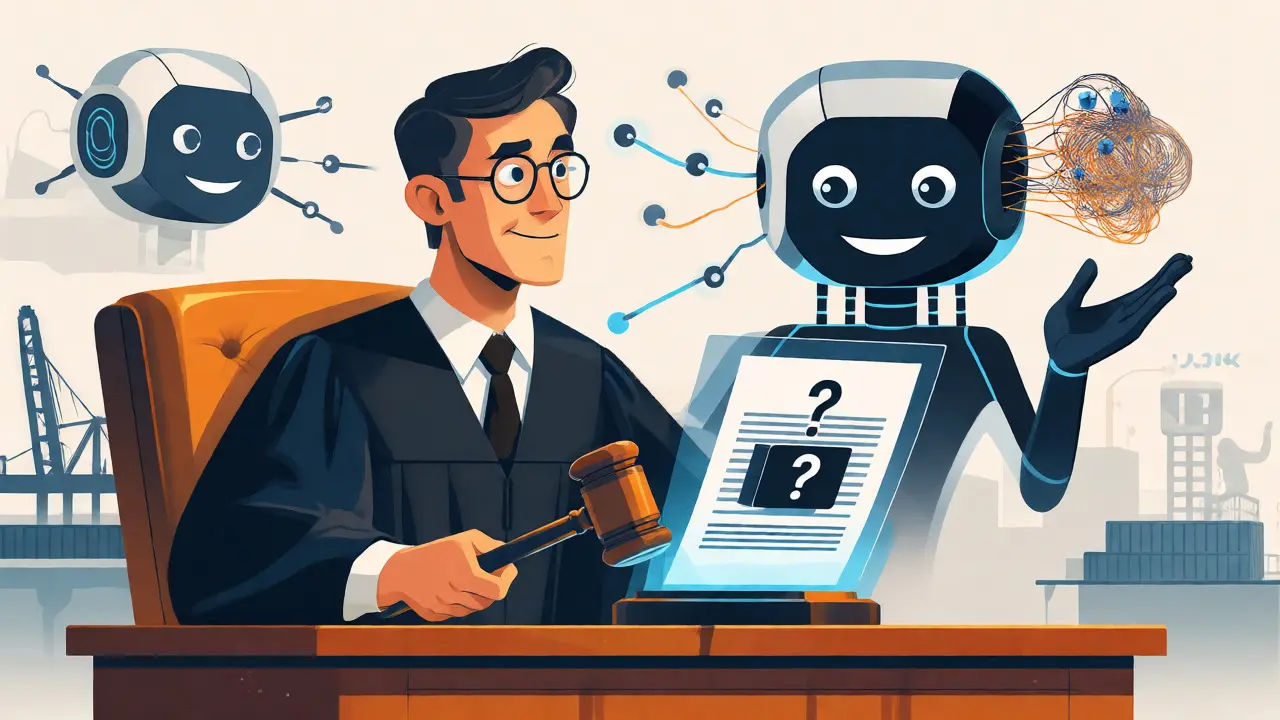
If you’re in finance or healthcare, you care about explainability. When an AI denies a loan or approves a claim, regulators want to know why. Dr. James Lovejoy from IEEE Spectrum warned in early 2025 about the "black box problem." If the AI’s decision pathway is unexplainable, who is liable when things go wrong? The developer? The oracle provider? The user?
Regulations are catching up. The EU’s updated MiCA framework, effective January 2025, specifically requires "sufficient explainability mechanisms" for AI elements in smart contracts operating in regulated markets. This is driving development in cryptographic verification, where the AI proves its decision path without revealing the entire model. The Ethereum Foundation has even opened a dedicated research track for "Explainable AI in Smart Contracts" to tackle this head-on.
Should You Adopt It Now?
Gartner places AI-powered smart contracts at the "Peak of Inflated Expectations" in their 2025 Hype Cycle, with mainstream adoption expected around 2028-2030. However, enterprise interest is already high. 68% of Fortune 500 companies are running pilots, though only 22% have moved to production due to technical complexity.
If you’re considering adoption, ask yourself: Do I have complex, variable-driven processes? If yes, the ROI could be huge. If you’re handling simple, predictable transactions, stick to traditional smart contracts. The extra cost and complexity won’t pay off. Start small. Run a pilot on a non-critical workflow. Ensure your data team is ready before your dev team starts coding. And always keep a human oversight layer for high-stakes decisions.
Frequently Asked Questions
Are AI-powered smart contracts more secure than traditional ones?
Not necessarily. While they inherit the security of the underlying blockchain, AI introduces new attack vectors. Malicious actors can try to poison the training data or manipulate oracle inputs to trick the AI. Traditional contracts are vulnerable to code bugs, while AI contracts are vulnerable to data integrity issues and model manipulation. Security depends heavily on the robustness of the oracle network and data validation processes.
Why are gas fees higher for AI smart contracts?
AI computations require significantly more CPU cycles and memory than simple logical checks. Processing machine learning models, especially those involving matrix multiplications, consumes more gas. Additionally, fetching and validating large amounts of external data via oracles adds overhead. Solutions like Chainlink’s AI oracle framework aim to reduce this by processing some calculations off-chain.
Can AI smart contracts replace lawyers?
No, not entirely. They automate execution and compliance checking, reducing administrative burden. However, drafting the initial logic, interpreting ambiguous clauses, and handling disputes still require human legal expertise. AI is best viewed as a tool that handles the routine, allowing lawyers to focus on strategy and complex negotiation.
What happens if the AI makes a mistake?
This is the biggest risk. Unlike traditional contracts where bugs are static, AI errors can be dynamic and hard to reproduce. Most implementations include a "circuit breaker" mechanism that pauses execution if confidence scores drop below a threshold. Some systems also use a dual-signature approach where a human must approve high-value AI decisions.
Which platforms support AI smart contracts best?
Ethereum remains the leader due to its ecosystem size, but it faces high costs. Specialized chains like Fetch.AI are built specifically for autonomous agents. Solana offers high speed for low-cost AI interactions, and newer Layer 2 solutions like Arbitrum and Optimism are increasingly popular for balancing cost and performance for AI workloads.

Write a comment