
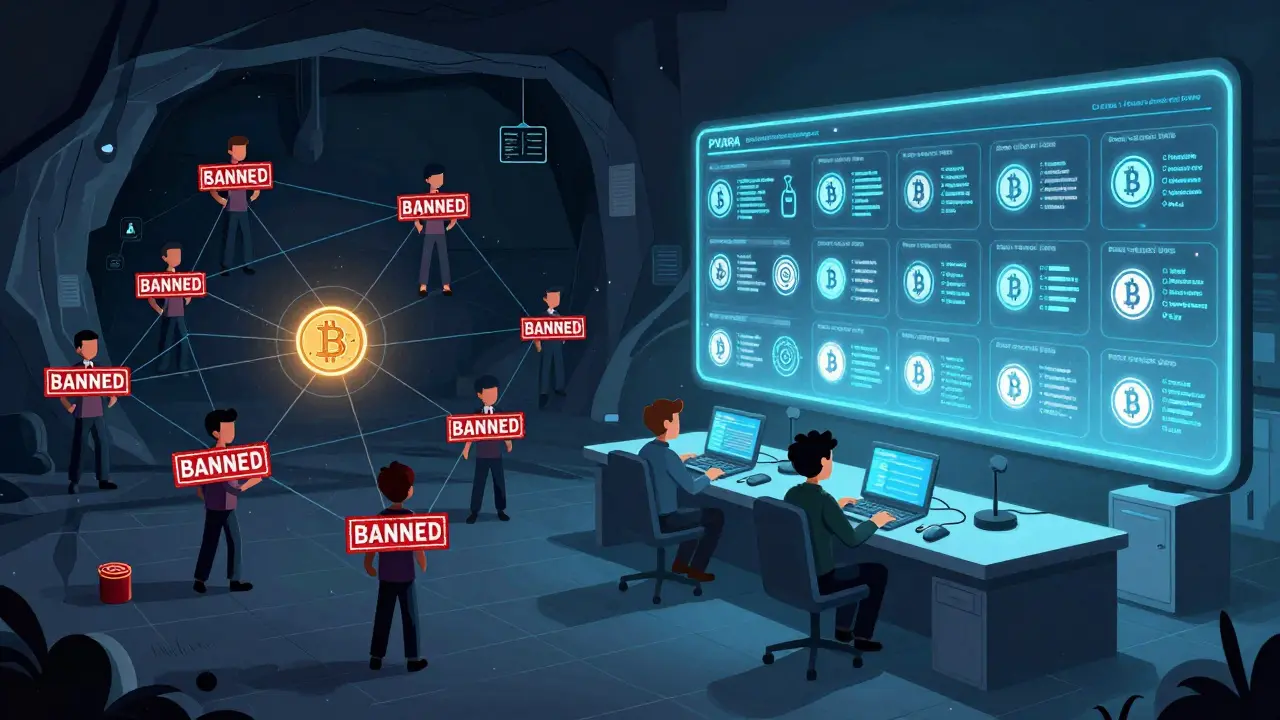
For years, Pakistan treated cryptocurrency like a forbidden currency - underground, risky, and legally gray. Banks blocked transactions. Exchanges shut down. Users hid behind VPNs. But in 2025, everything changed. The country didn’t just loosen its grip - it flipped the script entirely. Cryptocurrency is now legal in Pakistan. Not as a payment tool. Not as an investment playground. But as something far more controlled: a regulated asset under strict government oversight.
The Ban That Broke
It all started in 2018, when the State Bank of Pakistan (SBP) issued a sweeping advisory that banned financial institutions from handling any cryptocurrency-related activity. No exchanges. No wallets. No transfers. The move was meant to protect consumers and prevent money laundering. But it didn’t stop crypto use - it just pushed it underground. By 2024, Pakistan’s crypto market was estimated at $21 billion, mostly operating through peer-to-peer platforms and offshore exchanges. Millions of Pakistanis held Bitcoin, Ethereum, and other coins - not as speculation, but as a way to send and receive remittances, preserve savings, or bypass inflation.The 2025 Pivot: A New Law, A New Authority
On July 8, 2025, President Asif Ali Zardari signed the Virtual Assets Bill 2025 as an ordinance. This wasn’t just a policy tweak - it was a legal revolution. The bill created the Pakistan Virtual Asset Regulatory Authority (PVARA), an independent body with the power to license, monitor, and enforce rules for all virtual asset service providers (VASPs). Suddenly, crypto wasn’t just tolerated - it was institutionalized.What’s Legal? What’s Not?
Here’s where Pakistan’s model gets unusual. Cryptocurrency is legal to hold. You can buy, sell, and transfer Bitcoin or Ethereum. But you can’t use it to pay for groceries, gas, or a phone bill. Retailers can’t accept crypto. No app can let you tip a delivery driver in Dogecoin. The law explicitly bans using digital assets for commercial transactions. Altcoins? Trading them is limited. Only approved tokens - mostly Bitcoin and Ethereum - can be traded on licensed platforms. Newer coins like Solana or Polygon? Not yet. And no margin trading. No derivatives. No leveraged positions. The goal isn’t to turn Pakistan into a crypto hub like Dubai or Singapore. It’s to control the flow. The biggest twist? The government isn’t just regulating crypto - it’s replacing it. On September 3, 2025, the State Bank announced the Digital Pakistani Rupee (Digital PKR), a central bank digital currency (CBDC). Unlike Bitcoin, this isn’t decentralized. It’s fully controlled by the SBP. Think of it as digital cash - but with a government leash. You can send it, receive it, store it in your bank app. But you can’t mine it. You can’t transfer it to an overseas wallet without approval. And you can’t use it to bypass the financial system.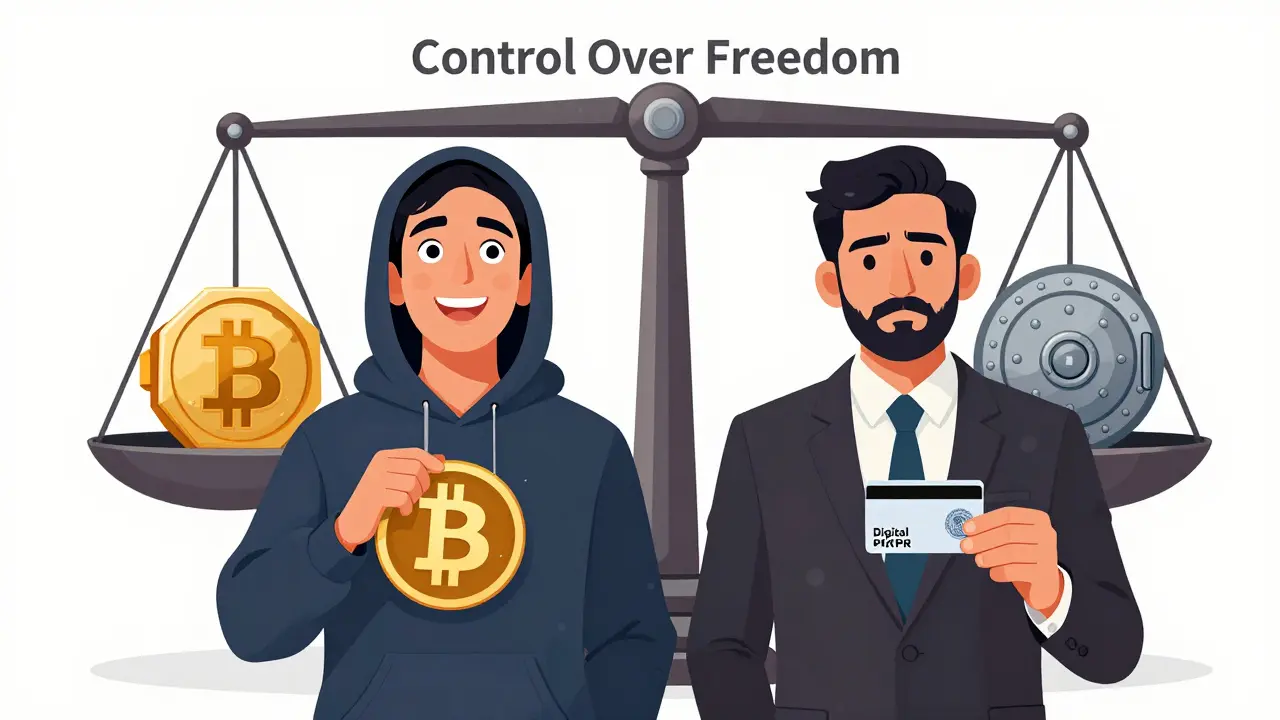
Why This Model? The Strategy Behind the Restriction
Pakistan didn’t go full crypto because it doesn’t need to. It needs stability. Its economy relies heavily on remittances - over $30 billion a year from workers abroad. Crypto has already become a quiet lifeline for many families. But with no oversight, those flows were invisible to tax authorities and regulators. The 2025 framework tries to solve three problems at once:- Bring hidden money into the system - by requiring VASPs to report all transactions, the government can track remittance flows and collect taxes.
- Protect monetary policy - if crypto replaced the rupee, inflation control and interest rates would become impossible to manage.
- Prevent capital flight - by blocking easy conversion to foreign currencies, the government reduces the risk of mass withdrawals from the banking system.
How It Compares to Neighbors
Compare Pakistan to India: India taxes crypto at 30% and bans foreign exchanges, but still lets people trade freely. The UAE? It has free zones like Dubai’s Virtual Asset Regulatory Authority (VARA) that welcome global crypto firms with open arms. Pakistan? No free zones. No tax breaks. No marketing campaigns. Just a tightly locked gate. That’s intentional. Pakistan’s leaders aren’t trying to attract crypto startups. They’re trying to absorb the existing market. The goal isn’t innovation - it’s integration. And they’re willing to sacrifice growth for control.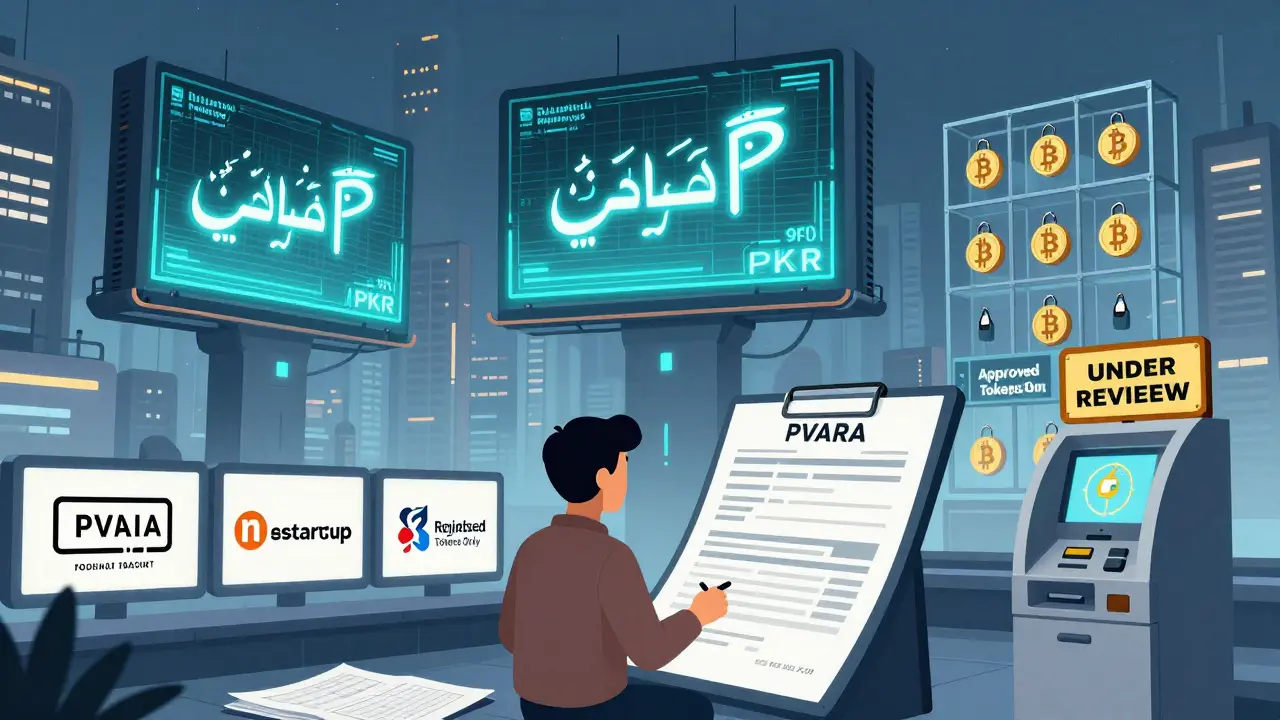
Real-World Impact: Who Wins? Who Loses?
For ordinary Pakistanis, the change is bittersweet. Many who spent years using crypto to send money home now have a legal path. No more risking bank account freezes. No more using unlicensed P2P apps. But for traders and investors? It’s a disappointment. No spot trading on local exchanges. No access to global DeFi protocols. No staking. No yield farming. The only way to earn returns is to hold - and hope the Digital PKR doesn’t devalue faster than Bitcoin. Fintech companies are caught in the middle. Startups building crypto-based remittance apps now need PVARA licenses - a slow, costly process. Many small players can’t afford compliance. Some have shut down. Others are pivoting to work only with the Digital PKR.What’s Next? The Road to 2026
As of early 2026, PVARA is still hiring its first team of regulators - mostly young tech experts with blockchain experience. Licensing for VASPs has begun, but only 12 applications have been approved so far. The Digital PKR pilot is underway in three major cities: Lahore, Karachi, and Faisalabad. It’s being tested with government employees and pensioners - not the public. The next big milestone? A full public rollout of the Digital PKR by mid-2026. After that, the government may allow limited crypto payments - but only for specific sectors like international trade or overseas education fees. Don’t expect to buy coffee with Bitcoin anytime soon.The Bigger Picture
Pakistan’s 2025 pivot isn’t about embracing crypto. It’s about reclaiming control over money. The country didn’t ban crypto because it feared it - it banned it because it couldn’t see it. Now, it’s trying to see everything. Every transaction. Every wallet. Every transfer. The question isn’t whether crypto will survive in Pakistan. It already did. The question is whether the government’s tight leash will stifle its potential - or finally turn a hidden economy into a tool for national stability.Is cryptocurrency legal in Pakistan in 2026?
Yes, cryptocurrency is legal to hold and transfer in Pakistan as of 2026, following the enactment of the Virtual Assets Bill 2025. However, it is not legal tender and cannot be used for payments at stores, online retailers, or for commercial transactions. Only licensed Virtual Asset Service Providers (VASPs) can facilitate trading, and all activity must comply with strict AML and CTF rules enforced by PVARA.
Can I use Bitcoin to pay for goods or services in Pakistan?
No. The Virtual Assets Bill 2025 explicitly prohibits using cryptocurrencies like Bitcoin or Ethereum for retail payments, online purchases, or any commercial transaction. This restriction is designed to prevent crypto from undermining the Pakistani rupee and to maintain government control over the monetary system.
What is the Digital Pakistani Rupee (Digital PKR)?
The Digital Pakistani Rupee (Digital PKR) is Pakistan’s central bank digital currency (CBDC), launched in September 2025 under the supervision of the State Bank of Pakistan. Unlike Bitcoin or Ethereum, it is not decentralized. It is fully controlled by the government, functions like digital cash, and can only be transferred through authorized banking channels. It is not meant to replace traditional crypto - it’s meant to replace the need for it.
Do I need a license to trade crypto in Pakistan?
Yes. Any platform or business offering crypto trading, wallet services, or exchange functions must obtain a license from the Pakistan Virtual Asset Regulatory Authority (PVARA). Unlicensed operations are illegal. As of early 2026, only 12 VASPs have been approved. Most international exchanges like Binance or Coinbase are not licensed and remain inaccessible to Pakistani users.
How does Pakistan’s crypto law compare to India’s?
India allows unrestricted crypto trading but taxes transactions at 30%. Pakistan bans commercial use entirely and restricts trading to approved tokens on licensed platforms. While India focuses on taxation, Pakistan focuses on control - limiting access to prevent capital flight and preserve monetary sovereignty. India’s approach is permissive with oversight; Pakistan’s is restrictive with surveillance.
Will Pakistan ever allow full crypto adoption like El Salvador?
Unlikely. Pakistan’s government has made it clear that its goal is not to adopt crypto as legal tender or encourage decentralized finance. The Digital PKR is the priority. Any future expansion of crypto use - such as limited payments for remittances - will be tightly controlled and phased in slowly. Full adoption, as seen in El Salvador or the UAE, goes against the core philosophy of Pakistan’s 2025 framework: state control over financial innovation.

Comments
Derek Lynch
This is HUGE. Pakistan just did what the entire Western financial system refused to do-adapt. No more hiding. No more shadow markets. This isn't just regulation, it's recognition. People were already using crypto to survive inflation and send remittances. Now the government’s finally saying: 'We see you, and we’re building a system for you.' This could be the blueprint for every developing economy.
Shreya Baid
The institutionalization of crypto under PVARA is a masterstroke. Finally, a regulatory body with teeth and clarity. No more ambiguity. No more fear of sudden crackdowns. This gives developers, entrepreneurs, and ordinary citizens the legal ground to innovate. It’s not about speculation-it’s about financial sovereignty. Pakistan is leading, not following.
Christopher Hoar
lol so now the state wants to tax ur btc like it’s a car? they’re gonna make it a bureaucratic nightmare. 'Submit your wallet address, proof of 3 years of transaction history, and a notarized letter from your uncle explaining why you didn’t use it to buy cocaine.'
Robert Kunze
I’ve been tracking this for years. The ban was a joke. People still bought crypto. They just did it through WhatsApp groups and shell companies. Now that it’s legal? The real work starts: education, infrastructure, security. Hope they don’t screw it up with overregulation. This could actually help millions.
Sarah Zakareckis
VASPs licensed under PVARA? That’s the key. Institutional-grade custody, AML/KYC compliance, real-time monitoring. This isn’t crypto as a wild west-it’s crypto as a financial utility. We’re talking about embedding blockchain into the core of remittance flows, SME financing, even micro-savings. This is fintech evolution, not revolution. And it’s happening in a country most thought was too chaotic to pull it off.
Heather James
Finally. Took long enough.
Ross McLeod
Let’s be honest. This is less about empowerment and more about control. The moment you create a regulatory body for crypto, you create a surveillance mechanism. Every transaction monitored. Every wallet tracked. Every exchange forced to report. The government didn’t legalize crypto to help people-they did it to bring it under the same system that already controls their banks, their salaries, their pensions. This isn’t freedom. It’s a velvet cage.
rajan gupta
OMG this is like the universe finally whispering 'I believe in you' to Pakistan 🥹💔 After decades of corruption, power cuts, and 70% inflation... crypto became their lifeline. And now? The state says 'thank you' by putting it under a microscope. It’s poetic. It’s tragic. It’s... *dramatic violin*
Billy Karna
The real impact here isn’t in the law-it’s in the infrastructure. PVARA needs to build out a national KYC layer, integrate with existing mobile payment systems like JazzCash and Easypaisa, and ensure interoperability with global VASPs. If they do this right, Pakistan could become the largest peer-to-peer crypto hub in South Asia. But if they overcomplicate licensing or demand excessive reserves? It’ll collapse under its own bureaucracy. The devil’s in the implementation details.
Cheri Farnsworth
Legalization does not equate to accessibility
Gene Inoue
Of course they legalized it. Now they can tax it. Now they can freeze accounts. Now they can say 'we told you so' when someone gets scammed. This isn’t progress-it’s a trap wrapped in a press release. They didn’t embrace crypto. They weaponized it.
Ricky Fairlamb
This is the beginning of the end. Once the state has full visibility into your digital assets, what’s next? Asset seizures? Mandatory staking? A crypto ID card? The moment you give the government control over your money, you give them control over your life. This isn’t regulation. It’s the first step toward a digital serfdom. Wake up.
Jessica Beadle
The PVARA framework aligns with FATF’s Travel Rule. The compliance burden is non-trivial, but the long-term systemic benefits-reduced informal capital flight, increased tax base, lower remittance fees-are quantifiable. This is macroeconomic engineering at scale. Most Western regulators are still stuck in 2017. Pakistan just leapfrogged them.
Patty Atima
I’m so proud of Pakistan. Like, honestly. They didn’t wait for permission. They just built it. And now the world’s watching. This is the kind of thing that changes history.
Lucy de Gruchy
You really believe this isn’t a distraction? The economy is crumbling, inflation is out of control, and now they’re giving crypto a gold star? This is a smoke screen. They’re not solving poverty-they’re monetizing desperation. Mark my words: within two years, PVARA will be a shell for elite capture.
Lauren J. Walter
Wow. So now the government is gonna be the crypto police. How very... 1984. 🤡
Carol Lueneburg
This is hope. Real, tangible hope. For the first time, a government is saying: 'We see your struggle. We’re not going to punish you for trying to survive. We’re going to help you build something better.' The fact that this happened in Pakistan? It’s a beacon. To every country still stuck in fear: you can do better.
Brenda White
so like... can i still buy btc with my pakistani rupees or do i need to go through some fancy pvara portal? like is this legal for normal people or just for rich dudes with lawyers?
Tobias Wriedt
Crypto is the people’s money. And now the state is saying 'thank you' by putting a tax stamp on it. 🙌💰
Ernestine La Baronne Orange
This is the most beautiful, terrifying thing I’ve seen in years. Imagine the power: every transaction, every wallet, every transfer-logged, tracked, analyzed. The government now has a real-time map of financial behavior across the entire country. This isn’t regulation. This is behavioral control. And it’s being sold as 'progress.' I’m not mad. I’m just... terrified. And honestly? Kind of impressed.
Manali Sovani
It is a well-known fact that regulation is the first step toward abolition. The moment crypto becomes legal, it becomes controllable. The moment it becomes controllable, it becomes obsolete. This is not innovation. It is assimilation.
Konakuze Christopher
They didn’t legalize crypto. They just made it easier to seize.
S F
Pakistan? Seriously? They can’t even fix their electricity grid. Now they’re running a crypto agency? This is the dumbest thing I’ve ever heard. The U.S. and EU are still figuring this out. Pakistan? They’re just trying to look cool.
Derek Lynch
I get the fear, but you’re missing the point. This isn’t about surveillance. It’s about inclusion. For years, Pakistanis were forced into illegal channels just to send money home or save their earnings. Now they have a legal, transparent path. Yes, there’s risk. But the risk of *not* doing this was far worse. This is the first time a government chose to empower its people instead of punishing them.
Billy Karna
Exactly. The real win here is that PVARA’s licensing requirements will force VASPs to partner with local banks and mobile networks. That means crypto becomes usable without a passport, without a Western bank account, without a VPN. It’s not just about legality-it’s about accessibility. And that’s revolutionary.
Ernestine La Baronne Orange
You’re both naive. Power doesn’t give up control. It rebrands it. PVARA isn’t a shield for the people-it’s a sword for the state. The moment they can track every crypto transaction, they can freeze anyone’s savings. They can blacklist wallets. They can force compliance with political agendas. This isn’t progress. It’s a new form of authoritarianism dressed in blockchain hype.