
If you are scrolling through your exchange app right now, hunting for a coin labeled Dog (Bitcoin) with the ticker DOG, stop for a second. You might be standing at the wrong door. In the wild world of crypto, names get mixed up constantly, and tickers can be trickier than they look. Most often, when people ask about a "Dog" coin related to Bitcoin, they are actually stumbling over the famous Dogecoin (DOGE).
There isn't really a mainstream coin called "Dog (Bitcoin)" trading under the strict DOG symbol that acts exactly like a Bitcoin version of itself. This confusion happens all the time. People see "Dog," they see "Coin," and they assume it's the same family. But here is the deal: the one that actually matters, the one with the history and the millions of holders, is Dogecoin (DOGE). Understanding the difference between these names is the first step in not losing money.
The Real Story Behind the Dog Coin
Let's clear up the biggest mystery first. When we talk about a legitimate dog-themed cryptocurrency, we are talking about Dogecoin is the original satirical cryptocurrency featuring a Shiba Inu dog. It wasn't built by some secret tech giant trying to replace the dollar. It started as a joke. Back in late 2013, two software engineers named Billy Markus and Jackson Palmer decided to have fun with the blockchain space. They saw Bitcoin getting way too serious and wanted to create something light-hearted.
They took code from a coin called Luckycoin, which was itself based on Litecoin, and slapped the face of Kabosu, a Shiba Inu, on top of it. That image became the logo. They launched it on December 6, 2013. By the time it hit the public eye, it had already picked up a massive following. Even though it was created to mock the speculative nature of crypto bubbles, it somehow became a real financial asset. Fast forward to today, and it is still one of the most recognized names in the industry.
How the Technology Works
You might wonder if this coin works like Bitcoin. Technically, yes, but they use different tools. Both sit on a decentralized ledger known as a Blockchain which records transactions across many computers. However, the engine running inside the hood is different.
Bitcoin uses an algorithm called SHA-256 to secure its network. It is super secure but requires a lot of power. Dogecoin chose a path called Scrypt. This algorithm was originally designed to be more memory-hard, making it harder for specialized hardware to dominate early on, though that has changed over time. Because of Scrypt, you cannot mine Dogecoin with the same machines used for Bitcoin mining. It creates a separate ecosystem where miners need specific gear like Application-Specific Integrated Circuit (ASIC) devices tailored for Scrypt.
This separation means the security model is distinct. While Bitcoin aims to be digital gold-scarce and hard to produce-Dogecoin was built differently. Its target block time is just one minute. Bitcoin takes ten minutes per block. This speed makes sending Dogecoin much faster for daily transactions. If you want to tip someone online or buy a coffee, waiting ten minutes for a confirmation isn't ideal. One minute changes the game completely.
The Economics of Infinity
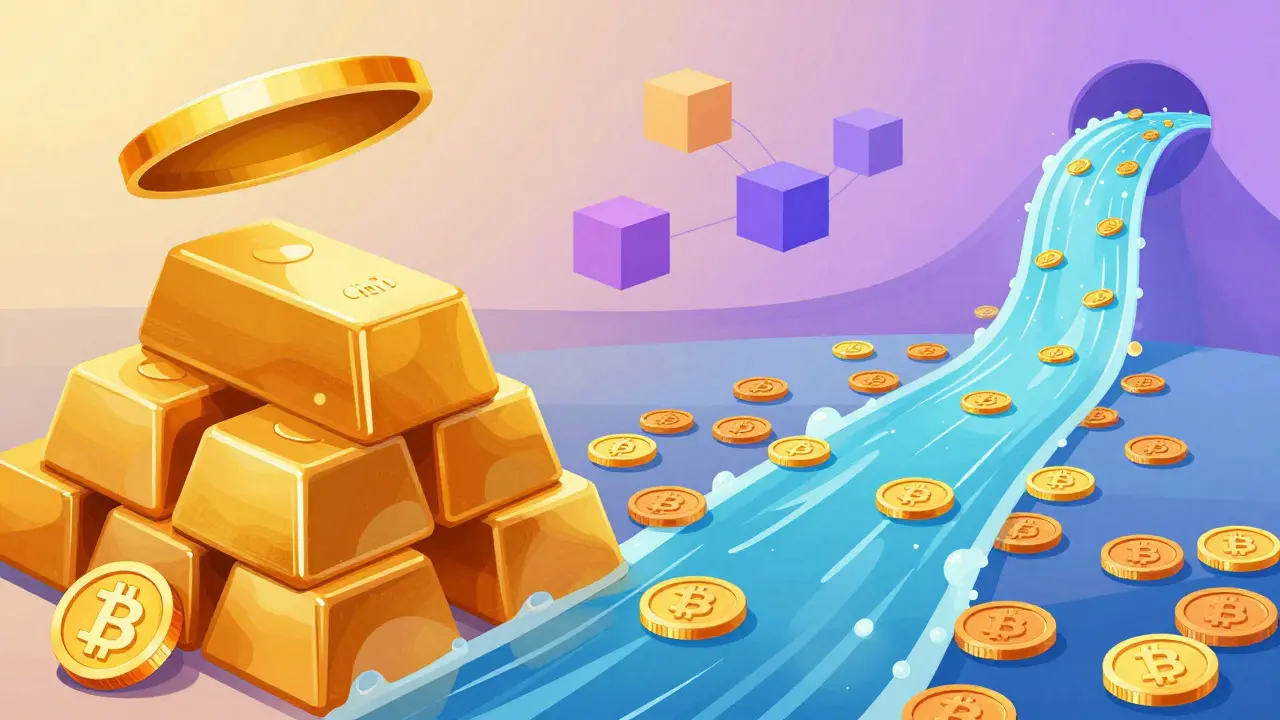
This is where things get interesting for investors. If you think of Bitcoin as having a maximum limit, Dogecoin breaks that rule entirely. Bitcoin has a hard cap of 21 million coins. Once those are mined, no more will ever exist. Dogecoin, however, has no maximum supply cap. Miners produce approximately 10,000 new coins every single minute.
Why would anyone design an infinite currency? The creators wanted it to feel approachable. With billions of coins in circulation, the price per coin stays low, sometimes fractions of a cent. As of April 2024, the price hovered around $0.20 per coin, meaning you could own thousands of units for the price of a few burgers. As of March 2026, the inflation remains steady, keeping the annual rate around 3.5%.
| Metric | Bitcoin (BTC) | Dogecoin (DOGE) |
|---|---|---|
| Consensus Mechanism | Proof-of-Work (SHA-256) | Proof-of-Work (Scrypt) |
| Block Time | 10 Minutes | 1 Minute |
| Total Supply | 21 Million Cap | Infinite (Inflationary) |
| Transaction Fees | High (Network Dependent) | Low (~$0.01) |
This inflation means the value doesn't rise solely due to scarcity mechanics like Bitcoin. Instead, it relies on demand. If more people use it for tips, payments, or tipping streamers, the price goes up despite the growing supply. It serves as a payment currency rather than a store of value. That distinction is vital when you are building a portfolio.
Is "DOG" Ticker Safe?
I mentioned earlier that you might see a ticker that says DOG. Be extremely careful here. While Dogecoin is DOGE, there are thousands of smaller tokens popping up on various platforms. Sometimes, exchanges list a token called "Dog" or similar names. These are often independent projects with no relation to the main Dogecoin network.
Buying a random "DOG" token that claims to be linked to Bitcoin is risky. It might not even support Bitcoin's Lightning Network or similar protocols. Always double-check the contract address if you are on a decentralized exchange. Stick to established pairs like DOGE/USD or DOGE/BTC unless you know exactly why you are buying a different variant.
Buying and Storing Your Coins
Getting into this market is easier than ever. You can find Dogecoin on major exchanges like Binance or Coinbase. The process is simple:
- Create an account with a reputable platform.
- Complete your identity verification (KYC).
- Fund your account using fiat currency or stablecoins.
- Search for the DOGE pair.
- Execute your trade.
Once you have bought them, storing them is the next step. Leaving coins on an exchange is convenient, but it comes with risks. If the exchange freezes assets or shuts down, you lose access. A better move is to download a wallet app that supports the Scrypt protocol, such as Trust Wallet or Ledger. These wallets give you full control over the private keys needed to sign transactions.
Why Does It Still Matter?
Some people argue that Dogecoin is just a relic of internet culture from 2013. They say the hype died down years ago. But looking at the data, the project maintains a loyal army. It sponsors football clubs, funds charities, and keeps a developer team active. It proved that a coin started as a meme can actually fund real-world utility.
The community is the backbone here. Unlike projects run by faceless corporations, this is driven by volunteers. They decide the roadmap, they handle the marketing, and they keep the network running. That organic growth makes it resilient in ways traditional businesses aren't.
Is Dogecoin part of the Bitcoin blockchain?
No, Dogecoin runs on its own independent blockchain. It shares similarities in design with Bitcoin, but they are separate networks with different consensus rules.
Can Dogecoin reach the price of Bitcoin?
Mathematically, it is highly unlikely. Dogecoin has an infinite supply and billions of coins circulating. Bitcoin's scarcity drives its high valuation per unit, whereas Dogecoin's abundance keeps individual unit prices lower.
What happens if I buy a coin labeled only "DOG"?
You might be buying a different, unrelated asset. Always verify the ticker symbol. The official mainnet coin uses the ticker DOGE. Many山寨 (clone) coins use similar names to cause confusion.
Does Dogecoin have transaction fees?
Yes, but they are very low compared to Bitcoin. Usually, a transaction costs less than a dollar, making it practical for small online purchases and transfers.
Who controls the development of Dogecoin?
Development is open-source and maintained by a group of community volunteers. There is no central company owning the project, which ensures decentralization.

Comments
Matt Bridger
asset valuation relies on utility rather than superficial meme status which drives irrational exuberance among novice participants lacking deep understanding of underlying blockchain technology mechanics inherent to proof of work systems
Alex Lo
I really think people dont get how special doge is even though teh author said someting about Bitcoin mixing It started as joke but now its real money People use every day for buying stuff online which is crazy nice Wait times are low and fees are almost nothing This is compared to what btc charges you Everyone forgets that community runs it That is powerful than any corporation running a coin So i believe we should hold tight instead of selling early Prices drop a bit like my friend told me yesterday Supply inflation doesnt matter if demand keeps going up New users join everyday and using it for payments at stores Look at how many charities get funds through donations in doge That helps so many people in bad situations needing food or shelter from storms So please stop worrying about the name difference too much The ticker is clear if you look closely Stop clicking buy before you check Technology is different but the spirit stays alive with miners working hard to keep the chain secure against attacks Its fun to own coins named after a dog face and sharing them with friends is easier since units cost pennies I hope everyone reads the whole guide but remembers the heart of crypto is freedom to choose what you want to believe Scarcity of bitcoin does not equal better utility for small shops who need speed over holding value long term Infinite supply feels scary but stable inflation protects us from massive price spikes that hurt normal buyers trying to spend cash Keep learning about wallets and safety steps like hardware keys so you do not lose your keys to hackers easily This is why i am staying invested regardless of what the news says today or tomorrow about market crashes coming soon You gotta stick to your guns and ignore the noise around ticker symbols confusing newbies constantly
Wade Berlin
Another day another confused investor looking for the perfect meme investment while ignoring the basic tech details completely
Joy Crawford
but matt u dont understand the pain of seeing values drop so much its really sad i feel so empty when i check my portfolio again and again 😭 why does it have to be so hard to keep track of everything 🥺 nobody cares about us regular people 😢
Shaira Vargas
OMG yeah that guy totally did not know what he was talking about and im scared now that i put money into the wrong thing omg i feel sick inside my stomach right now 💔 why does crypto always hurt us poor girls so much 😱
Samson Abraham
security matters more than name confusion in end result of trades you make daily
Colin Finch
What a tale of digital dogs and paper fortunes tangled up in the web of blockchain destiny indeed quite the spectacle for modern times
Elizabeth Akers
its really cool how far we came from just laughing about a dog picture now to actual money systems running smoothly today honestly
Liam Robertson
Yes absolutely correct and we should keep pushing forward with positivity because the tech works well for transfers between friends
Sean Carr
Always verify the contract address before purchasing any token labeled with similar tickers to avoid losses.
Lisa Miller
Great breakdown of the differences here thanks for explaining it clearly so we can shop safely without getting tricked by fake coins
Beverly Menezes
yeah it helps lots to read things carefully first then buy safe stuff only no risks please
Jay Starr
The potential loss of funds hangs heavy in the air like dark clouds above our digital portfolios silently
Ronald Siggy
Focus on education and secure storage methods to eliminate those risks completely from your financial journey ahead