
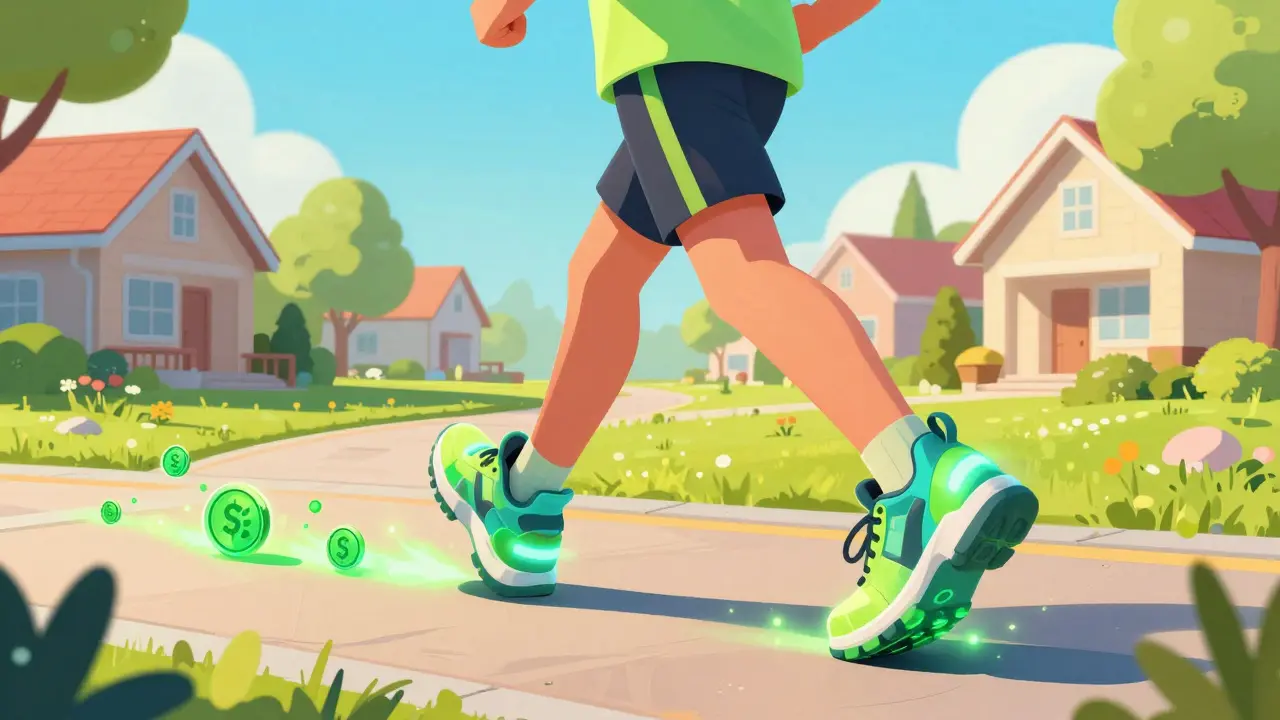
The Engine Behind GST: STEPN and Move-to-Earn
To understand GST, you first have to understand STEPN is a Web3 lifestyle application that incentivizes physical activity through NFT-based sneakers. The app uses GPS and accelerometer data to track your movement. When you walk or run with a digital pair of sneakers, the system rewards you with GST. This isn't like traditional mining where a computer solves math problems. Here, the "work" is your actual physical effort. The tokens are generated based on your speed, the quality of your NFT sneakers, and your consistency. It's a fundamental shift in how we think about rewards, moving the value generation from a server farm to the pavement of your local street.Dual-Token Economy: GST vs. GMT
STEPN doesn't just use one coin; it uses a dual-token system to keep the economy stable. While GST is the reward you earn daily, there is a second, more powerful token called Green Metaverse Token is the governance token of the STEPN ecosystem with a capped supply of 6 billion tokens. Commonly referred to as GMT, it acts as the "premium" currency. Think of GST as the daily spending money and GMT as the investment or voting power. Because GST is printed every time someone goes for a walk, it can suffer from inflation if not managed. GMT, on the other hand, is used for high-level decisions and has a fixed supply, making it a different animal entirely in terms of value and purpose.How the BSC Version Differs from Solana
Originally, GST lived exclusively on the Solana is a high-performance blockchain known for its fast transaction speeds and low costs. As the app exploded in popularity, it expanded to the BNB Smart Chain is a blockchain network developed by Binance that supports smart contracts and decentralized apps. Also known as BSC, it allowed more users to access the ecosystem. Here is where it gets tricky for investors. There is often a price gap between the Solana version and the BSC version of the token. In some market conditions, this disparity has been as high as 68%. Why does this happen? It usually comes down to liquidity-how easily the token can be bought or sold on a specific chain. If more people are trading GST on BSC through PancakeSwap is a decentralized exchange (DEX) on the BNB Smart Chain where users swap tokens. than on Solana exchanges, the prices can drift apart.| Feature | Green Satoshi Token (GST) | Green Metaverse Token (GMT) |
|---|---|---|
| Primary Role | Utility & Reward | Governance & Investment |
| Supply Type | Inflationary (Earned by movement) | Capped (6 Billion) |
| Main Use Case | Repairs, Leveling, Minting | Protocol Voting, High-tier upgrades |
| Generation Method | Physical Activity / Leasing | Token Sale / Ecosystem Allocation |
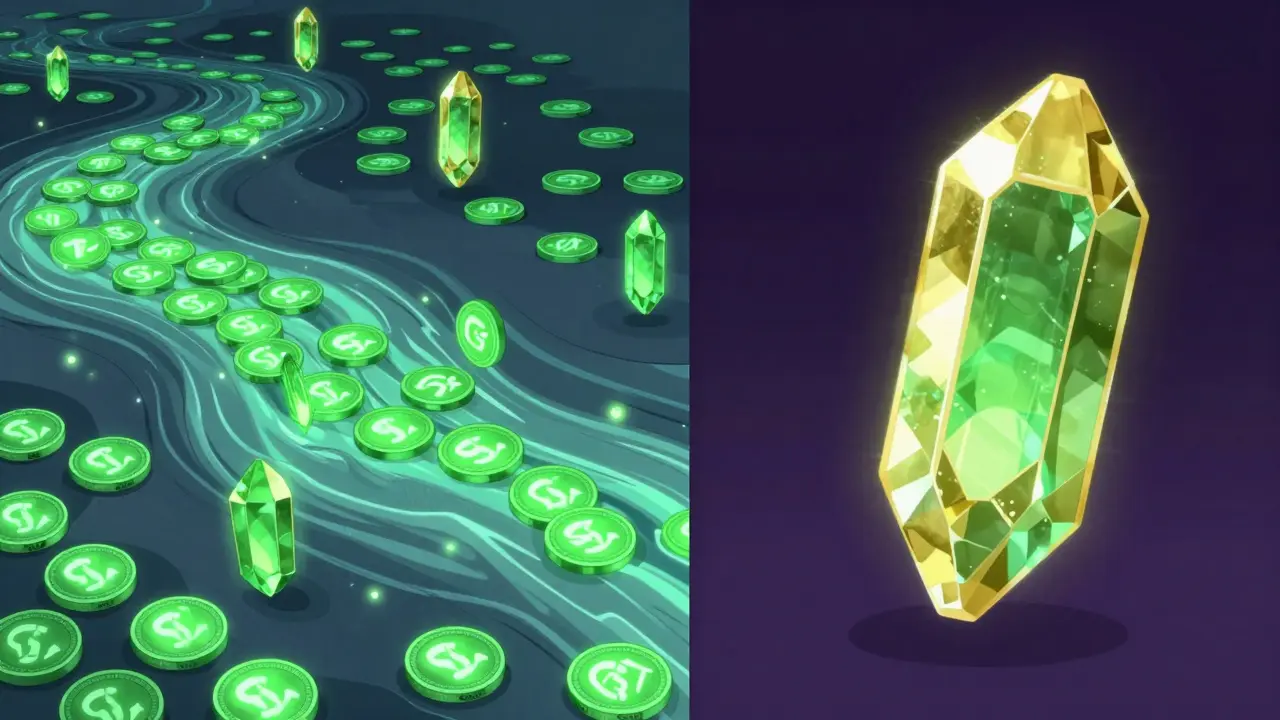
The Burn Mechanism: Fighting Inflation
Since GST is constantly being created by thousands of people walking, the total supply could skyrocket, which would crash the price. To stop this, STEPN uses a "use-and-burn" model. This means that to keep your digital sneakers working, you have to pay GST, and those tokens are permanently destroyed (burned). You'll find yourself burning GST when you do the following:- Repairing your shoes after they've been used for walking.
- Leveling up your NFT sneakers to earn more rewards.
- Adding or upgrading gems to improve sneaker stats.
- Unlocking new sockets for more gems.
- Resetting sneaker attributes for a fresh start.
Market Reality: The Price Crash and Volatility
If you are looking at Green Satoshi Token (BSC) today, the numbers are sobering. At its absolute peak on May 25, 2022, GST hit an all-time high of $25.24. Fast forward to April 2026, and it is trading in the fractions of a cent-often between $0.0008 and $0.0020. That is a drop of roughly 99.99%. This happened because the initial hype for "Move-to-Earn" was massive, leading to a surge of users who earned GST but didn't burn it fast enough. When the reward-to-burn ratio tipped, the price plummeted. Today, the token suffers from low liquidity. You might see one exchange reporting a 5% gain while another shows a decline, simply because a few small trades are moving the needle in a thin market.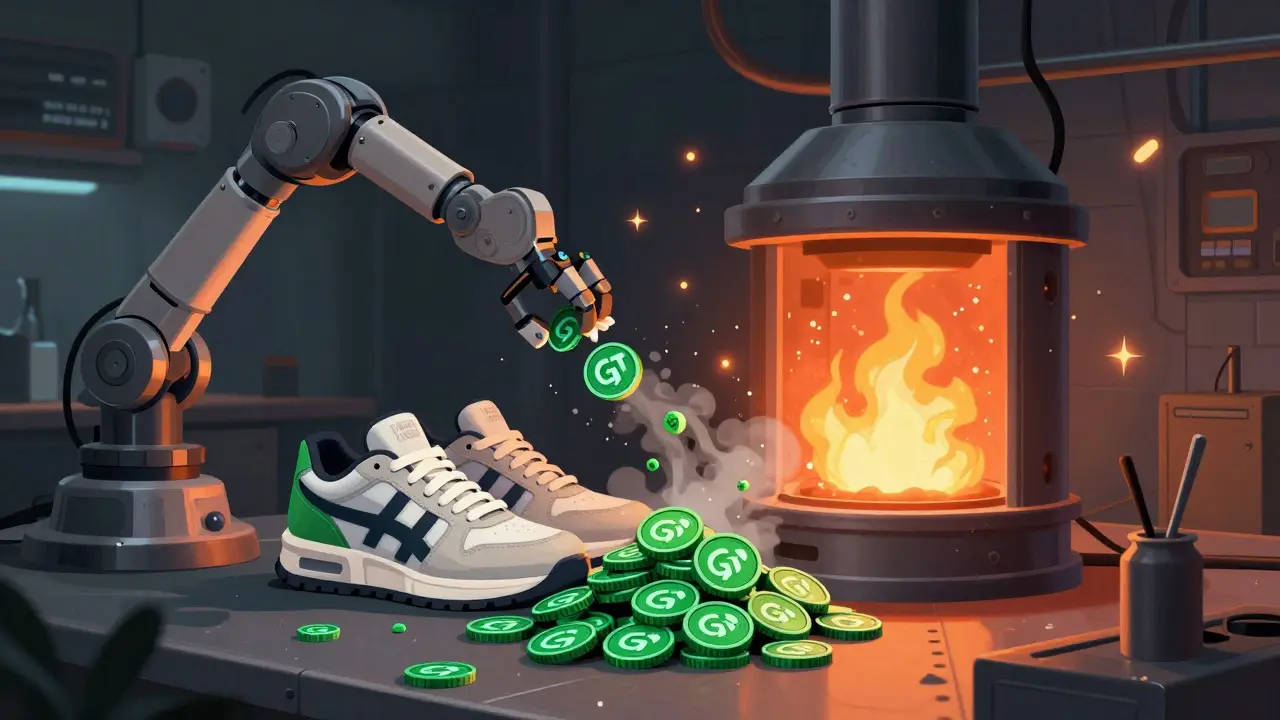
How to Trade GST on BSC
Since GST isn't available on every major centralized exchange, most people use decentralized options. To get your hands on GST-BSC, you generally follow these steps:- Buy BNB is the native utility token of the BNB Chain ecosystem. Also known as Binance Coin, it is used for gas fees and trading. on an exchange like Binance.
- Transfer your BNB to a compatible hot wallet. Popular choices include MetaMask is a software cryptocurrency wallet used to interact with the Ethereum and BSC networks. or Trust Wallet.
- Connect your wallet to PancakeSwap.
- Import the GST-BSC contract address (0x4a2c860cec6471b9f5f5a336eb4f38bb21683c98) to ensure you are swapping for the correct token.
- Execute the swap from BNB to GST.
The Verdict on GST's Future
GST is a fascinating experiment in behavioral economics. It proved that people are willing to change their daily habits for digital rewards. However, as a financial asset, it carries immense risk. Its value is tied directly to the number of active users in the STEPN app. If people stop walking or stop repairing their shoes, the utility of GST vanishes. For those who enjoy the game, GST is a great way to gamify fitness. For the investor, it's a high-volatility asset that reflects the boom-and-bust cycle of early Web3 gaming. Whether it can recover from its 99% drop depends entirely on whether the developers can attract a new wave of users to the Move-to-Earn lifestyle.Is Green Satoshi Token (GST) the same as GMT?
No. GST is a utility reward token earned through physical activity in STEPN and is used for repairs and upgrades. GMT is a governance token with a limited supply used for voting on project decisions and high-level ecosystem functions.
Why is there a price difference between GST (BSC) and GST (Solana)?
The difference is primarily due to liquidity and trading volume on the respective blockchains. Since they trade on different exchanges (like PancakeSwap for BSC), the prices can drift apart based on local supply and demand.
How do I earn GST crypto?
You earn GST by using the STEPN app, owning NFT sneakers, and engaging in physical activities like walking, jogging, or running. The amount you earn depends on your sneaker's attributes and your activity level.
What does "burning" GST mean?
Burning refers to the permanent removal of tokens from circulation. In STEPN, when you pay GST to repair shoes or level up, those tokens are destroyed to prevent hyperinflation and help maintain the token's value.
Is GST a safe investment?
GST is considered extremely high-risk. It has experienced a price drop of over 99% from its all-time high and is subject to extreme volatility. It should be viewed more as a game utility token than a stable financial investment.

Comments
Noel Mandotah
Oh wow, imagine investing in something that drops 99.99%. Truly a masterclass in financial planning.
Sri Astuti
The fundamental flaw in this whole M2E model is that it relies on a perpetual influx of new capital to sustain reward payouts, which is basically a Ponzi scheme dressed up as fitness software, and honestly, anyone who thinks the burn mechanism can offset a 99% crash is just delusional about how liquidity actually works in a bear market 🙄.
Brendan Thraxton
just keep walking and stay positive everyone. its a cool way to get moving even if the coin price is wild
Ryan Nakielny
Totally. Because nothing says "healthy lifestyle" like staring at a 1-minute candle chart while jogging in circles.
Livvy Cooper
This is just a waste of energy. Why do we need tokens to walk? Just walk because it is good for you. This is silly.
Emily A
The author correctly identifies the liquidity disparity between BSC and Solana, but fails to emphasize that the inflationary pressure of GST is a systemic failure of the tokenomics design.
Janis Naglis
I love the synergy here!!! It's all about that holistic approach to wellness, and utilizing the DeFi ecosystem to incentivize physical movement is such a vibe... even if the volatility is a bit high!!!
Elle Kharitou
It is truly fascinating to contemplate how we have commodified the simple act of walking through the lens of blockchain technology, essentially turning our physical existence into a data point for a digital economy, which makes me wonder if we are finding balance or simply adding another layer of stress to our wellness journeys 🌿✨.
Lex Harley
The slippge on Pancakeswap can be realy bad for GST-BSC if the pool is thin... i think the arb oportunity between chains is mostly gone now
Nitin Gupta
I agree that the dual-token system was a good attempt to separate governance from utility, although the execution had some challenges.
Kathleen Warren
If you're new to this, just be careful. Don't put in more money than you're okay with losing since it's very risky.
Tracy McBurney
The 99.99% drop isn't just "volatility," it's a complete collapse of value. Calling it a "wild ride" is an understatement of the highest order.
Arti Jain
Only a fool would invest in this now. Pathetic.
Abhishek Verma
Sure, because we all know that "burning" tokens is a foolproof way to save a dying project. Pure genius lol.
Pramendra Singh
It's still a great way to stay active, regardless of the price!
Bevon Findley
Boring. Basics. 🥱
Kristi Swartz
one should not gamble with these assets it is wrong and unwise
Alex Mazonowicz
I still believe in the tech!!! The recovery is always possible if the community stays strong!!!
Gabby Puche
Just enjoy the walks 👟✨
Barbara Jones
i tried using it but my shoes broke too fast and it cost more to fix them than i earned lol
Wayne Gillis
Who is still using this? 😂 I remember when everyone was obsessed with it for like a week! 🚀📉