
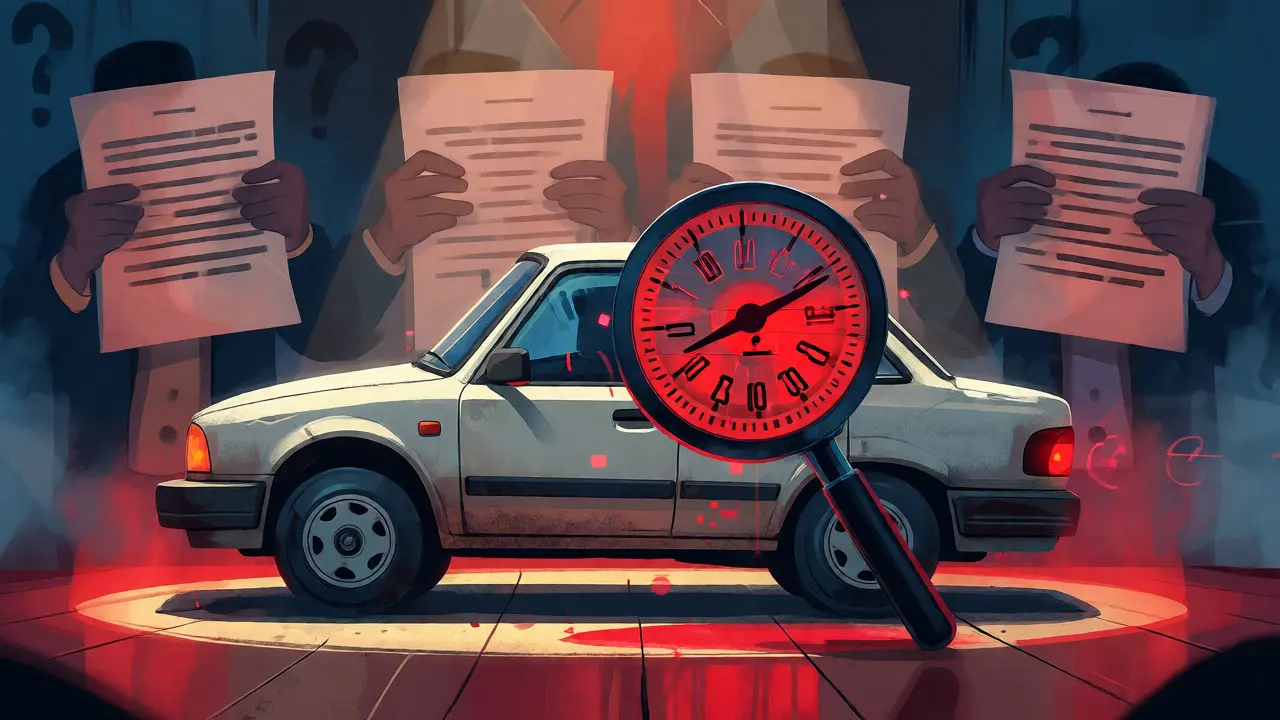
Imagine a world where your car’s maintenance history is as trustworthy as a bank statement, and you get paid in crypto just for driving. That isn't science fiction; it's the core promise of MVL, or Mass Vehicle Ledger. While most cryptocurrencies exist purely on screens, MVL tries to bridge the gap between digital tokens and physical vehicles. If you've ever wondered how blockchain can actually fix the messy, opaque world of transportation, this guide breaks down exactly what MVL is, how it works, and why it matters.
The Core Problem: Trust in Mobility
Think about buying a used car. How do you know the odometer hasn't been rolled back? How do you know the accident history wasn't hidden by the dealer? In traditional markets, we rely on centralized databases that can be hacked, manipulated, or simply incomplete. This lack of transparency costs consumers billions annually in fraud and inefficiency.
MVL Foundation Pte. Ltd., based in Singapore, launched its project to solve this exact issue. They didn't start with code; they started with cars. Since 2018, they have operated real-world services like TADA, a zero-commission ride-hailing app, and ONiON Mobility, an electric vehicle manufacturer. By running these businesses first, they generated millions of data points before even launching their mainnet. This "proof-of-use" approach distinguishes MVL from many vaporware projects that promise utility but deliver only whitepapers.
How MVL Works: The DePIN Model
MVL operates on a concept called DePIN, which stands for Decentralized Physical Infrastructure Network. Instead of relying on a single company to own all the servers and data, MVL distributes this infrastructure across thousands of participants. Every trip taken on TADA, every battery swap at an ONiON station, and every repair logged by a mechanic gets recorded on the MVLChain.
This creates an immutable ledger-a permanent record that cannot be altered retroactively. When a driver completes a ride, the transaction is verified and stored on-chain. This data feeds into a reputation system. Drivers who maintain good records and provide accurate data earn MVL tokens as rewards. It’s a closed-loop economy where participation generates value, rather than just speculation driving price action.
| Component | Function | User Role |
|---|---|---|
| TADA Ride-Hailing | Zero-commission taxi service | Drivers/Riders earn MVL for trips |
| ONiON Mobility | Electric three-wheeler manufacturing | Asset tokenization & charging data |
| Clutch Wallet | Official Web3 wallet integration | Storing/staking MVL tokens |
| MVL Fi | Decentralized Finance layer | Liquidity provision & yield farming |
Tokenomics: Supply, Utility, and Value
As of late September 2026, the total supply of MVL is capped at 30 billion tokens. A significant portion-roughly 27.8 billion-is already in circulation. You might notice the price per token is quite low, often trading below $0.01 USD. Don't let that fool you; high supply doesn't necessarily mean low potential. What matters more is utility.
MVL serves multiple functions within its ecosystem:
- Incentives: Users receive MVL for contributing data, such as logging a vehicle repair or completing a ride.
- Governance: Token holders can vote on protocol upgrades and treasury decisions.
- Payments: MVL can be used to pay for services within the TADA and ONiON networks.
- Staking: Holders can stake their tokens via Clutch Wallet to earn passive income and secure the network.
The token exists primarily as an ERC-20 asset on Ethereum, but thanks to a bridge, it also runs as a BEP-20 token on BNB Chain. This multi-chain compatibility lowers gas fees for users, making micro-transactions feasible. For instance, paying a fraction of a cent for a short ride becomes practical when you aren't burning $5 in Ethereum gas fees.
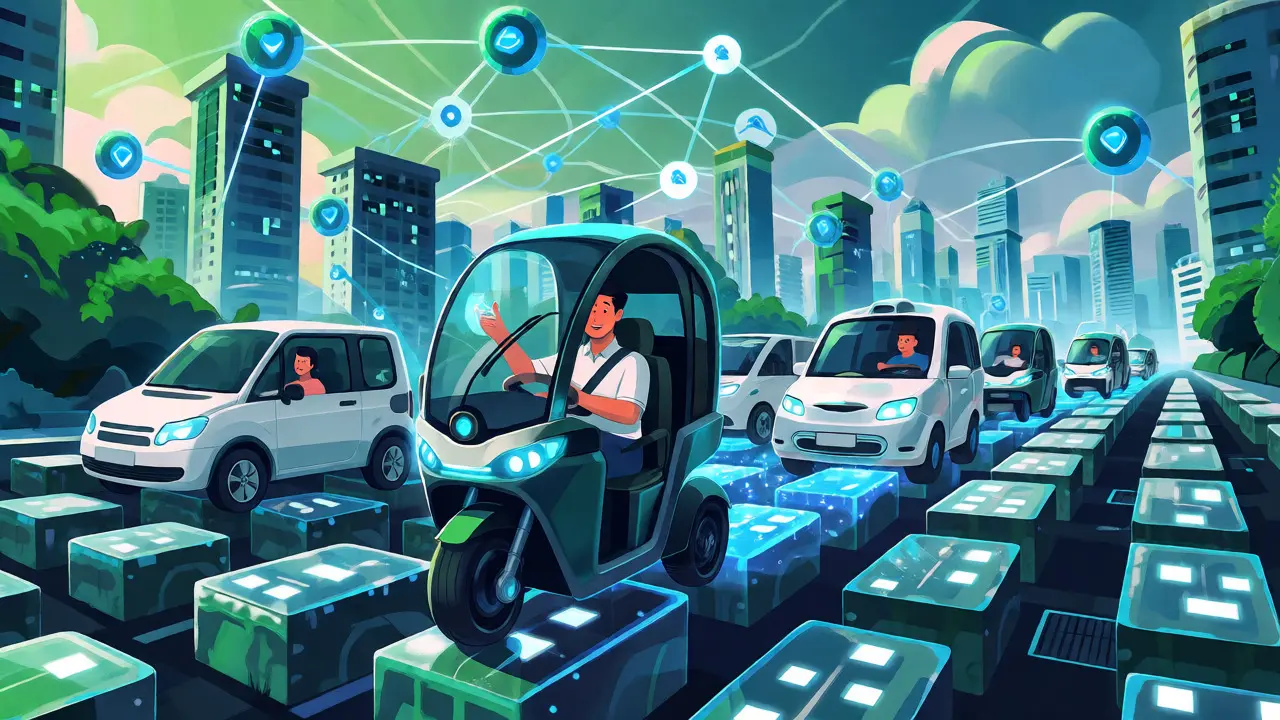
Real-World Integration: TADA and ONiON
You don't need to understand smart contracts to use MVL. The technology is abstracted away behind familiar apps. Take TADA, which operates in six countries including Singapore, Vietnam, and Cambodia. Unlike Uber or Grab, which take 20-30% commission from drivers, TADA charges 0%. Where does the platform make money? From data monetization and token economics.
Every ride generates data: route efficiency, traffic patterns, and driver behavior. This data is valuable to insurers, city planners, and automotive manufacturers. By selling access to this anonymized, verified data pool, the ecosystem sustains itself while returning value to users via MVL rewards. Similarly, ONiON produces battery-swappable electric trikes. Each swap is recorded on-chain, creating a transparent history of battery health. This prevents the "lemon problem" where second-hand EV buyers can't verify battery degradation.
Why Choose MVL Over Other Mobility Tokens?
The crypto space is littered with failed attempts to tokenize transportation. So, what makes MVL different? Most competitors are pure software plays-they build a blockchain and hope companies will adopt it. MVL built the companies first.
Consider the competition table below to see how MVL stacks up against generic DePIN projects:
| Feature | MVL (Mass Vehicle Ledger) | Generic DePIN Token |
|---|---|---|
| Physical Assets | Owned/Operated (TADA fleet, ONiON EVs) | Rental/User-owned devices |
| Data Source | Direct operational control | Third-party integrations |
| Revenue Model | Data sales + Zero-commission volume | Token inflation + Staking fees |
| User Adoption | 1M+ users since 2021 | Often speculative early adopters |
This vertical integration gives MVL a moat. They control the hardware, the software, and the data pipeline. It reduces reliance on external partners who might leave the ecosystem if better offers arise.
Getting Started: Buying and Using MVL
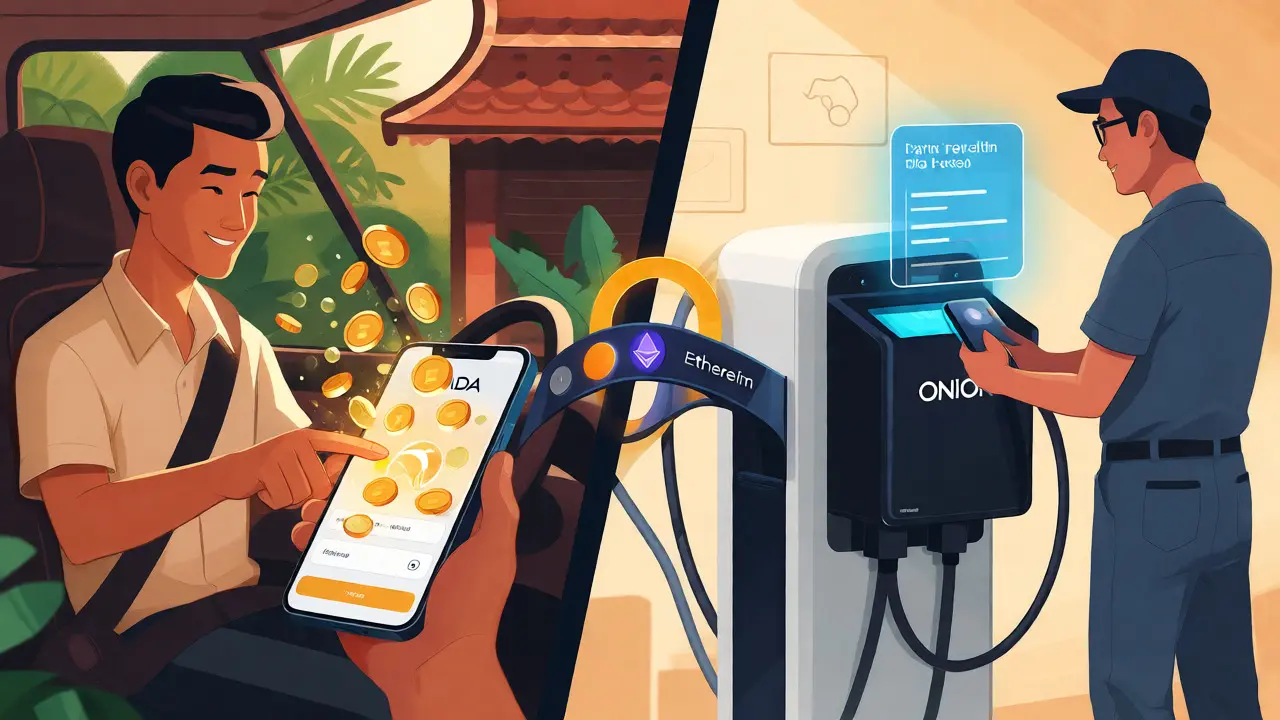
If you're interested in participating, acquiring MVL is straightforward. It's listed on major exchanges like Upbit, Gate.io, and Bybit, as well as decentralized exchanges like Uniswap. Once you have the tokens, you'll likely want to move them to a compatible wallet. MetaMask and Trust Wallet work well for general storage, but Clutch Wallet offers deep integration with the MVL ecosystem, allowing seamless staking and reward claiming.
For active users, staking MVL through MVL Fi provides yield. However, remember that crypto assets carry risk. Prices fluctuate based on broader market sentiment, not just ecosystem usage. Keep an eye on regulatory developments in Southeast Asia, as MVL's primary operations are centered there.
Frequently Asked Questions
Is MVL a good investment?
MVL has strong fundamentals due to its real-world operations in Southeast Asia, but it remains a small-cap altcoin. Its value depends heavily on the adoption of DePIN narratives and continued growth of TADA and ONiON. Always do your own research and consider the volatility of sub-cent tokens.
Can I use MVL to pay for rides?
Yes, MVL tokens are integrated into the TADA ecosystem. While fiat currency is still common for payments, the incentive structure allows users to earn and potentially spend MVL within the platform, especially as cross-border settlement features expand.
What is Clutch Wallet?
Clutch Wallet is the official Web3 wallet for the MVL ecosystem. It is designed to simplify the user experience by automatically handling token rewards from driving or riding activities, removing the need for manual claim processes typical in other DeFi protocols.
Does MVL support Ethereum and BNB Chain?
Yes, MVL is a multi-chain token. It exists as an ERC-20 token on Ethereum and a BEP-20 token on BNB Chain. A token bridge allows users to move funds between these networks, offering flexibility in choosing lower transaction fees.
Who backs the MVL project?
The project is overseen by MVL Foundation Pte. Ltd., a Singapore-based organization. They operate directly under the foundation, managing brands like TADA and ONiON, which provides a level of corporate accountability often missing in decentralized autonomous organizations (DAOs).

Write a comment