
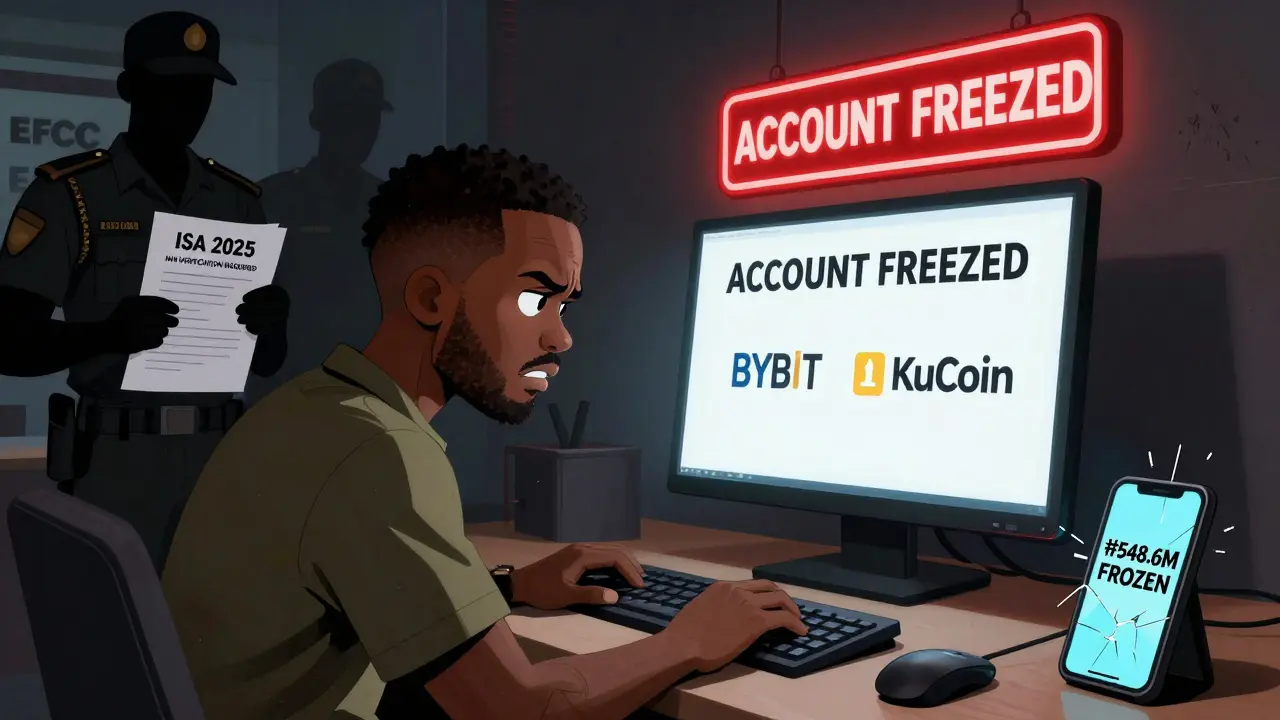
If you're a Nigerian using cryptocurrency, your biggest risk isn't price swings or hacking-it's using the wrong exchange. Since the Investments and Securities Act (ISA 2025) took effect, Nigeria has become one of Africa’s strictest crypto regulators. The Securities and Exchange Commission (SEC) now has full power to freeze bank accounts, seize assets, and pursue criminal charges against anyone using unlicensed platforms. And it’s not just a warning-it’s happening. In September 2024 alone, the Economic and Financial Crimes Commission (EFCC) froze 22 bank accounts linked to Bybit and KuCoin transactions, totaling ₦548.6 million (about $330,000). If you’re still using unlicensed exchanges, you’re playing with fire.
Why Unlicensed Exchanges Are Dangerous in Nigeria
The Nigerian government didn’t just make rules-it built enforcement tools. Under ISA 2025, every crypto exchange operating in Nigeria must be licensed by the SEC. That means they must:- Have a registered Nigerian company with the Corporate Affairs Commission (CAC)
- Use biometric KYC (National Identification Number or NIN verification)
- Integrate with Nigerian banks for Naira deposits and withdrawals
- Implement real-time transaction monitoring that flags suspicious activity in under 500 milliseconds
- Maintain a minimum capital of ₦500 million (roughly $300,000)
- Carry SEC-mandated insurance of up to ₦50 million per user account
Exchanges You Should Avoid Right Now
As of March 2026, the SEC has only licensed two exchanges: Quidax and Busha. Everything else is operating illegally-and you’re at risk if you use them.Bybit: Despite having millions of Nigerian users, Bybit has no Nigerian entity. It doesn’t use NIN verification. It doesn’t report to the NFIU. In September 2024, the EFCC froze accounts linked to Bybit trades. Users on Nairaland reported losing ₦5 million or more, with 41% never recovering their funds.
KuCoin: KuCoin’s Nigerian traffic dropped by 61% after the EFCC crackdown. Its P2P platform still allows trading without proper KYC, which the SEC explicitly banned. One Reddit user, u/LagosTrader89, spent 47 days and 12 visits to EFCC offices to recover just 63% of ₦2.4 million locked in a KuCoin-linked account.
Binance P2P: Binance doesn’t have a Nigerian license. Its P2P marketplace accounts for over 78% of the suspicious transactions flagged by the EFCC in Q3 2024. While Binance.com itself is blocked in Nigeria, its P2P gateway remains accessible-and dangerous. Users who trade Naira for USDT on Binance P2P are now prime targets for account freezes.
OKX, Gate.io, MEXC: These platforms have no presence in Nigeria’s regulated ecosystem. They don’t integrate with Nigerian banks. They don’t verify NIN. They don’t comply with CBN guidelines. If you’re using any of them, you’re already in violation of ISA 2025.
What Happens When Your Account Gets Frozen
It’s not a simple “your funds are temporarily locked” message. This is a legal action. When the EFCC freezes your account:- Your bank will freeze all funds linked to crypto transactions
- You’ll need to visit EFCC offices in person-no online appeals
- You’ll have to prove the source of your funds, often with bank statements from 6+ months ago
- Recovery can take 30 to 90 days
- Many users never get back more than half of their money
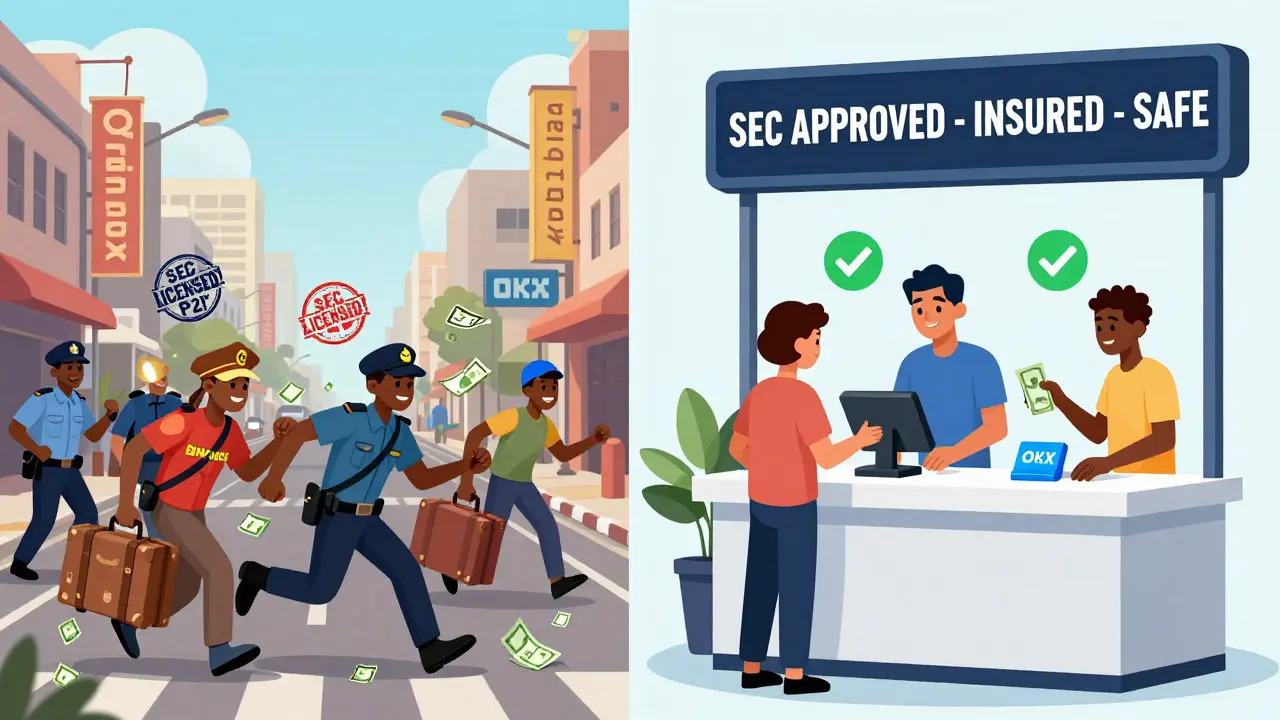
How to Check If an Exchange Is Licensed
Don’t guess. Don’t rely on YouTube tutorials or Telegram groups. Here’s how to verify:- Go to sec.gov.ng/crypto-exchanges (updated weekly). Look for the exchange name and its SEC license number (e.g., SEC/CRP/2025/001).
- Check the Corporate Affairs Commission (CAC) registry. Licensed platforms have Nigerian company names: Quidax Technologies Limited (RC1782456), Busha Fintech Limited (RC1834562).
- Look for the CBN Verified badge on the exchange’s Nigerian website. Click it-it should redirect to an SMS verification page. Send “VERIFY [exchange name]” to 20255. If it says “Not Licensed,” stop using it.
- Confirm NIN integration. Licensed platforms require you to enter your National Identification Number during KYC. If they don’t ask for it, they’re not compliant.
If you can’t verify any of these, walk away.
Why People Still Use Unlicensed Exchanges (And Why They Shouldn’t)
Some users stick with Bybit or KuCoin because they claim lower fees-0.15% vs. 0.25% on licensed platforms. But here’s the math:- Lower fee: saves you ₦25 on a ₦100,000 trade
- Risk of account freeze: could cost you ₦2 million or more
Others say licensed exchanges have poor liquidity. But Quidax and Busha now support Naira deposits as low as ₦1, with instant settlement. Their trading volume has grown 220% since January 2025. The market is shifting. You’re not saving money-you’re falling behind.
The Bigger Picture: Nigeria Is Changing
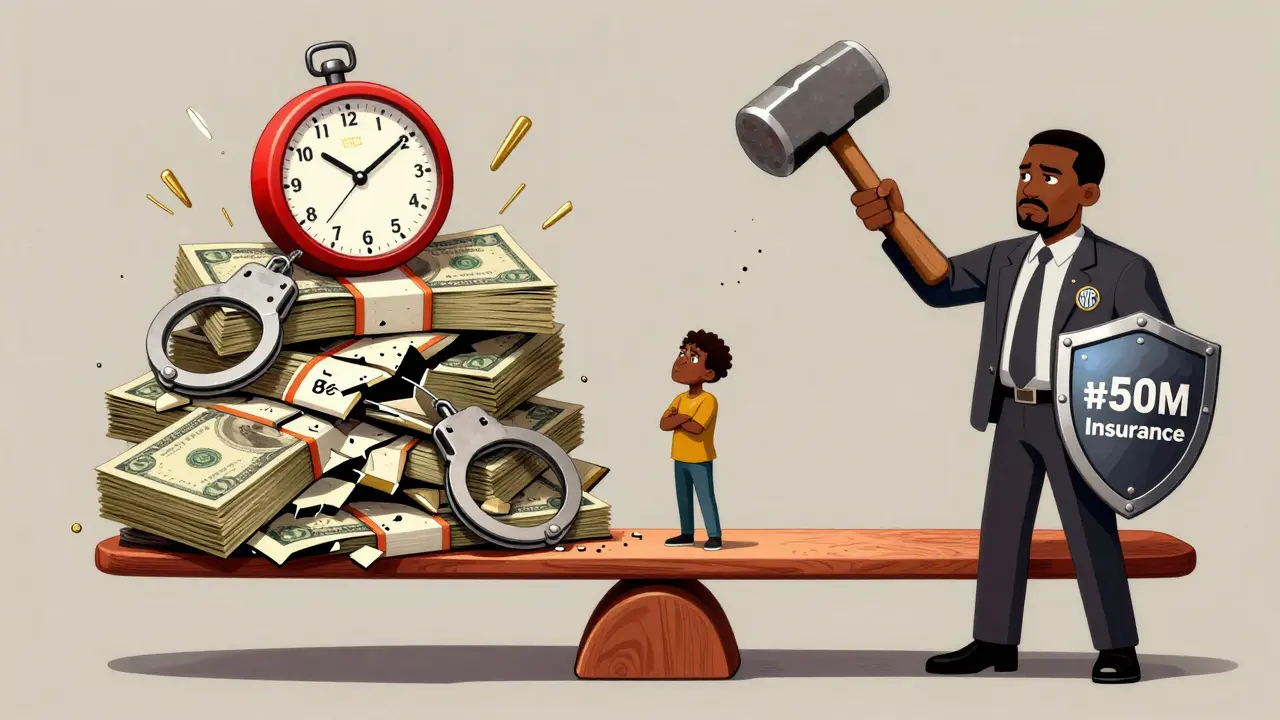
Nigeria used to be the world’s second-largest P2P Bitcoin market, with $400 million in monthly trading volume in 2024. Now, 63% of that unregulated activity has vanished. Licensed platforms now handle 37% of all Nigerian crypto volume, up from just 12% a year ago.The SEC is not slowing down. By September 2026, automated systems will freeze assets from unlicensed exchanges within 15 minutes of detection. The EFCC’s crypto unit has grown from 15 to 47 officers. The message is clear: if you’re not licensed, you’re not welcome.
Even decentralized exchanges (DEXs) like Uniswap aren’t safe. They’re not regulated, and the Nigerian Cybersecurity Experts Forum reports a 34% rise in DEX usage since ISA 2025. But with no KYC, no insurance, and no recourse, they’re riskier than ever.
What Should You Do Now?
- Stop using Bybit, KuCoin, Binance P2P, OKX, Gate.io, MEXC, or any platform not on the SEC registry.
- Move your funds to Quidax or Busha. Both allow instant Naira deposits and withdrawals.
- Verify your account with NIN and bank details. It takes 10 minutes.
- Bookmark sec.gov.ng/crypto-exchanges. Check it every month.
- Warn others. A friend using KuCoin today could lose everything tomorrow.
Crypto in Nigeria isn’t dead-it’s just getting real. The days of offshore anonymity are over. If you want to trade safely, you have to play by the rules. There’s no shortcut. There’s no workaround. And there’s no second chance when the EFCC comes knocking.
Are Bybit and KuCoin completely banned in Nigeria?
No, they aren’t officially banned by law. But they’re unlicensed, which makes operating them illegal under ISA 2025. The SEC has the power to freeze accounts, seize assets, and prosecute users. The EFCC has already done this to hundreds of people. Using them is not just risky-it’s legally dangerous.
Can I still use Binance P2P in Nigeria?
Technically, yes-but it’s the most dangerous option. Binance P2P doesn’t require Nigerian KYC, so it’s flagged as a high-risk channel by the EFCC. Over 78% of suspicious crypto transactions in Q3 2024 came from unregulated P2P trades. If you use it, you’re likely to face account freezes, bank restrictions, or legal inquiries. Switch to Quidax or Busha for secure, legal trading.
What happens if I transfer crypto from an unlicensed exchange to a licensed one?
The transfer itself isn’t illegal. But if the funds originated from an unlicensed exchange, the EFCC may still investigate the source. If your bank account was flagged for past activity on KuCoin or Bybit, moving crypto to Quidax won’t erase the red flag. The safest move is to stop using unlicensed platforms entirely and only deposit funds you’ve earned through licensed channels.
Is Quidax and Busha the only safe option now?
As of March 2026, yes. Only Quidax and Busha have received full SEC licensing. Dozens of other platforms are still applying, but until they appear on the SEC’s official registry with a valid license number, treat them as unlicensed. Don’t assume they’re safe just because they look professional. Always verify via sec.gov.ng/crypto-exchanges and the CAC registry.
Can I get my money back if my account gets frozen?
Sometimes-but it’s not guaranteed. The EFCC doesn’t guarantee refunds. Recovery depends on proving the source of funds, submitting documents, and attending multiple in-person hearings. According to Nairaland data, 41% of users never recovered their full funds. Licensed exchanges offer insurance up to ₦50 million per account. Unlicensed ones offer nothing.

Comments
Dominic Taylor
This is a solid breakdown. The SEC's enforcement tools are way more sophisticated than most realize. Real-time monitoring in under 500ms? That's not just compliance-it's surveillance-grade infrastructure. Nigerian banks are now embedded in the crypto compliance chain. No more hiding behind P2P shells. The game changed.
JOHN NGEH
I've been on Quidax for 6 months now. The NIN verification took 8 minutes. Deposits hit in 12 seconds. Withdrawals? Same. I used to trade on KuCoin because I thought fees were lower. Now I realize I was paying in stress, sleepless nights, and fear of EFCC knockouts. This isn't about regulation-it's about safety.
Justin Credible
frankly i didnt even know nigerian banks could freeze accounts for crypto. thought it was all decentralized. guess not. switched to busha last week. no drama. no drama at all. peace of mind > 0.1% fee savings
Jeannie LaCroix
I'm American but I have family in Lagos. I watched my cousin lose ₦3.2 million on Binance P2P. She had to go to EFCC HQ three times. They made her sit in a hallway for 6 hours. No AC. No water. Just a clipboard and a guy who said 'come back next week'. She got 40% back. I told her: if you're gonna gamble, at least gamble with a casino that has a license. She cried. I cried. We both switched to Quidax. No regrets.
Alice Clancy
Nigeria needs to stop being soft. Freeze their wallets. Arrest their phones. Block their IPs. If you're using unlicensed platforms, you're not a trader-you're a liability. And if you're reading this and still on KuCoin? You're asking for prison. No sympathy. No mercy. Just consequences.
Brijendra Kumar
Lmao. People still think they can outsmart the state? The EFCC has AI that traces crypto flows through bank ledgers like it's reading a children's book. Your 'anonymous' USDT trade? They know your mom's maiden name. They know your sister's school. They know you used your cousin's phone to verify. Wake up. This isn't 2021.
Kayla Thompson
Wow. So now we're supposed to trust a government that can't even fix the power grid? You're telling me to use Quidax because they have a license? What's next? Paying taxes to a corrupt bureaucracy? This isn't safety-it's surrender. And you're calling it wisdom?
Alicia Speas
I appreciate the clarity here. But let’s not forget: regulation isn’t about control. It’s about inclusion. Quidax and Busha aren’t perfect-but they’re the first platforms in Nigeria that actually give users legal recourse. That’s huge. The alternative was chaos. This is evolution, not oppression.
Joshua T Berglan
Yessss!!! 🙌 Switched to Quidax last week. Got my NIN verified in 5 mins. Made my first withdrawal in 17 seconds. Felt like a grown-up. 💪 No more sweating when my phone rings. No more 'did the EFCC come for me?' nightmares. You don't need to be a genius to play this right. Just be smart. And safe. 🤝
Tammy Stevens
The liquidity point is real. I used to say 'Quidax has low volume'-until I tried trading ₦50,000 in USDT. Got filled in 3 seconds. No slippage. No ghost orders. The volume graph has gone from a flatline to a rocket since January. People are waking up. The market’s shifting under their feet. And honestly? It’s beautiful to watch.
Jackie Crusenberry
So what? They froze accounts. Big deal. People still trade. The world doesn't stop because a government says so. This is just another attempt to control money. You're not safer. You're just obedient.
Kevin Da silva
The 500ms monitoring is the real story. That’s not just tech. That’s a statement. Nigeria’s saying: we see everything. No more anonymity. No more excuses. If you’re still on Bybit? You’re not a trader. You’re a data point.
Misty Williams
This is exactly why decentralized finance was invented. To escape corrupt institutions. To bypass authoritarian oversight. To reclaim financial sovereignty. You're not protecting people-you're forcing them into a state-controlled financial prison. This isn't progress. It's regression.
Kevion Daley
I used to think Quidax was just another 'gov-approved' scam. Then I checked their SEC license number. SEC/CRP/2025/001. Verified it on the CAC registry. RC1782456. Then I called their customer support. Real person. Answered in 22 seconds. Gave me my NIN verification status. No bot. No delay. I cried. Not because I was happy. Because I realized I’d been paranoid for nothing. This is what trust looks like.
Marie Mapilar
I just want to say thank you to the person who wrote this. My brother got his account frozen last month. He lost ₦1.8 million. He went to EFCC 5 times. They made him bring 8 bank statements. He cried every night. I didn't know what to do. This post? It gave me the steps. We moved his funds. Verified with NIN. Now he sleeps. I'm so grateful.
Anand Makawana
The regulatory framework is not merely reactive-it is anticipatory. The integration of real-time transaction monitoring with biometric KYC creates a closed-loop compliance ecosystem that is unprecedented in African fintech. The 37% market shift toward licensed entities is not anecdotal-it is systemic. The infrastructure is now scalable, auditable, and enforceable. This is the future of regulated crypto in emerging markets.
Mohammed Tahseen Shaikh
They say 'play by the rules'-but the rules were written by people who don't trade. I’ve been on KuCoin for 3 years. I’ve made ₦40 million. I’ve never been flagged. I’ve never been frozen. Why should I quit because some bureaucrat says so? The system is rigged. The license? A tax. The 'safety'? A cage.
Anna Lee
Just moved my last funds from Binance P2P to Busha. Took 3 mins. Got a confirmation SMS. Felt like I just escaped a sinking ship. You guys are right-this isn’t about fees. It’s about peace. And I’m finally at peace. 💛