
Cryptocurrency: Insights, Risks, and Latest Developments
When working with Cryptocurrency, digital assets that use cryptographic techniques to secure transactions and control new unit creation, you quickly realize it’s more than just a buzzword. Also known as crypto, it fuels payments, smart contracts, and new financial models. Airdrop, free token distribution used to promote projects and reward communities shows how projects attract users, while a Decentralized Exchange, platform that lets users trade directly from their wallets without a central intermediary illustrates the shift toward peer‑to‑peer markets. Finally, a Crypto Tax, the legal obligation to report gains or losses from crypto transactions reminds investors that compliance matters.
One of the biggest draws for newcomers is the promise of easy money through cryptocurrency airdrops. In practice, airdrops can be legitimate marketing tools, but many turn out to be scams that steal personal data or require risky wallet permissions. Understanding the red flags—anonymous teams, unclear token utility, and demands for upfront fees—helps you verify any airdrop safely before you click. This knowledge is echoed across our guides on projects like SHIBSC and GMEE, where we break down the steps to confirm legitimacy.
Trading on adds another layer of skill. Unlike centralized platforms, DEXs let you keep custody of your keys, but they also expose you to smart‑contract bugs and liquidity risks. Our deep dives into MCDEX, VoltSwap, and XCOEX spell out how these platforms work, compare their fee structures, and show where you might encounter impermanent loss. By grasping the mechanics of automated market makers and permission‑less order books, you can choose the right venue for your strategy.
Regulation shapes everything from airdrop legality to exchange licensing. Countries such as Qatar and Thailand have shifted from permissive stances to strict bans, forcing residents to either comply with new rules or find alternative ways to engage with tokenized assets. Meanwhile, Germany’s zero‑tax policy on long‑term holdings offers a unique incentive for investors willing to hold assets for over a year. These regulatory snapshots are crucial because they dictate where you can trade, how you report gains, and what risks you face in different jurisdictions.
Key Themes Across the Collection
Our article set covers three core pillars: security, usability, and market outlook. Security topics range from AMM vulnerabilities to how to spot fake airdrops. Usability focuses on wallet integration, exchange fees, and user‑interface quirks in platforms like Cat.Ex and Defibox. Market outlook pieces, such as the 2025 Global Crypto Adoption Index, give you data‑driven insights on where adoption is accelerating and which tokens are seeing real liquidity.
When you look at token‑specific guides—whether it’s Pandanda on Solana, Hege’s romance‑themed meme token, or the real‑estate‑focused REM—you’ll see consistent frameworks. We break down tokenomics (supply, distribution, utility), price history, community sentiment, and risk factors. This uniform approach lets you compare coins side‑by‑side without having to relearn a new analysis method each time.
Beyond individual coins, we also explore broader concepts like DAO governance with quadratic voting, security token offerings, and the rise of crypto‑backed real‑world assets. These topics tie back to the central idea that cryptocurrency is not just a collection of isolated projects; it’s an evolving ecosystem where governance, regulation, and technology intersect.
For traders focused on liquidity, our “Top Liquid Cryptocurrencies to Trade in 2025” guide ranks assets based on daily volume, market depth, and spread stability. Knowing which tokens can be entered and exited quickly helps you avoid slippage and stay agile during volatile market moves.
Developers and auditors will appreciate the deep dive into AMM vulnerabilities, which outlines common attack vectors like flash‑loan exploits and provides a checklist for smart‑contract reviews. This technical insight links directly to our reviews of platforms like VoltSwap and MCDEX, where we assess how well each protocol mitigates those risks.
If you’re a crypto enthusiast living in a regulated market, the sections on country‑specific restrictions—Qatar, Thailand, Germany—give you actionable steps to stay compliant while still accessing tokenized assets through licensed exchanges or tokenized real‑world instruments.
All these pieces share a common thread: they aim to turn confusion into clarity. Whether you’re chasing the next airdrop, evaluating a DEX, or figuring out how to report your gains, the information here equips you with the right questions and the tools to find reliable answers.
Now that you have a solid foundation on what cryptocurrency, airdrops, decentralized exchanges, and tax rules entail, dive into the articles below. You’ll find everything from step‑by‑step airdrop verification guides to in‑depth exchange reviews, plus data‑rich market analyses that can help you make smarter moves in this fast‑changing space.

Future of Decentralized Finance: How DeFi Is Reshaping Money in 2026
By 2026, DeFi is no longer experimental - it’s a faster, cheaper, and more accessible way to move money. Small businesses, developing nations, and everyday users are adopting it to bypass banks, cut fees, and earn interest without middlemen.
read more
DYP DeFi Yield Protocol Airdrop Details: How the Original Mining Pool Incentive Worked
The original DYP airdrop by DeFi Yield Protocol rewarded Ethereum miners with 10% monthly DYP token bonuses, creating a loyal user base. It wasn't a gimmick - it was a smart, security-audited system that turned miners into stakeholders. Today, Dypius continues this legacy with expanded token utilities.
read more
Labrotix Crypto Exchange Review: What You Need to Know Before Trading
Labrotix crypto exchange shows no real trading activity, no token listings, and no verified infrastructure. Learn why it's not a legitimate platform and how to avoid similar crypto scams.
read more
ThetaSwap crypto exchange review: What you need to know about trading THETA on swap platforms
There's no ThetaSwap exchange - here's how to safely trade THETA cryptocurrency using trusted swap platforms like SimpleSwap and SwapSpace. Learn how to buy, store, and avoid scams in 2026.
read more
SaucerSwap v1 Crypto Exchange Review: Speed, Cost, and Limitations of Hedera's Leading DEX
SaucerSwap v1 is a fast, low-cost decentralized exchange on Hedera Hashgraph. It excels in speed and fees but only supports Hedera-native tokens. Perfect for niche traders, not beginners.
read more
What is Conflux (CFX) Crypto Coin? A Clear Breakdown of Its Tech, Use Cases, and Tokenomics
Conflux (CFX) is a high-performance Layer-1 blockchain that solves scalability issues with its Tree-Graph consensus, enabling 3,000+ TPS and near-instant transactions. Learn how CFX powers DeFi, gaming, and enterprise apps with low fees and EVM compatibility.
read more
What is Trabzonspor Fan Token (TRA) Crypto Coin?
Trabzonspor Fan Token (TRA) lets fans vote on club decisions like jersey designs and charity choices. Built on the Chiliz Chain, it's not a currency but a membership tool for Trabzonspor supporters. Price, supply, and usage details explained.
read more
What is Orizon (ORI) Crypto Coin? AI-Powered DeFi Protocol Explained
Orizon (ORI) is an AI-powered DeFi protocol that distributes real revenue from AI services to token holders. Unlike most crypto projects, it earns money from real customers - not token inflation. Launched in July 2025, ORI has over 256K holders and a $7.28M market cap.
read more
ICDex Crypto Exchange Review: A Deep Look at the Internet Computer's Niche DEX
ICDex is a niche decentralized exchange built for trading Internet Computer (ICP) tokens with full self-custody. It offers advanced order types but suffers from near-zero liquidity, minimal token options, and almost no user activity. Only suitable for experienced users in the ICP ecosystem.
read more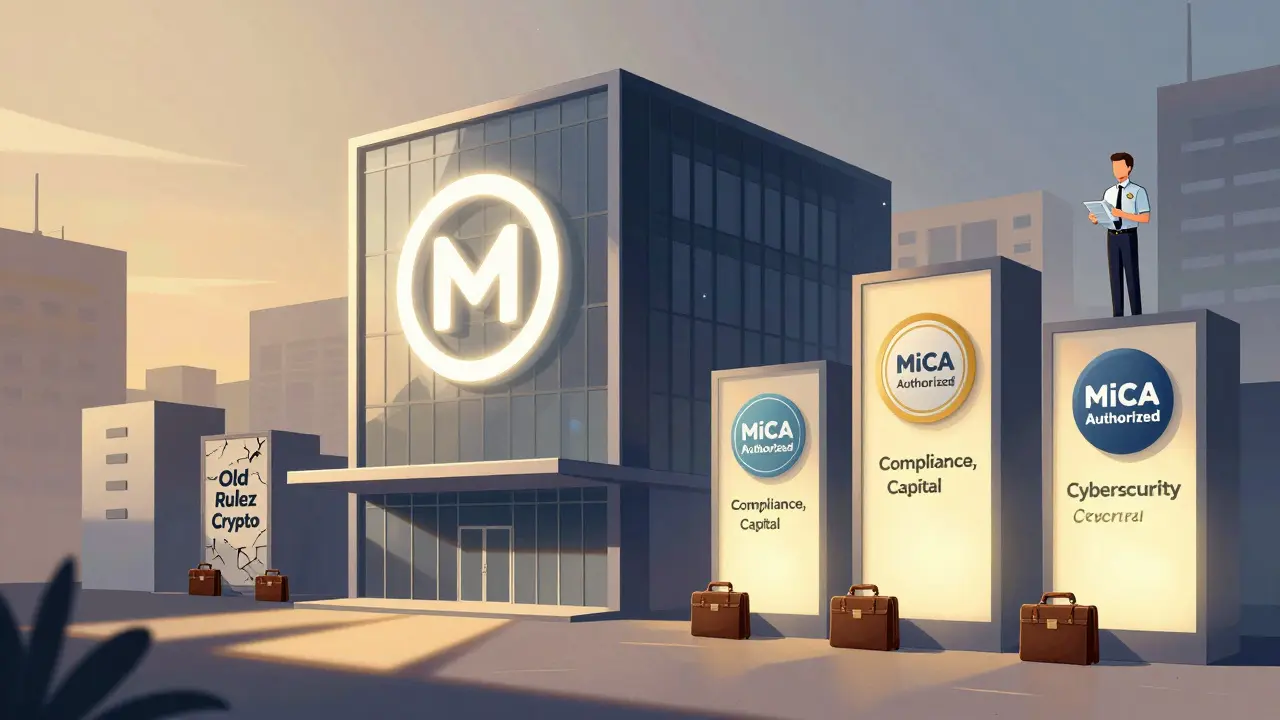
How EU MiCA Regulations Are Reshaping Cyprus's Crypto Sector
EU MiCA regulations have forced Cyprus's crypto sector to transform, ending loose rules and demanding strict compliance. Firms must now get licensed, implement the Travel Rule, and prove real presence on the island - reshaping the market into a tighter, more credible ecosystem.
read more
OFAC Sanctions Impact on Syrian Crypto Users: What Changed in 2025
In 2025, U.S. sanctions on Syria were dramatically lifted, allowing Syrian crypto users to legally access global exchanges, DeFi platforms, and mining hardware. This shift from blanket bans to targeted restrictions marks a major policy change with global implications.
read more
MND Mind Music Airdrop Details: How the Crypto Music Label Distributed 30 Trillion Tokens
Mind Music's 2022 MND airdrop distributed 30 trillion tokens via CoinMarketCap, combining crypto incentives with real music releases. Learn how it worked, why it stood out, and why it faded.
read more